-
Shop
- Advanced Technologies
- AI Skills for Creators & Freelancers
- AI Client Management
- AI Ethics
- AI Mindset
- AI Tools & Prompts
- AI Writing & Content Creation
- Audio, Voice & Music
- Design & Visual Creation
- Email, Messaging & Communication
- Freelancing & Business
- Marketing, Ads & Conversion
- Productivity, Workflow & Automation
- SEO & Search Optimization
- Social Media Content & Growth
- Strategy, Planning & Analytics
- Video Creation & Editing
- AI Skills Mastery 2026 Collection
- Bathroom
- Best-Sellers
- Car Accessories
- Confidence
- Dating & Social Skills
- Digital Resources
- Easter Products
- Education & Learning
- Family & Parenting
- Fashion
- Fashion Accessories
- Furniture
- Gadgets
- Health & Beauty
- Health & Wellness
- Home & Garden
- Home Electronics
- Home Supplies
- Jewelry
- Kids & Babies
- Kitchen
- Lighting
- Patio, Lawn & Garden
- Personal Growth
- Pet Care
- Pet Supplies
- Pets
- Shoes
- Smart Home Living Guides
- Sport & Outdoors
- Stress Relief & Relaxation
- Super Deals
- TikTok Growth & Monetization Mastery
- Travel
- Travel & Adventure
- Wealth
- Wellness
45-Piece Makeup Brush & Puff Set: Face + Eye Tools
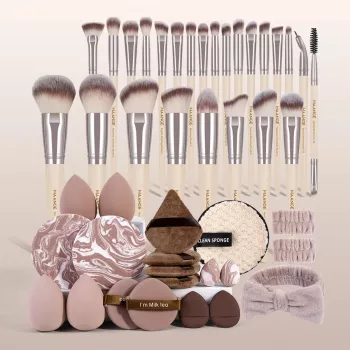
Complete 45-Piece Makeup Brush & Puff Set for Face and Eyes
A full brush-and-puff kit can streamline everyday makeup by pairing the right tool with each step—base, sculpting, and eye detail—while keeping blending smooth and product placement controlled. The Complete 45-Piece Makeup Brush & Puff Set for Face and Eyes is built to cover face and eye application in one bundle, with multiple shapes and puff options that work well with powders, creams, and liquids. For more guidance, see Assessing the Levels and Types of Bacterial Contamination in ….
When tools are organized and purpose-driven, it’s easier to keep coverage even, cheek color clean (not muddy), and eye looks crisp without overworking the skin. For further reading, see F.A.R.A.H – Be Beautiful Be You 5 Piece Eye-Brush Set + 2 ….
What’s Included in a 45-Piece Face-and-Eye Kit
A well-rounded 45-piece set typically includes a mix of face brushes, eye brushes, and makeup puffs/sponges. That variety matters because each formula behaves differently—powders need diffusion, creams need controlled blending, and liquid base products often look best when they’re pressed or buffed evenly.
- Face brushes commonly covered: powder, blush, bronzer, contour, highlighter, and foundation blending options
- Eye brushes commonly covered: flat shader, fluffy blender, crease, pencil/smudger, liner detail, and brow/angle shapes
- Puffs/sponges: for pressing in powder, diffusing cream products, and quick touch-ups
- Why duplicates matter: a second blender or shader helps keep light and dark shades separate
- How to identify tools at a glance: size, density, and tip shape guide where each tool performs best
Tool Guide: Where Each Type Fits Best
| Tool type | Best for | Product textures | Quick tip |
|---|---|---|---|
| Large fluffy face brush | Setting powder, finishing | Loose/pressed powders | Tap off excess to avoid cakiness |
| Dense face brush | Foundation or cream base | Liquids/creams | Stipple then buff for an even layer |
| Angled cheek brush | Blush/bronzer/contour | Powders and creams | Place color higher for a lifted look |
| Tapered highlight brush | High points of face | Powder highlight | Use light pressure to prevent streaks |
| Fluffy eye blender | Crease transitions | Powders | Small circles, then windshield-wiper motions |
| Flat shader brush | Lid color/pigment placement | Powders/creams | Press to build intensity, then blend edges |
| Smudger/pencil brush | Lower lash line, inner/outer corner | Powders/creams | Keep strokes short and controlled |
| Makeup puff | Powder setting and touch-ups | Loose/pressed powders | Press and roll for long wear |
How to Use the Set for a Full Face (Quick Routine)
With a larger kit, the main advantage is having a dedicated tool for each step—so you’re not trying to blend bronzer with the same brush you used for blush, or packing shimmer with a brush that’s already dusty with matte pigment.
- Base: apply foundation with a dense brush or puff depending on desired coverage (buff for medium-to-full, press for more seamless)
- Concealer/spot work: use a smaller dense brush to place product precisely, then soften edges with a clean blender brush
- Set: press powder with a puff in the T-zone, then sweep away excess with a large fluffy brush for a natural finish
- Cheeks: layer bronzer, blush, and highlight with separate brushes to avoid muddy tones
- Eyes: build a gradient—transition shade with a fluffy blender, depth with a smaller crease brush, shimmer with a flat shader
- Liner and details: use a small angled or pointed detail brush for tight lines and precise corners
- Finish: use a clean fluffy brush for a final sweep to meld powders together
For everyday wear, keeping one fluffy brush “clean-only” for final blending is a small trick that makes makeup look more airbrushed without adding any extra product.
Brush vs. Puff: Choosing the Right Tool for Each Product
Brushes and puffs aren’t interchangeable in every scenario. The fastest way to decide is to think “diffuse” versus “press.” Brushes are often better at diffusing edges, while puffs shine when you need product to grip and last.
Care and Cleaning for Longer-Lasting Tools
Clean tools support smoother application and can help reduce skin irritation from product buildup. For general skin-safety guidance, the American Academy of Dermatology shares practical makeup hygiene tips on its site (AAD makeup tips), and the FDA also maintains cosmetic safety resources (FDA cosmetics safety).
Who This Set Fits Best
Common Mistakes That Make Makeup Look Patchy (and Easy Fixes)
Product Details and Buying Option
Shop the Complete 45-Piece Makeup Brush & Puff Set for Face and Eyes
More in-stock picks
- Triple-Sided Ultra-Fine Soft Bristle Toothbrush for Enhanced Oral Health
- Universal Car Steering Wheel Phone Mount for Safe Navigation
FAQ
How often should makeup brushes and puffs be cleaned?
Wash complexion brushes and puffs regularly (at least weekly if used daily) and clean eye brushes more frequently when switching shades. For quick changes, wipe off surface pigment between colors, then do a gentle deep wash and let tools dry fully before the next use.
Can the same brush set work for both powders and creams?
Yes—many brushes can work with both, but density matters: denser brushes help place and blend creams while fluffier brushes are better for diffusing powders. To avoid buildup and keep colors true, dedicate certain tools to cream products and keep a clean blender for finishing.
What’s the easiest way to avoid muddy eyeshadow and patchy blush?
Build color in thin layers, tap off excess before applying, and blend with a clean fluffy brush to soften edges without adding more pigment. Using separate brushes for different shades (and different cheek products) also helps keep tones crisp.
Recommended for you

Was this article helpful?
Yes
No









Leave a comment