-
Shop
- Advanced Technologies
- AI Skills for Creators & Freelancers
- AI Client Management
- AI Ethics
- AI Mindset
- AI Tools & Prompts
- AI Writing & Content Creation
- Audio, Voice & Music
- Design & Visual Creation
- Email, Messaging & Communication
- Freelancing & Business
- Marketing, Ads & Conversion
- Productivity, Workflow & Automation
- SEO & Search Optimization
- Social Media Content & Growth
- Strategy, Planning & Analytics
- Video Creation & Editing
- AI Skills Mastery 2026 Collection
- Bathroom
- Best-Sellers
- Car Accessories
- Confidence
- Dating & Social Skills
- Digital Resources
- Easter Products
- Education & Learning
- Family & Parenting
- Fashion
- Fashion Accessories
- Furniture
- Gadgets
- Health & Beauty
- Health & Wellness
- Home & Garden
- Home Electronics
- Home Supplies
- Jewelry
- Kids & Babies
- Kitchen
- Lighting
- Patio, Lawn & Garden
- Personal Growth
- Pet Care
- Pet Supplies
- Pets
- Shoes
- Smart Home Living Guides
- Sport & Outdoors
- Stress Relief & Relaxation
- Super Deals
- TikTok Growth & Monetization Mastery
- Travel
- Travel & Adventure
- Wealth
- Wellness
25-Minute Monthly Car Check Routine for Safety & Life
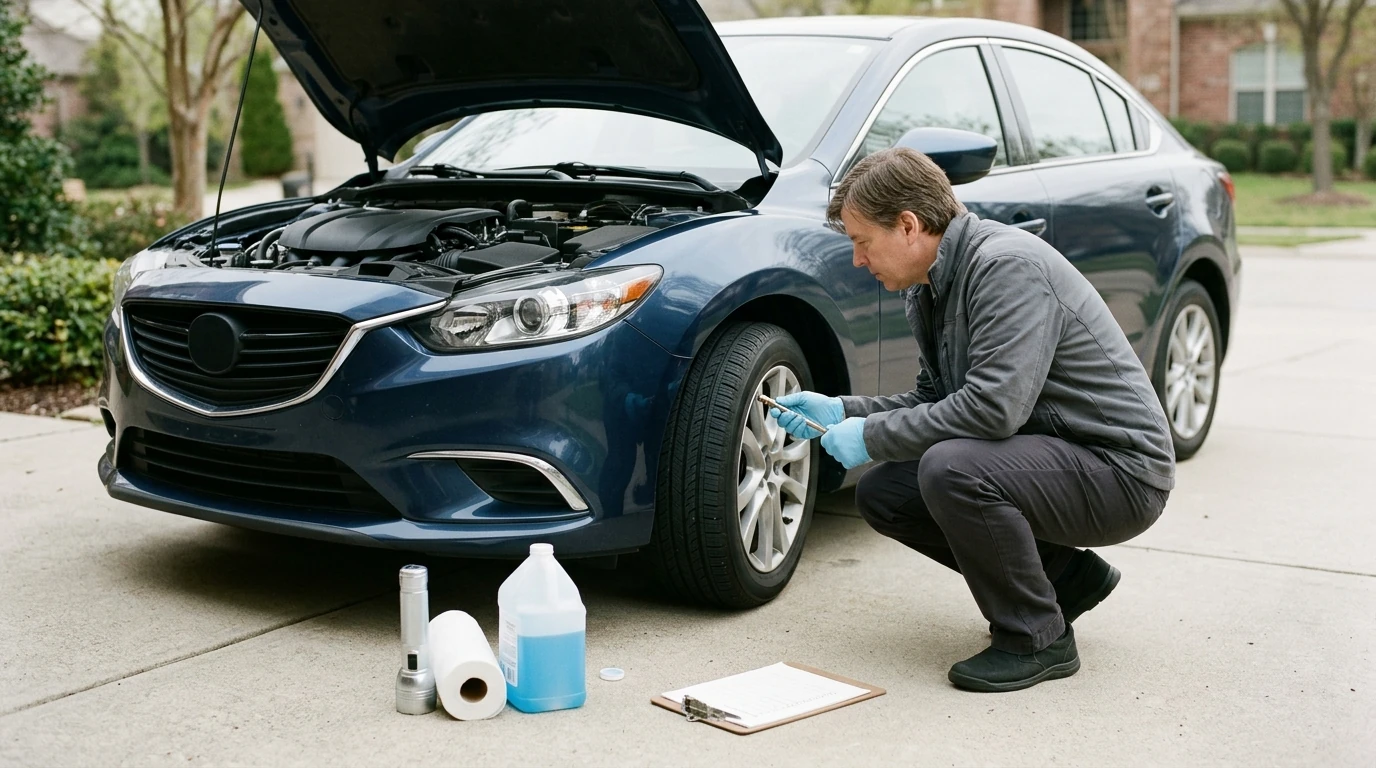
Essential Monthly Car Checks: A Simple Routine for Safety and Longer Vehicle Life
Monthly car checks catch small issues before they become breakdowns or expensive repairs. A consistent 20–30 minute routine helps protect passengers, improve fuel economy, and extend the life of key components—without requiring advanced tools or mechanical experience. The goal isn’t perfection; it’s consistency and noticing changes early.
A 25-minute monthly routine that fits real life
Pick a trigger you’ll actually remember: the first weekend of the month, pay day, or the next time you refuel at a familiar station. Do your checks on level ground with decent lighting so fluid levels and tire condition are easier to judge.
Keep a small kit in the trunk: a tire pressure gauge, flashlight, paper towels, disposable gloves, and windshield washer fluid. Then follow the same walk-around order every time (front-left and clockwise works well). Repetition reduces missed items and makes the routine feel faster.
Finally, write down what you see—date, mileage, tire pressures, and any notes. Small logs reveal trends like slow leaks, oil consumption, or a battery that’s starting to weaken.
If you want a simple, print-friendly checklist to keep in the glove box, use Essential Monthly Car Checks – Practical Guide to Monthly Car Inspection Habits, Simple Vehicle Maintenance Checklist for Safety & Longevity.
Tires and wheels: the fastest safety win
Tires are the quickest, highest-impact monthly check. Start with pressure when tires are cold (before driving). Inflate to the vehicle placard specification (usually on the driver’s door jamb), not the maximum on the tire sidewall. Pressure that’s consistently low can increase heat, reduce handling, and hurt fuel economy.
Next, look at tread depth and wear patterns. Uneven wear (inside-edge wear, cupping, or feathering) can point to alignment or suspension issues. Scan sidewalls for bulges or cracks, and look for nails or embedded debris in the tread. Confirm valve stem caps are present; missing caps can contribute to slow leaks. While you’re there, do a quick visual of lug nuts and note any missing wheel weights (sometimes noticed as new vibration at speed).
For deeper tire safety guidance, the National Highway Traffic Safety Administration maintains a helpful tire safety hub at NHTSA Tire Safety, and AAA offers practical tips at AAA: Tire Maintenance and Safety.
Monthly checklist: what to check, what “good” looks like, and when to act
| Item | Quick check | OK if… | Act now if… |
|---|---|---|---|
| Tire pressure | Gauge each tire (incl. spare if accessible) | Within a few PSI of door-placard spec | Repeatedly low, big differences between tires, or warning light returns |
| Tread & wear | Visual + tread gauge/coin check | Wear is even across tread | Inside/outside edge worn, cords showing, or vibration appears |
| Engine oil | Dipstick level and color | Between min/max; no burnt smell | Below min, milky appearance, or rapid monthly loss |
| Coolant | Check reservoir level (cold engine) | Between min/max; color consistent | Low level, crusty residue, sweet smell, or frequent top-ups |
| Lights | Headlights, brake lights, signals, hazards | All illuminate and lenses clear | Any bulb out, rapid turn-signal flash, or moisture inside housing |
| Battery | Terminal look + start behavior | No corrosion; starts strongly | White/green buildup, slow crank, or warning light |
| Wipers & washer | Spray + wipe test | Clear sweep; strong spray | Streaking, chatter, torn rubber, or weak/no spray |
Under the hood: fluids that prevent big repairs
Fluid checks are a “small effort, big payoff” habit. Engine oil is first: check the dipstick on a parked, level car. Top up with the correct grade if needed, but don’t ignore patterns—if you’re adding oil every month, document how much and investigate.
Coolant should be checked at the reservoir with the engine cold. Never open a hot radiator cap. If the level drops repeatedly, look for leaks (hoses, radiator, water pump) and address it before overheating causes major damage.
Brake fluid should sit between the min/max marks. Low brake fluid can mean worn pads or a leak—either way, it deserves prompt attention. If your vehicle has hydraulic power steering, verify the level and note foaming or unusually dark fluid; sudden loss suggests a leak. Windshield washer fluid is simple: top it off and confirm the spray hits the glass with decent force; clogged nozzles often respond to gentle cleaning.
For a quick overview of common under-hood fluids and what they do, reference Car Care Council: Check Engine Fluids.
Battery, belts, and hoses: small checks with outsized impact
Look at battery terminals for corrosion (white/green buildup) and make sure the clamps aren’t loose. If starting feels weaker—slow cranking, dim lights at startup, or repeated jump starts—your battery or charging system may be heading toward failure.
Lights, glass, and visibility: reduce risk in seconds
A quick cabin and trunk check that prevents roadside surprises
For safer navigation without holding your phone, consider a simple accessory like the Universal Car Steering Wheel Phone Mount for Safe Navigation.
Simple tracking habits that make maintenance easier
When to stop and call a professional
FAQ
How often should tire pressure be checked?
Monthly is a practical baseline, but check more often during big temperature swings, before long trips, or anytime a tire has been losing air. If the warning light returns after inflation, treat it as a problem to diagnose rather than a one-time top-off.
What fluid levels can be checked at home without tools?
Washer fluid, the coolant reservoir (with a cold engine), brake fluid reservoir, and many power steering reservoirs can be checked visually. Engine oil typically requires using the dipstick, but still doesn’t require special tools.
Is it normal to top up engine oil between oil changes?
Some engines consume small amounts of oil, especially as mileage increases. If top-ups become frequent or the amount increases over time, document it and have the vehicle checked for leaks or internal wear.
Recommended for you



Was this article helpful?
Yes
No









Leave a comment