-
Shop
- Advanced Technologies
- AI Skills for Creators & Freelancers
- AI Client Management
- AI Ethics
- AI Mindset
- AI Tools & Prompts
- AI Writing & Content Creation
- Audio, Voice & Music
- Design & Visual Creation
- Email, Messaging & Communication
- Freelancing & Business
- Marketing, Ads & Conversion
- Productivity, Workflow & Automation
- SEO & Search Optimization
- Social Media Content & Growth
- Strategy, Planning & Analytics
- Video Creation & Editing
- AI Skills Mastery 2026 Collection
- Bathroom
- Best-Sellers
- Car Accessories
- Confidence
- Dating & Social Skills
- Digital Resources
- Easter Products
- Education & Learning
- Family & Parenting
- Fashion
- Fashion Accessories
- Furniture
- Gadgets
- Health & Beauty
- Health & Wellness
- Home & Garden
- Home Electronics
- Home Supplies
- Jewelry
- Kids & Babies
- Kitchen
- Lighting
- Patio, Lawn & Garden
- Personal Growth
- Pet Care
- Pet Supplies
- Pets
- Shoes
- Smart Home Living Guides
- Sport & Outdoors
- Stress Relief & Relaxation
- Super Deals
- TikTok Growth & Monetization Mastery
- Travel
- Travel & Adventure
- Wealth
- Wellness
24-Inch Hand Swager: Strong, Consistent Cable Crimps
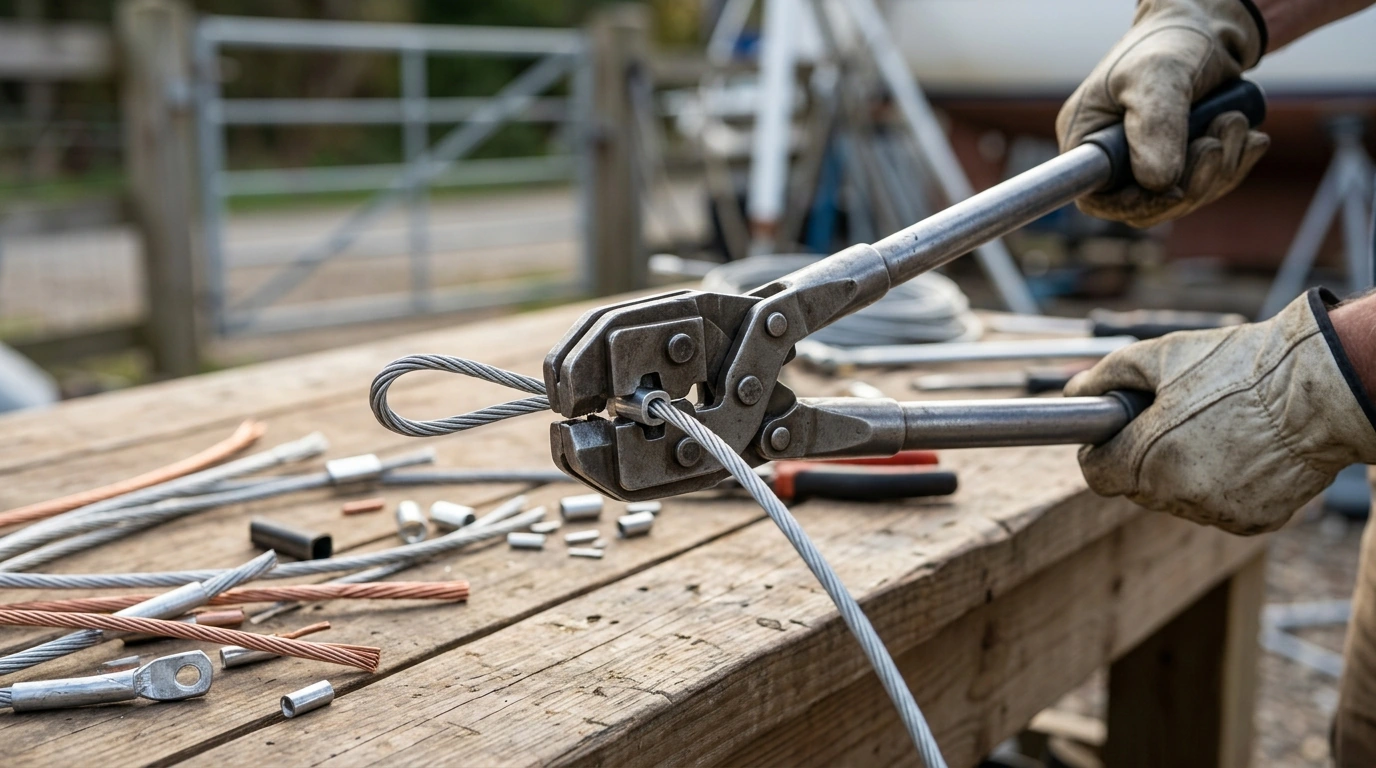
Clean, Consistent Cable Connections with a 24-Inch Hand Swager
When a cable termination needs to hold steady under tension, the difference often comes down to one thing: a repeatable crimp. A long-handle hand swager helps you compress sleeves and ferrules with controlled force, giving stranded cable a secure termination without relying on improvised hammer-and-anvil shortcuts. The result is typically a cleaner finish, fewer do-overs, and better consistency across multiple connections—especially when you’re working in the field without power. For more guidance, see Self-Adjusting Wire Ferrule Crimper Kit AWG30-5 With ….
If you’re setting up loops, making repairs, or building assemblies for outdoor or shop use, a dedicated tool like the 24-Inch Hand Swager Crimping Tool for Copper & Aluminum Wire is designed to turn hand pressure into dependable compression, with less strain than shorter tools. For further reading, see Nicopress.
What a 24-inch hand swager is used for
- Crimping sleeves and ferrules to form secure loops and terminations on stranded cable
- General fit for copper and aluminum wire work where a hand-operated tool is preferred over hydraulic crimpers
- Common project areas: fencing and gates, marine/boat rigging, shade structures, shop fixtures, and general repair work
- Long handles increase leverage, helping reduce hand fatigue and improve closure on thicker sleeves
In practical terms, this style of swager is often chosen when you want a predictable “set” on the sleeve—enough compression to grip strands firmly—while staying portable and simple to operate.
Why the 24-inch handle length matters
- More mechanical advantage: the added length helps compress sleeves with fewer partial squeezes
- Better consistency: stronger closure can reduce the chance of an under-crimp that slips under load
- Practical ergonomics: two-handed operation can feel steadier for repeat crimps across multiple connections
- Trade-off: longer tools need more swing room, which can be limiting in tight compartments or crowded panels
Handle length is about leverage and control. A longer tool can help you complete a crimp in fewer cycles, which matters when you have multiple terminations to make and want them all to “feel” the same at the end of each squeeze.
Copper vs. aluminum wire: what changes during crimping
- Copper is generally tougher and more forgiving; aluminum is softer and can deform more easily if misaligned
- Aluminum oxidation can increase resistance; clean contact surfaces and proper sleeves/connectors matter
- Use sleeves/connectors rated for the wire material and environment (especially outdoors and marine conditions)
- Avoid mixing metals without appropriate rated connectors or anti-oxidation practices where applicable
For load-bearing loops (like rigging and hanging points), your main concern is mechanical grip and abrasion resistance. For electrical connections, material compatibility and oxidation control become critical. Safety standards and tool-use basics are also worth reviewing, such as OSHA’s general hand tool guidance (OSHA Hand Tools requirements) and the broader framework for electrical work under the National Electrical Code (NFPA 70 overview).
Key features to look for in a hand swager/crimping tool
- Jaw geometry that matches the sleeve style being used (oval/round compressions depending on dies/jaws)
- Solid hinge/pivot and tight alignment to prevent uneven crimp marks
- Non-slip grips and comfortable handle spacing for repeated cycles
- Corrosion resistance if used near saltwater or stored in damp environments
- Clear sizing guidance from sleeves/connectors so the crimp fully captures strands without cutting them
A good “feel” at the handles is useful, but alignment is the real make-or-break detail. If jaws pinch unevenly, you can end up with a lopsided sleeve that looks tight yet fails a pull test.
Quick fit check: choosing sleeves and wire sizes
| What’s being checked | Good result looks like | Likely issue if it fails |
|---|---|---|
| Sleeve size vs. cable | Sleeve wraps strands tightly with minimal gaps | Oversized sleeve may slip; undersized sleeve may flare or damage strands |
| Crimp placement | Crimps are centered and spaced evenly along the sleeve | Crimping too close to an edge can weaken the termination |
| Compression depth | Sleeve is firmly compressed without sharp strand cut-through | Under-crimp can pull out; over-crimp can shear strands |
| Loop protection (optional) | Thimble fits snugly, loop keeps its shape under load | Without protection, cable can abrade and deform over time |
Step-by-step: making a strong crimp connection
Mistakes that cause weak crimps (and how to avoid them)
Where this 24-inch hand swager fits among other crimping options
For portable, power-free work, the 24-Inch Hand Swager Crimping Tool for Copper & Aluminum Wire is a straightforward option to keep on hand. If your cable projects are offsite, a small accessory that helps you stay hands-free for directions can also be useful: the Universal Car Steering Wheel Phone Mount for Safe Navigation.
Care, storage, and longevity tips
FAQ
Can the same hand swager be used on both copper and aluminum wire?
Yes, as long as the sleeves/connectors are correctly rated for the specific wire material and the jaw profile matches the sleeve style. For aluminum, pay extra attention to surface cleanliness and oxidation control so the termination stays stable over time.
How many crimp presses should be made on a single sleeve?
It depends on the sleeve length and design, but many sleeves require multiple evenly spaced compressions so the full length grips the strands. Follow the sleeve manufacturer’s guidance and do a test pull on scrap before committing to an installed connection.
What’s the fastest way to tell if a crimp is unsafe?
Watch for visible gaps, skewed or uneven compression, a cracked sleeve, cut strands, or any slippage during a controlled pull test. If any of those show up, remake the termination with a new sleeve rather than trying to re-crimp a damaged one.
Recommended for you

Was this article helpful?
Yes
No









Leave a comment