-
Shop
- Advanced Technologies
- AI Skills for Creators & Freelancers
- AI Client Management
- AI Ethics
- AI Mindset
- AI Tools & Prompts
- AI Writing & Content Creation
- Audio, Voice & Music
- Design & Visual Creation
- Email, Messaging & Communication
- Freelancing & Business
- Marketing, Ads & Conversion
- Productivity, Workflow & Automation
- SEO & Search Optimization
- Social Media Content & Growth
- Strategy, Planning & Analytics
- Video Creation & Editing
- AI Skills Mastery 2026 Collection
- Bathroom
- Best-Sellers
- Car Accessories
- Confidence
- Dating & Social Skills
- Digital Resources
- Easter Products
- Education & Learning
- Family & Parenting
- Fashion
- Fashion Accessories
- Furniture
- Gadgets
- Health & Beauty
- Health & Wellness
- Home & Garden
- Home Electronics
- Home Supplies
- Jewelry
- Kids & Babies
- Kitchen
- Lighting
- Patio, Lawn & Garden
- Personal Growth
- Pet Care
- Pet Supplies
- Pets
- Shoes
- Smart Home Living Guides
- Sport & Outdoors
- Stress Relief & Relaxation
- Super Deals
- TikTok Growth & Monetization Mastery
- Travel
- Travel & Adventure
- Wealth
- Wellness
1450W Mag Drill Press: Variable Speed, 1.6in Boring
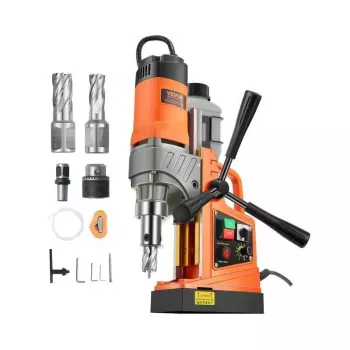
1450W Magnetic Drill Press with Variable Speed and 1.6in Boring Capacity
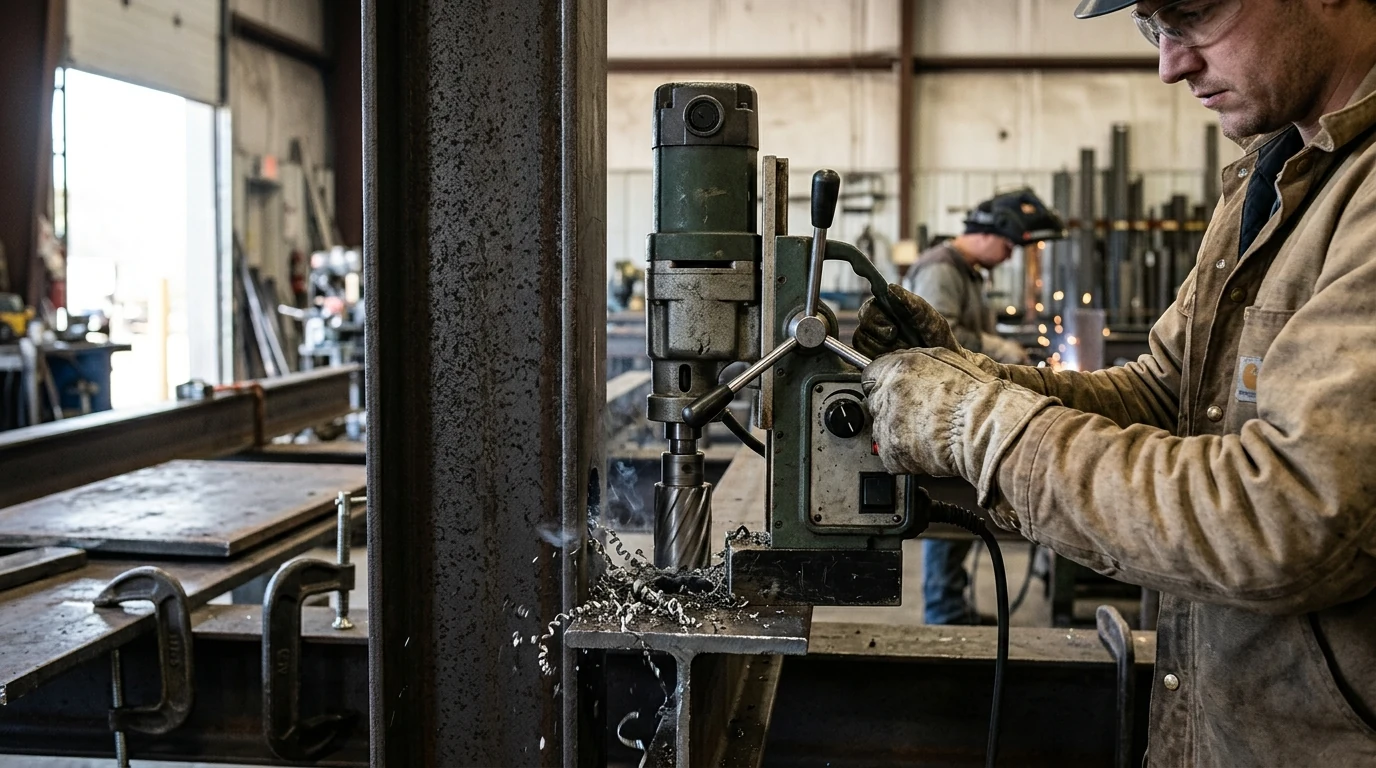
A magnetic drill press is built for accurate hole-making on steel where a conventional drill press can’t go—vertical beams, plate, and structural work on site. This 1450W model pairs a strong motor with variable speed control and a 1.6-inch boring capacity, helping match cutting speed to the cutter, material thickness, and desired finish while keeping the tool stable on ferrous surfaces.
What This Magnetic Drill Press Is Built To Do
When the job is too large—or too fixed in place—to bring to a shop drill press, a magnetic drill press brings controlled drilling directly to the steel. The goal is repeatable, straight holes with less wandering, better alignment, and less operator fatigue than handheld drilling on heavy sections.
- Portable drilling solution for steel fabrication, erection, and maintenance tasks where moving the workpiece is impractical
- Variable speed adjustment to better match annular cutters, twist drills, and material types
- 1.6-inch boring capacity aimed at larger holes commonly used for structural connections and equipment mounting
- Magnetic base stability for controlled, repeatable drilling on ferrous metal surfaces
Key Specs at a Glance
The headline specs matter because they influence what hole sizes you can cut efficiently, what tooling you can run comfortably, and how easy it is to keep heat under control on thicker steel.
- Motor power: 1450W for demanding drilling and boring tasks
- Boring capacity: up to 1.6 inches for larger diameter holes
- Speed control: variable speed for better chip control and cutter life
- Use case fit: steel plate, beams, channels, and structural members (ferrous surfaces for magnetic adhesion)
Quick Specification Summary
| Feature | What it means in practice |
|---|---|
| 1450W motor | Supports heavier cutting loads and steadier progress in thicker steel when paired with proper tooling and coolant |
| Variable speed | Helps dial in RPM for different cutter sizes and materials to reduce overheating and improve finish |
| 1.6in boring capacity | Suitable for larger mounting and structural holes often done with annular cutters |
| Magnetic base | Adds holding force and stability on clean, flat ferrous surfaces; improves precision vs handheld drilling |
Why Variable Speed Matters on a Magnetic Drill Press
Variable speed is more than a convenience—on steel, it’s one of the biggest factors in heat management and tool life. A single “fast” speed that works for small twist drills can be too aggressive for large annular cutters, leading to blue chips, dulled edges, and rough holes.
- Different cutter diameters require different RPM; larger cutters typically run at lower RPM to manage heat and torque
- Material and thickness affect optimal speed—too fast can burn tooling, too slow can cause chatter and poor chip formation
- Speed control supports cleaner holes, reduced burr formation, and longer cutter life when paired with correct feed pressure
- Better control for starting holes and maintaining stability, especially on vertical or overhead applications (when permitted by the job setup)
As a practical habit: set a conservative RPM for larger diameters, use cutting fluid, then focus on steady feed pressure so the cutter is actually cutting rather than rubbing.
Understanding 1.6-Inch Boring Capacity
A 1.6-inch boring capacity is a sweet spot for many structural and industrial jobs—large enough for common bolt patterns, mounting slots (with layout), and connection hardware, while still being manageable in a portable tool.
- A 1.6-inch capacity is commonly associated with annular cutter use for fast, efficient large-diameter holes
- Annular cutters remove a ring of material rather than the full slug, often reducing effort versus large twist drills
- Capacity should be matched with appropriate shank type, cutter depth, and the drill’s arbor compatibility (verify tooling fit before purchase)
- For best results, use cutting fluid and steady feed to prevent overheating and premature edge wear
If you regularly need larger holes, confirm the cutter depth needed for your typical plate thickness, and verify your jobsite power setup can support consistent cutting without voltage drop.
Safety and Setup Essentials for Magnetic Drilling
Mag drilling is fast and precise, but it demands disciplined setup. The magnetic base is only as secure as the surface beneath it—and the safest workflow assumes chips, hot slugs, and sharp edges are part of the process.
For eye and face protection expectations in general industry settings, reference OSHA 29 CFR 1910.133. For unit references when checking inch-to-metric dimensions on prints, NIST’s overview is a helpful baseline: NIST – Units of Measurement.
Common Jobs This Tool Handles Well
Care, Maintenance, and Tooling Tips
Product Options
- 1450W Magnetic Drill Press with Variable Speed and 1.6in Boring Capacity — a single-tool solution aimed at portable steel drilling with adjustable RPM and large-hole capability.
- Universal Car Steering Wheel Phone Mount for Safe Navigation — a simple accessory option for keeping navigation visible on the move between job sites.
- Triple-Sided Ultra-Fine Soft Bristle Toothbrush for Enhanced Oral Health — a compact personal-care add-on for travel and long shifts.
FAQ
Can a magnetic drill press be used on non-ferrous materials like aluminum or stainless steel?
Magnetic bases need ferrous metal for reliable holding power. For non-ferrous work, use purpose-built clamping fixtures or a dedicated setup and never depend on the magnet alone for retention.
What tooling is typically used to reach a 1.6-inch hole size?
Annular cutters are commonly used for large holes because they remove a ring of material instead of cutting the full diameter. Confirm arbor compatibility, cutter depth, and pilot pin requirements before ordering.
How do you choose the right speed setting?
Set RPM based on cutter diameter and the material; larger diameters generally need lower RPM to control heat and torque. Use cutting fluid and steady feed pressure to maintain chip formation and hole quality.
Recommended for you


Was this article helpful?
Yes
No









Leave a comment