-
Shop
- Advanced Technologies
- AI Skills for Creators & Freelancers
- AI Client Management
- AI Ethics
- AI Mindset
- AI Tools & Prompts
- AI Writing & Content Creation
- Audio, Voice & Music
- Design & Visual Creation
- Email, Messaging & Communication
- Freelancing & Business
- Marketing, Ads & Conversion
- Productivity, Workflow & Automation
- SEO & Search Optimization
- Social Media Content & Growth
- Strategy, Planning & Analytics
- Video Creation & Editing
- AI Skills Mastery 2026 Collection
- Bathroom
- Best-Sellers
- Car Accessories
- Confidence
- Dating & Social Skills
- Digital Resources
- Easter Products
- Education & Learning
- Family & Parenting
- Fashion
- Fashion Accessories
- Furniture
- Gadgets
- Health & Beauty
- Health & Wellness
- Home & Garden
- Home Electronics
- Home Supplies
- Jewelry
- Kids & Babies
- Kitchen
- Lighting
- Patio, Lawn & Garden
- Personal Growth
- Pet Care
- Pet Supplies
- Pets
- Shoes
- Smart Home Living Guides
- Sport & Outdoors
- Stress Relief & Relaxation
- Super Deals
- TikTok Growth & Monetization Mastery
- Travel
- Travel & Adventure
- Wealth
- Wellness
10-Slot Garden Tool Organizer With Hooks for Safer Storage
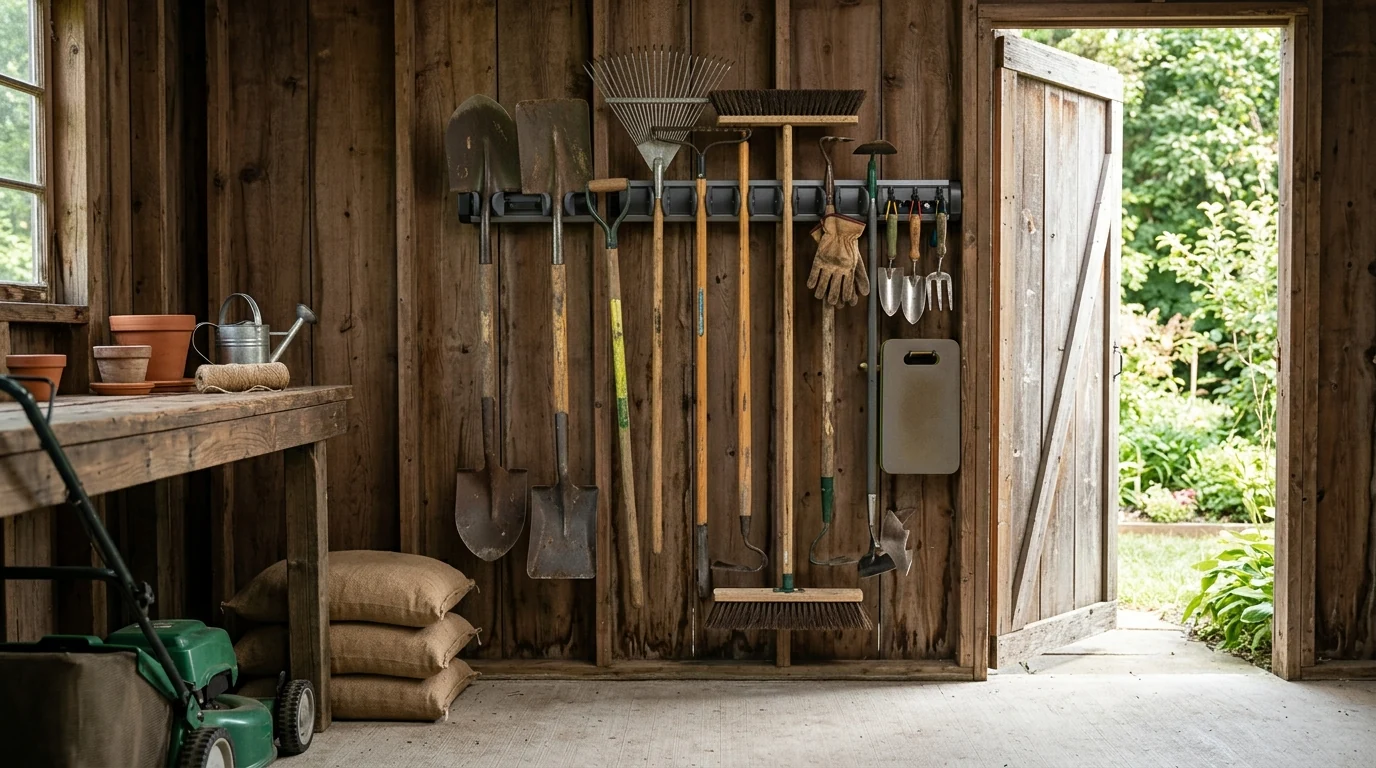
Garden Tool Organizer with 10 Slots & Hooks: A Cleaner, Safer Way to Store Yard Gear
A dedicated organizer with slots and hooks keeps long-handled tools upright, small hand tools visible, and sharp edges off the floor. With defined storage positions, it’s easier to put items back after each task, reduce clutter in sheds and garages, and prevent handles from warping or getting damaged.
What a slots-and-hooks organizer solves
Yard tools are awkward by design: long handles, heavy heads, and sharp edges don’t play well with “lean it in the corner” storage. A wall-mounted organizer with slots and hooks brings order to that chaos by giving each item a stable resting spot.
- Stops rakes, shovels, and brooms from piling into unstable stacks that fall over when a door opens
- Creates assigned “homes” so tools don’t disappear behind bags of soil or seasonal equipment
- Keeps sharp or heavy items off walkways, lowering trip hazards and accidental cuts
- Protects tool heads and handles from moisture on concrete floors and from impact damage
- Makes quick inventory checks possible before starting a task or packing up
Keeping walking paths clear matters in any work area. OSHA’s guidance on walking-working surfaces underscores how clutter contributes to slips and trips—exactly the kind of small accident that can happen when a shovel slides underfoot.
How the 10 slots and hooks can be used
A 10-slot layout is a sweet spot for most homes: enough capacity for the “core” set of yard tools, without forcing everything into a tight bundle that’s hard to grab. The hooks add flexible space for the items that usually migrate to shelves, windowsills, or the top of the mower.
- Use slots for long-handled tools: shovel, spade, rake, hoe, cultivator, leaf broom, push broom, edger
- Use hooks for hand tools and accessories: pruners, loppers, trowels, hand fork, garden gloves, twine, kneeling pad, hose nozzle
- Group tools by task zone (lawn care vs. beds vs. cleanup) to speed up grab-and-go
- Reserve one slot for a “dirty tool” after use so wet soil doesn’t drip onto everything else
- Place frequently used tools at the easiest reach height; move rarely used items to the outer slots/hooks
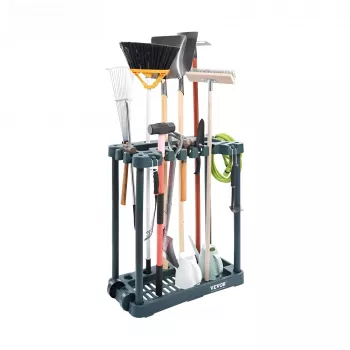
For a ready-to-use setup, Garden Tool Organizer with 10 Slots & Hooks creates clear storage positions so tools don’t rotate, tangle, or slide into one another.
Where it fits best: shed, garage, fence, or utility room
Location affects how consistently tools get put away. The “best” spot is usually the place where tools naturally land after a task—because the easier the reset, the more likely it happens.
- Garage wall: keeps yard tools away from vehicles and reduces the chance of scratching paint with handles
- Shed interior: frees floor space for bags, bins, and mower parking
- Mudroom/utility space: stores brooms, dustpans, and seasonal outdoor tools without leaning piles
- Near an exterior door: supports quick tool drop-off and consistent return habits
- Moisture management: avoid placing directly under roof leaks or irrigation spray; reducing damp storage extends tool life
If your shed tends to run humid, tool maintenance matters even more. General care principles from the University of Maryland Extension can help guide cleaning and rust prevention practices (tool care and maintenance resources).
Installation and layout tips for stable storage
Wall-mounted storage is only as solid as the mounting. A few planning steps help the organizer stay secure and keep tools easy to remove one-handed.
- Mount to solid framing or appropriate anchors for the wall type (drywall, masonry, studs) to prevent pull-out
- Leave enough side clearance to remove wide tool heads without twisting or scraping adjacent tools
- Set bottom clearance so long handles don’t drag on the floor; keep a small drip tray or mat if tools are stored wet
- Balance weight across the organizer: distribute heavier tools (shovels, digging forks) across different slots
- Add labels or a simple outline system so every tool returns to the same position
Quick comparison: common storage options
| Option | Best for | Trade-offs |
|---|---|---|
| Organizer with slots + hooks | Mixed long-handled tools and small accessories | Requires mounting and some planning for spacing |
| Single hook rail | Light tools with uniform handles | Tools can rotate, slide, and overlap |
| Floor stand | Renters or temporary setups | Takes floor space; can tip if bumped |
| Large bin/tub | Loose accessories and gloves | Tools get buried; moisture and rust risk increases |
Care habits that keep tools and the organizer in good shape
A practical pick for everyday yard organization
Helpful add-ons to keep your routine smooth
Storage is the foundation, but small conveniences can make a “put it away now” habit easier to keep. If you often drive to garden centers or job sites, a secure phone holder can help with navigation while keeping hands on the wheel: Universal Car Steering Wheel Phone Mount for Safe Navigation.
FAQ
Will the slots hold different handle sizes?
Most slots are designed for common long-handled garden tools, so typical wood or fiberglass handles fit well. If some handles are noticeably thicker, place them in the roomiest positions and avoid forcing oversized handles, which can scuff grips and stress the organizer.
How many tools can be stored at once with 10 slots and hooks?
The 10 slots generally hold one long-handled tool each. The hooks can carry several smaller accessories depending on their size and weight, but leaving a little breathing room keeps everything easy to grab without tangling.
Is it better to mount a tool organizer in a shed or garage?
A shed keeps tools closest to the yard, which can improve daily convenience, while a garage often stays drier and can be easier to access in winter. The best choice is usually the most consistent drop-off point—where tools naturally return after you finish a task.
Recommended for you


Was this article helpful?
Yes
No









Leave a comment