-
Shop
- Advanced Technologies
- AI Skills for Creators & Freelancers
- AI Client Management
- AI Ethics
- AI Mindset
- AI Tools & Prompts
- AI Writing & Content Creation
- Audio, Voice & Music
- Design & Visual Creation
- Email, Messaging & Communication
- Freelancing & Business
- Marketing, Ads & Conversion
- Productivity, Workflow & Automation
- SEO & Search Optimization
- Social Media Content & Growth
- Strategy, Planning & Analytics
- Video Creation & Editing
- AI Skills Mastery 2026 Collection
- Bathroom
- Best-Sellers
- Car Accessories
- Confidence
- Dating & Social Skills
- Digital Resources
- Easter Products
- Education & Learning
- Family & Parenting
- Fashion
- Fashion Accessories
- Furniture
- Gadgets
- Health & Beauty
- Health & Wellness
- Home & Garden
- Home Electronics
- Home Supplies
- Jewelry
- Kids & Babies
- Kitchen
- Lighting
- Patio, Lawn & Garden
- Personal Growth
- Pet Care
- Pet Supplies
- Pets
- Shoes
- Smart Home Living Guides
- Sport & Outdoors
- Stress Relief & Relaxation
- Super Deals
- TikTok Growth & Monetization Mastery
- Travel
- Travel & Adventure
- Wealth
- Wellness
Samsung USB-C Cables: Not All Are Equal
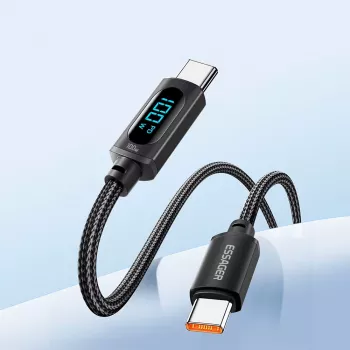
Are all Samsung USB-C cables the same?
No. “Samsung USB-C cable” can refer to many different cables that look similar but perform very differently. The big differences come down to charging wattage support, data speed, cable build quality, and whether the cable includes the right electronics (like an e-marker) to safely negotiate higher power.
Charging power can vary a lot
Some Samsung-branded USB-C to USB-C cables are designed for everyday phone charging, while others can handle much higher power for fast charging and even some laptops. A cable that’s fine at 15–25W may not reliably support 45W or higher, especially over longer lengths. To charge a Samsung device at its fastest rate, you need a cable that supports USB Power Delivery (and for some setups, PPS) at the required wattage.
Not every cable supports the same data speeds
Many USB-C cables are “charge-first” and only carry USB 2.0 data speeds, which is plenty for basic syncing but not ideal for large file transfers. Other USB-C cables support faster USB standards and are better for moving big videos, using external storage, or connecting compatible displays/docks.
Build quality and safety features differ
Even when two cables share the same connector type, their internals can differ: wire gauge, shielding, strain relief, and connector quality all affect durability, heat, and charging stability. Higher-power USB-C cables often use thicker conductors and may include an e-marker chip so chargers and devices can identify the cable’s safe power limit.
How to pick the right one
Match the cable to what you actually do: fast charging only, fast data transfer, or both. Check for stated wattage support (e.g., 60W/100W), USB PD compatibility, and the length you need. For a deeper breakdown of high-power USB-C cables and what to look for, see this guide: https://ulorin.com/guide-100w-led-usb-c-to-usb-c-cable-pd-qc3-guide/.
FAQ
What’s the difference between a 60W and 100W USB-C cable?
A 100W cable is built to safely carry more power for higher-demand devices like laptops, while a 60W cable may cap charging speed on those devices. Both can charge phones, but only the higher-rated cable can fully support higher-wattage chargers without becoming a bottleneck.
Recommended for you

Was this article helpful?
Yes
No









Leave a comment