-
Shop
- Advanced Technologies
- AI Skills for Creators & Freelancers
- AI Client Management
- AI Ethics
- AI Mindset
- AI Tools & Prompts
- AI Writing & Content Creation
- Audio, Voice & Music
- Design & Visual Creation
- Email, Messaging & Communication
- Freelancing & Business
- Marketing, Ads & Conversion
- Productivity, Workflow & Automation
- SEO & Search Optimization
- Social Media Content & Growth
- Strategy, Planning & Analytics
- Video Creation & Editing
- AI Skills Mastery 2026 Collection
- Bathroom
- Best-Sellers
- Car Accessories
- Confidence
- Dating & Social Skills
- Digital Resources
- Easter Products
- Education & Learning
- Family & Parenting
- Fashion
- Fashion Accessories
- Furniture
- Gadgets
- Health & Beauty
- Health & Wellness
- Home & Garden
- Home Electronics
- Home Supplies
- Jewelry
- Kids & Babies
- Kitchen
- Lighting
- Patio, Lawn & Garden
- Personal Growth
- Pet Care
- Pet Supplies
- Pets
- Shoes
- Smart Home Living Guides
- Sport & Outdoors
- Stress Relief & Relaxation
- Super Deals
- TikTok Growth & Monetization Mastery
- Travel
- Travel & Adventure
- Wealth
- Wellness
Emotional Clarity Guide: Daily Steps to Respond Calmly
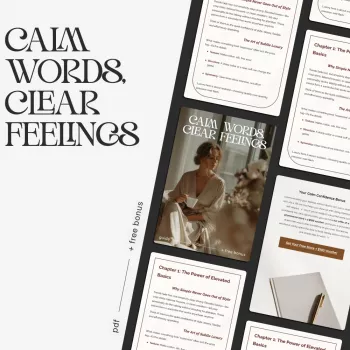
What is an emotional clarity guide and how do you use it in daily life?
An emotional clarity guide is a simple, repeatable framework for identifying what you feel, why you feel it, and what you want to do next—without rushing to fix, fight, or avoid the emotion. Instead of getting swept up in a reaction, it helps you name the experience, separate facts from interpretations, and choose a response that matches your values.
Used in daily life, it turns emotional “noise” into usable information. That can mean fewer spirals, clearer boundaries, and calmer conversations—especially when stress, conflict, or uncertainty hits.
How to use an emotional clarity guide day to day
1) Pause and locate the emotion
Take 30 seconds to slow down. Notice where the feeling shows up (tight chest, jaw tension, racing thoughts) and give it a precise label: frustrated, embarrassed, disappointed, anxious, relieved.
2) Name the trigger and the story
Write or think: “What happened?” (the observable facts) and “What am I telling myself about what happened?” (the interpretation). This step reduces mind-reading and worst-case assumptions.
3) Identify the need underneath
Most strong emotions point to a need: safety, respect, rest, autonomy, reassurance, connection, fairness. When you can name the need, your next step becomes clearer.
4) Choose a small, values-aligned action
Pick one doable move: ask a clarifying question, take a break, set a boundary, apologize, request support, or plan a next step. Keep it specific and time-bound (“I’m going to take a 10-minute walk, then reply”).
5) Use it to communicate more honestly
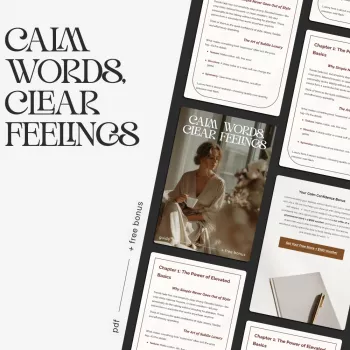
When talking with someone, try: “When X happened, I felt Y. The story I’m telling myself is Z. What I need is A. Can we try B?” For a deeper walkthrough, visit this emotional clarity guide.
FAQ
How can emotional clarity improve communication in relationships?
It helps you speak from feelings and needs instead of accusations, which lowers defensiveness. You can ask for what you want more directly and respond to conflict with more steadiness.
Recommended for you


Was this article helpful?
Yes
No









Leave a comment