-
Shop
- Advanced Technologies
- AI Skills for Creators & Freelancers
- AI Client Management
- AI Ethics
- AI Mindset
- AI Tools & Prompts
- AI Writing & Content Creation
- Audio, Voice & Music
- Design & Visual Creation
- Email, Messaging & Communication
- Freelancing & Business
- Marketing, Ads & Conversion
- Productivity, Workflow & Automation
- SEO & Search Optimization
- Social Media Content & Growth
- Strategy, Planning & Analytics
- Video Creation & Editing
- AI Skills Mastery 2026 Collection
- Bathroom
- Best-Sellers
- Car Accessories
- Confidence
- Dating & Social Skills
- Digital Resources
- Easter Products
- Education & Learning
- Family & Parenting
- Fashion
- Fashion Accessories
- Furniture
- Gadgets
- Health & Beauty
- Health & Wellness
- Home & Garden
- Home Electronics
- Home Supplies
- Jewelry
- Kids & Babies
- Kitchen
- Lighting
- Patio, Lawn & Garden
- Personal Growth
- Pet Care
- Pet Supplies
- Pets
- Shoes
- Smart Home Living Guides
- Sport & Outdoors
- Stress Relief & Relaxation
- Super Deals
- TikTok Growth & Monetization Mastery
- Travel
- Travel & Adventure
- Wealth
- Wellness
Minimalist Ways to Let Go of Sentimental Items
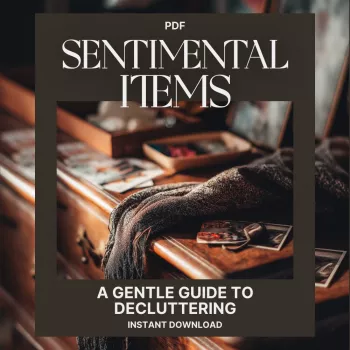
How do minimalists get rid of sentimental items?
Minimalists let go of sentimental items by separating the memory from the object, then keeping only what truly supports the life they want now. Instead of trying to be “tough,” they use gentle rules that reduce decision fatigue: choose a small, meaningful “yes” pile, create boundaries for what stays, and release the rest with a clear plan.
Start with your values, not the boxes
Before sorting, define what “enough” looks like—one keepsake bin per person, one shelf in the living room, or a single memory folder. Minimalists do better with limits because they turn an emotional decision into a simple container decision: when the space is full, something has to leave.
Sort by category and set a “best-of” standard
Gather similar sentimental items together (letters, kids’ artwork, travel souvenirs, inherited pieces). Then keep only the best representatives—items that instantly spark warmth, tell a clear story, or are used/displayed. Duplicates and “maybe someday” objects are usually the easiest to release first.
Digitize what you want to remember, not store
Photos, scans, or short videos can preserve the meaning without the physical bulk. Minimalists often create a single digital album per theme (family, school years, trips) and let that become the “home” for memories that don’t need to live in a closet.
Let go with a respectful exit plan
Donations go to places where items will be used. Heirlooms can be offered to relatives who genuinely want them. Worn-out items can be recycled or discarded without guilt—appreciating something’s role doesn’t require keeping it forever.
For a step-by-step, heart-centered process, follow this guide: https://ulorin.com/guide-declutter-sentimental-items-gently-heart-clarity-method/.
For Minimalist Ways to Let Go of Sentimental Items, the best answer depends on fit, material, care instructions, and how the product will be used day to day.
FAQ
How do you decide what sentimental items to keep?
Keep items that you would choose again today, that fit your space limits, and that you can realistically display, use, or revisit. If the item mainly carries guilt or obligation, it’s usually a candidate to release.
Recommended for you


Was this article helpful?
Yes
No









Leave a comment