-
Shop
- Advanced Technologies
- AI Skills for Creators & Freelancers
- AI Client Management
- AI Ethics
- AI Mindset
- AI Tools & Prompts
- AI Writing & Content Creation
- Audio, Voice & Music
- Design & Visual Creation
- Email, Messaging & Communication
- Freelancing & Business
- Marketing, Ads & Conversion
- Productivity, Workflow & Automation
- SEO & Search Optimization
- Social Media Content & Growth
- Strategy, Planning & Analytics
- Video Creation & Editing
- AI Skills Mastery 2026 Collection
- Bathroom
- Best-Sellers
- Car Accessories
- Confidence
- Dating & Social Skills
- Digital Resources
- Easter Products
- Education & Learning
- Family & Parenting
- Fashion
- Fashion Accessories
- Furniture
- Gadgets
- Health & Beauty
- Health & Wellness
- Home & Garden
- Home Electronics
- Home Supplies
- Jewelry
- Kids & Babies
- Kitchen
- Lighting
- Patio, Lawn & Garden
- Personal Growth
- Pet Care
- Pet Supplies
- Pets
- Shoes
- Smart Home Living Guides
- Sport & Outdoors
- Stress Relief & Relaxation
- Super Deals
- TikTok Growth & Monetization Mastery
- Travel
- Travel & Adventure
- Wealth
- Wellness
7-Day Social Media Detox Reset for Clearer Thinking

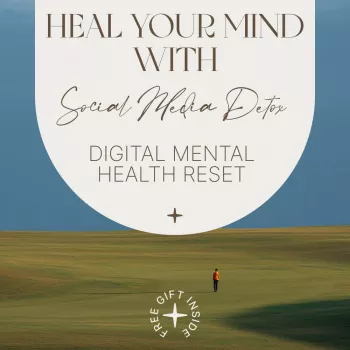
Heal Your Mind with a Social Media Detox: A Digital Mental Health Reset You Can Actually Finish
When scrolling stops feeling like a break and starts feeling like noise, you don’t need a “perfect” unplug—you need a reset you can finish. Our team created the Heal Your Mind with Social Media Detox Guide – Digital Mental Health Reset workbook as a workbook-style self-care guide to help you reduce doomscrolling, calm comparison spirals, and rebuild attention with simple daily steps. It’s designed for real life: work, school, group chats, and responsibilities included.
If you want clearer thinking, steadier mood, and a healthier relationship with apps—without disappearing—this is your starting line.
What “social media detox” really looks like (and what it doesn’t)
A detox isn’t a punishment. It’s a boundary reset that puts you back in charge of when you check, why you check, and how you feel afterward. The goal isn’t to “win” by deleting every app—it’s to reduce compulsive checking and the emotional hangover that can follow long scroll sessions.
Most sustainable resets focus on two practical levers:
- Triggers: boredom, stress, loneliness, procrastination, or that “just in case” feeling.
- Replacement habits: movement, connection, rest, or a quick task that gives your mind closure.
Expect some discomfort early on. That’s normal habit friction, not failure. Our workbook uses prompts and tracking so discomfort becomes information (patterns you can change), instead of a relapse loop.
Does deleting social media improve mental health?
Many people feel immediate relief when they reduce social media—less comparison, fewer interruptions, and less exposure to distressing content. Whether it improves your mental health depends on how you were using it in the first place and what it was replacing in your day.
If social media is your main social outlet, deleting everything overnight can increase isolation. A healthier route is often a targeted reset: time limits, curated feeds, scheduled check-in windows, and turning down the “always-on” settings that keep your nervous system on alert.
Meaningful improvement shows up in daily-life signals: steadier mood, better sleep, improved focus, kinder self-talk, and fewer automatic phone checks. For research and guidance on how social media can affect well-being, the American Psychological Association (APA) overview is a helpful starting point, and the NIH News in Health updates summarize ongoing findings in plain language.
Who this digital mental health reset is for
A 7-day reset plan to get traction fast
| Day | Focus | Detox action | Workbook prompt | Offline swap |
|---|---|---|---|---|
| 1 | Awareness | Turn off non-essential notifications | When do urges hit most? | 5-minute stretch |
| 2 | Boundaries | No social apps during meals | What does scrolling replace? | Mindful snack/tea |
| 3 | Environment | Move apps off home screen | Which app costs the most time? | Quick room reset |
| 4 | Time blocks | Choose 2 scheduled check-in windows | How does your body feel after scrolling? | 10-minute walk |
| 5 | Content clean-up | Unfollow/mute 10 draining accounts | What content makes you tense? | Read 10 pages |
| 6 | Connection | Replace one scroll session with a message/call | What connection do you want more of? | Meet-up or call |
| 7 | Reset rules | Write your “after detox” rules | What boundaries protect your peace? | Plan a screen-free block |
What’s inside the workbook-style self-care guide
Our Digital Mental Health Reset workbook is built to make urges understandable instead of shameful. You’ll use step-by-step prompts to spot what’s driving your checking, daily reflections to reduce mental noise, and tracking pages that reveal patterns like time sinks, emotional triggers, and relapse moments.
Make the reset stick: after-detox rules that feel realistic
Offline swaps that support a calmer nervous system
Movement breaks reduce restless scrolling; a quick walk often does more than another refresh. If you want a simple nudge to step away from the couch-and-scroll cycle, comfortable walk-ready shoes make the “just go” choice easier—like our Armani Exchange Men’s Sneakers.
A consistent morning or night routine also helps replace the “scroll to switch off” habit. Something as small as upgrading a basic habit can anchor your attention; our team likes pairing a screen-free wind-down with a quick self-care cue like the Triple-Sided Ultra-Fine Soft Bristle Toothbrush—a tiny routine shift that signals “we’re done for the day.” For sleep fundamentals that support mood and focus, the CDC sleep hygiene guidance is a solid reference.
If you’re trying to stop picking up your phone repeatedly while you’re out, hands-free navigation helps reduce temptation. The Universal Car Steering Wheel Phone Mount for Safe Navigation supports purpose-based phone use—directions only—without turning every stoplight into a scroll trigger.
How to start today in under 10 minutes
FAQ
Should social media be deleted completely during a detox?
You can do a full delete, a temporary uninstall, or keep apps but add time limits and scheduled check-in windows; the best choice depends on your triggers, work needs, and how much social connection you get there. Many people do better by adding friction (logging out, removing shortcuts) before going all-or-nothing.
How long does it take to feel better after reducing social media?
Some relief can show up in a few days, but steadier improvements often take one to two weeks as your attention and routines rebalance. Early discomfort is common, so track sleep, mood, and focus to see progress even when urges spike.
What if social media is needed for work or school?
A detox can be about intentional use rather than total absence: try browser-only access, strict check-in times, and purpose-based sessions where you log off as soon as the task is done. Separating work and personal accounts and silencing non-essential notifications can also reduce spillover.
Recommended for you


Was this article helpful?
Yes
No









Leave a comment