-
Shop
- Advanced Technologies
- AI Skills for Creators & Freelancers
- AI Client Management
- AI Ethics
- AI Mindset
- AI Tools & Prompts
- AI Writing & Content Creation
- Audio, Voice & Music
- Design & Visual Creation
- Email, Messaging & Communication
- Freelancing & Business
- Marketing, Ads & Conversion
- Productivity, Workflow & Automation
- SEO & Search Optimization
- Social Media Content & Growth
- Strategy, Planning & Analytics
- Video Creation & Editing
- AI Skills Mastery 2026 Collection
- Bathroom
- Best-Sellers
- Car Accessories
- Confidence
- Dating & Social Skills
- Digital Resources
- Easter Products
- Education & Learning
- Family & Parenting
- Fashion
- Fashion Accessories
- Furniture
- Gadgets
- Health & Beauty
- Health & Wellness
- Home & Garden
- Home Electronics
- Home Supplies
- Jewelry
- Kids & Babies
- Kitchen
- Lighting
- Patio, Lawn & Garden
- Personal Growth
- Pet Care
- Pet Supplies
- Pets
- Shoes
- Smart Home Living Guides
- Sport & Outdoors
- Stress Relief & Relaxation
- Super Deals
- TikTok Growth & Monetization Mastery
- Travel
- Travel & Adventure
- Wealth
- Wellness
USB Rechargeable Automatic Laser Toy for Indoor Cats
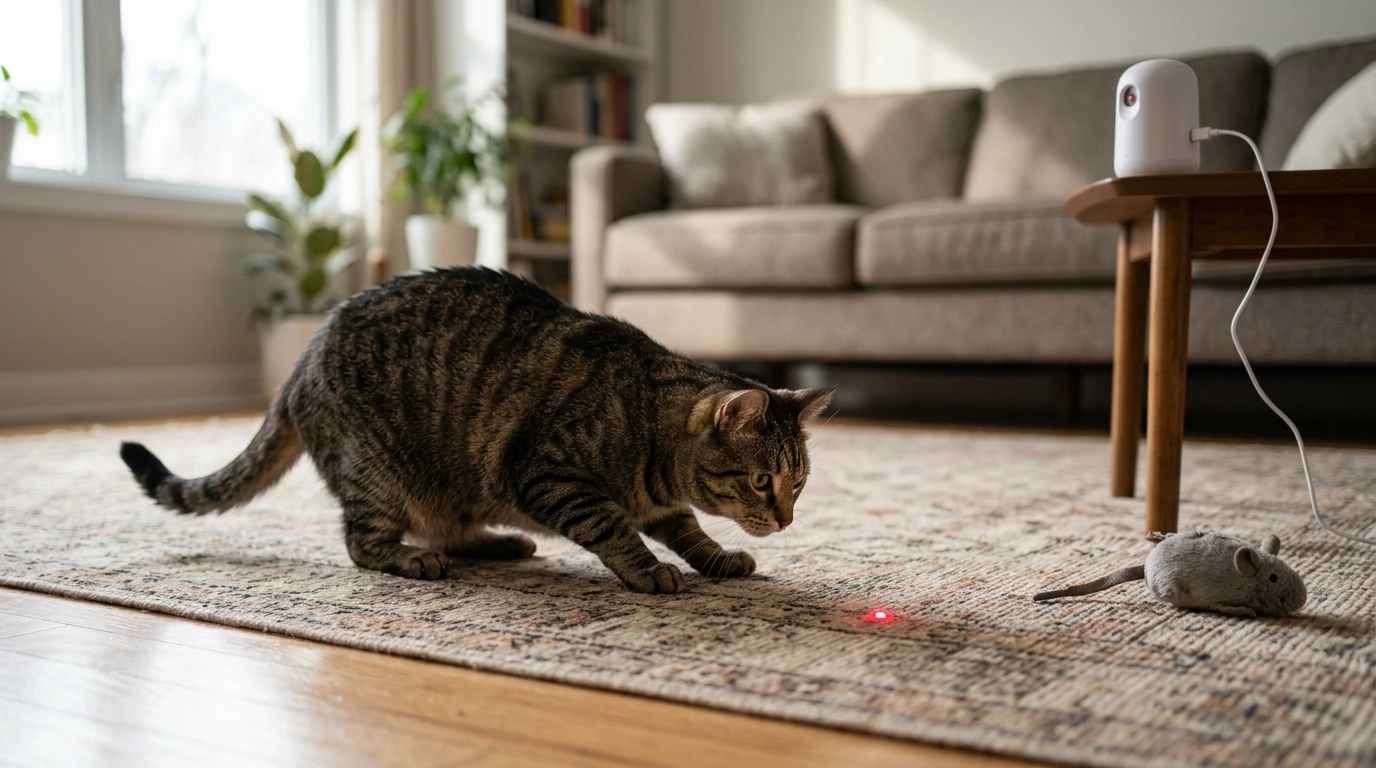
USB Rechargeable Interactive Automatic LED Laser Toy for Cats
Keeping cats active indoors is easier when playtime can happen even during busy moments. Our USB rechargeable interactive automatic LED laser toy for cats is designed to add quick, engaging movement sessions throughout the day—without needing constant hand control—so your cat can stalk, chase, and pounce in a safer, more structured way.
What this automatic laser toy adds to everyday cat play
Cats are wired for short hunting bursts: scan, stalk, sprint, then rest. An automatic laser pattern works with that natural rhythm by creating fast, unpredictable movement that taps into chase instincts—especially useful for indoor cats that need stimulation beyond window-watching.
- Creates quick, hard-to-predict movement that encourages stalking and pouncing.
- Adds short activity breaks between naps, supporting a more balanced daily routine.
- Keeps enrichment available during solo-play moments (meetings, cooking, multitasking).
- Helps with cats that lose interest unless motion stays dynamic and varied.
Key features to look for (and why they matter)
Not all laser toys feel the same to a cat. The details that matter are the ones that keep play consistent, visible, and easy to repeat daily—without turning into a “set it and forget it” frustration loop.
- USB rechargeable convenience: fewer battery swaps, quick top-ups, and easier “grab-and-go” storage.
- Automatic motion modes: pattern variety helps prevent boredom after the first few sessions.
- Clear LED laser dot: easier tracking in typical indoor lighting, so your cat can lock in and chase.
- Hands-free pacing: supports natural sprint-and-rest cycles without you constantly steering the dot.
- Compact setup: simple to move room to room to refresh the play environment.
At-a-glance benefits
| Feature | Why it helps | Best for |
|---|---|---|
| USB rechargeable power | Less maintenance than disposable batteries; quick top-ups keep play consistent | Daily play households |
| Automatic laser movement | Keeps the chase interesting without constant manual control | Busy schedules; solo-play moments |
| Interactive LED laser dot | Encourages stalking, chasing, and pouncing behaviors | Indoor cats needing stimulation |
| Short-session friendly | Supports quick energy outlets without overextending playtime | Cats that get zoomies |
| Easy to relocate | New angles and rooms make the game feel “new” again | Cats that get bored quickly |
How to introduce laser play so it stays satisfying
Laser play is most successful when it feels like a “complete” hunt, not an endless chase. Our team recommends building a tiny routine around it so your cat gets both the thrill of pursuit and the satisfaction of a catch.
- Start short: 5–10 minutes is often plenty for a focused, high-quality session.
- Use a predictable rhythm: a quick session before meals can match a “hunt-then-eat” pattern.
- End with a physical catch: toss a plush mouse, offer a kicker, or do a small treat scatter right after the laser stops.
- Rotate locations: hallway one day, living room rug the next—new terrain keeps interest high.
- Watch arousal levels: if vocalizing becomes frantic or your cat can’t disengage, shorten sessions and switch to a tangible toy finish.
For more guidance on using laser pointers appropriately with pets, you can review the safety notes from the American Veterinary Medical Association (AVMA).
Safety and comfort guidelines for laser toys
Automatic toys can make play more convenient, but safety is still about the environment you set up and the habits you reinforce.
- Avoid aiming near eyes: keep the dot on floors and low walls, never at face level.
- Create clear boundaries: avoid stairs, slippery surfaces, and areas with breakables where sharp turns could cause slips.
- Let your cat “win”: always offer a toy or treat at the end so the hunt has a payoff.
- Use as part of a mix: combine laser sessions with wand toys, scratching, climbing, and puzzle feeding for balanced enrichment.
- Supervise when possible: even with automatic play, it’s best to keep the zone hazard-free and check in on your cat’s body language.
For broader enrichment ideas that support healthy feline behavior, the Cornell Feline Health Center is a helpful reference.
Simple play plans for different cat personalities
- High-energy cats: do two short sessions daily (morning and evening), then finish with a kicker toy so the “catch” is real.
- Shy or cautious cats: start in a smaller room, keep the dot closer and slower, and end with a treat near a safe spot.
- Older cats: keep movement gentle and within a smaller area; use more pauses and an easy-to-grab plush as the finale.
- Multi-cat homes: use a larger open space, then provide separate “finish” treats/toys to reduce competition.
- Night zoomers: schedule a session 30–60 minutes before bedtime, then offer a snack to support a calmer wind-down.
When this toy is a great fit (and when to choose something else)
In-stock picks from our store
- USB Rechargeable Interactive Automatic LED Laser Toy for Cats
- Triple-Sided Ultra-Fine Soft Bristle Toothbrush for Enhanced Oral Health
- Universal Car Steering Wheel Phone Mount for Safe Navigation
FAQ
How long should a laser play session be for a cat?
Most cats do best with short sessions—often 5–10 minutes—so the chase stays fun without tipping into exhaustion or frustration. End by tossing a physical toy or offering a small treat scatter to complete the “hunt.”
Can cats get frustrated with laser toys?
Yes, some cats can get frustrated because they can’t physically catch the dot. Keeping sessions structured and finishing with a tangible toy or a few treats helps the game feel complete.
Is it safe to use an automatic LED laser toy around cats?
It can be safe when you keep the laser away from eyes, aim at floors and low surfaces, and clear the play area of slip and trip hazards. If your cat shows signs of overstimulation, stop the session and switch to a toy they can grab.
Recommended for you

Was this article helpful?
Yes
No









Leave a comment