-
Shop
- Advanced Technologies
- AI Skills for Creators & Freelancers
- AI Client Management
- AI Ethics
- AI Mindset
- AI Tools & Prompts
- AI Writing & Content Creation
- Audio, Voice & Music
- Design & Visual Creation
- Email, Messaging & Communication
- Freelancing & Business
- Marketing, Ads & Conversion
- Productivity, Workflow & Automation
- SEO & Search Optimization
- Social Media Content & Growth
- Strategy, Planning & Analytics
- Video Creation & Editing
- AI Skills Mastery 2026 Collection
- Bathroom
- Best-Sellers
- Car Accessories
- Confidence
- Dating & Social Skills
- Digital Resources
- Easter Products
- Education & Learning
- Family & Parenting
- Fashion
- Fashion Accessories
- Furniture
- Gadgets
- Health & Beauty
- Health & Wellness
- Home & Garden
- Home Electronics
- Home Supplies
- Jewelry
- Kids & Babies
- Kitchen
- Lighting
- Patio, Lawn & Garden
- Personal Growth
- Pet Care
- Pet Supplies
- Pets
- Shoes
- Smart Home Living Guides
- Sport & Outdoors
- Stress Relief & Relaxation
- Super Deals
- TikTok Growth & Monetization Mastery
- Travel
- Travel & Adventure
- Wealth
- Wellness
Cart Control Checklist: Break Impulse Buying Fast
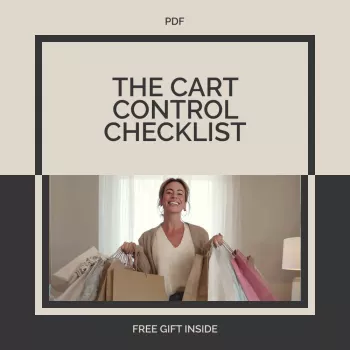
The Cart Control Checklist: A Clear, Repeatable Way to Spot and Stop Compulsive Shopping
Compulsive shopping rarely feels “compulsive” in the moment—it often shows up as a quick mood lift, a harmless browse, a well-timed sale, or a reward after a long day. Our Cart Control Checklist is built for that exact reality: a practical, non-judgmental guide that helps you notice triggers early, slow down the impulse loop, and replace reactive spending with intentional choices. Keep it close for the moments when “just looking” turns into a cart that’s suddenly ready to check out.
What “cart control” actually means (and why it works)
Cart control is the skill of creating a pause between urge and purchase—long enough to make a decision that matches your real priorities. Instead of debating with yourself (“But it’s on sale… but I shouldn’t…”), a checklist gives you a short sequence to follow, which reduces mental load and cuts through the trance-like momentum that can happen during browsing.
Most importantly, cart control focuses on patterns (triggers, emotions, routines) rather than raw willpower. That’s why progress often becomes more consistent over time. It also works for online and in-store shopping—including “add to cart and abandon” habits that still feed the craving loop.
Early signs of shopping turning into a coping mechanism
Shopping becomes risky when it starts functioning like emotional regulation. A few signals to watch for:
- Shopping to change a feeling: stress, boredom, loneliness, frustration, or “needing a win.”
- A sense of urgency that doesn’t match the purchase (countdown timers, limited drops, fear of missing out).
- Repeated “small” purchases that add up—especially if they’re hidden or followed by regret.
- Rationalizing a buy with unrelated reasons (a hard day, a “future you,” an imaginary event).
- Avoiding totals, skipping receipts, or postponing bank notifications because they spike anxiety.
If you recognize yourself here, you’re not alone. Stress and mood shifts can amplify impulses and reduce patience for discomfort—making “quick relief” behaviors more tempting (see American Psychological Association and NIMH resources on stress coping).
How to use The Cart Control Checklist in real time
The best moment to start is the first “spark”—the urge to browse. Waiting until checkout makes it harder, because the brain is already invested. When you feel that spark:
A simple decision framework for any purchase
Cart Control Quick Check (Print or save as a note)
| Checkpoint | Ask yourself | If the answer is “no” |
|---|---|---|
| Need vs. numb | Am I trying to change a feeling more than solve a real need? | Pause 10 minutes; do a quick reset (walk, water, breathe). |
| Budget reality | Does this fit the plan for this week without borrowing from essentials? | Move it to a wish list with a date to reconsider. |
| One-in, one-out | Do I have space (physical and mental) for this item? | Choose a donation/sell item first—or skip. |
| Future proof | Would I still buy this if it arrives next month, not tomorrow? | Delay purchase; revisit after 24–72 hours. |
| Regret check | Have I bought something similar and felt regret? | Identify the pattern; replace the habit with a non-shopping reward. |
Replace the reward: alternatives that actually calm the urge
If you want a health-forward “buy intentionally” example, a true replacement purchase solves a present need with minimal extras—like swapping a worn toothbrush for something practical such as our Triple-Sided Ultra-Fine Soft Bristle Toothbrush, instead of spiral-browsing for 12 “nice to have” items.
When to ask for extra support
If shopping is causing financial harm, relationship conflict, hiding behavior, or intense guilt, support can speed up recovery. Therapeutic approaches often used for compulsive behaviors (such as CBT) and financial counseling can add structure and relief. If urges feel unmanageable or tied to anxiety/depression, reaching out to a licensed professional can be a strong next step (see Cleveland Clinic for an overview of compulsive shopping and treatment options).
What’s inside The Cart Control Checklist
Our team designed The Cart Control Checklist: Spot and Stop Shopping Addiction – Your Guide to Understanding and Managing Compulsive Shopping to be simple enough to use mid-urge, but structured enough to reveal patterns over time. Inside, you’ll find:
And because real life includes both small necessities and bigger wants, it helps to define “decision levels.” A low-cost, functional item that solves a current problem (like our Universal Car Steering Wheel Phone Mount if navigation safety is the issue) deserves a different process than a higher-ticket want (like Armani Exchange Men’s Sneakers), which benefits from a longer wait and a clearer budget rule.
Make it a routine: a 7-day reset using the checklist
FAQ
Is this checklist only for serious shopping addiction?
No—our checklist is useful across a range, from occasional impulse buys to more compulsive patterns, because it targets triggers and builds a decision pause. If shopping is causing real harm or feels unmanageable, it can also complement professional support.
Can it help with online shopping and late-night scrolling?
Yes—use it at the earliest browsing stage, not at checkout. Pair it with friction steps like logging out, removing saved cards, deleting shopping apps during high-stress weeks, and a short reset routine to break the scroll-to-cart momentum.
What if the urge feels physical or overwhelming?
Start with the fastest steps first: delay, breathe, and change your environment to shift your body state. If urges are intense, persistent, or tied to distress, reaching out for added support can make the next steps feel doable.
Recommended for you


Was this article helpful?
Yes
No









Leave a comment