-
Shop
- Advanced Technologies
- AI Skills for Creators & Freelancers
- AI Client Management
- AI Ethics
- AI Mindset
- AI Tools & Prompts
- AI Writing & Content Creation
- Audio, Voice & Music
- Design & Visual Creation
- Email, Messaging & Communication
- Freelancing & Business
- Marketing, Ads & Conversion
- Productivity, Workflow & Automation
- SEO & Search Optimization
- Social Media Content & Growth
- Strategy, Planning & Analytics
- Video Creation & Editing
- AI Skills Mastery 2026 Collection
- Bathroom
- Best-Sellers
- Car Accessories
- Confidence
- Dating & Social Skills
- Digital Resources
- Easter Products
- Education & Learning
- Family & Parenting
- Fashion
- Fashion Accessories
- Furniture
- Gadgets
- Health & Beauty
- Health & Wellness
- Home & Garden
- Home Electronics
- Home Supplies
- Jewelry
- Kids & Babies
- Kitchen
- Lighting
- Patio, Lawn & Garden
- Personal Growth
- Pet Care
- Pet Supplies
- Pets
- Shoes
- Smart Home Living Guides
- Sport & Outdoors
- Stress Relief & Relaxation
- Super Deals
- TikTok Growth & Monetization Mastery
- Travel
- Travel & Adventure
- Wealth
- Wellness
10-Minute Kitchen Reset: Simple Counter-Clearing Habits
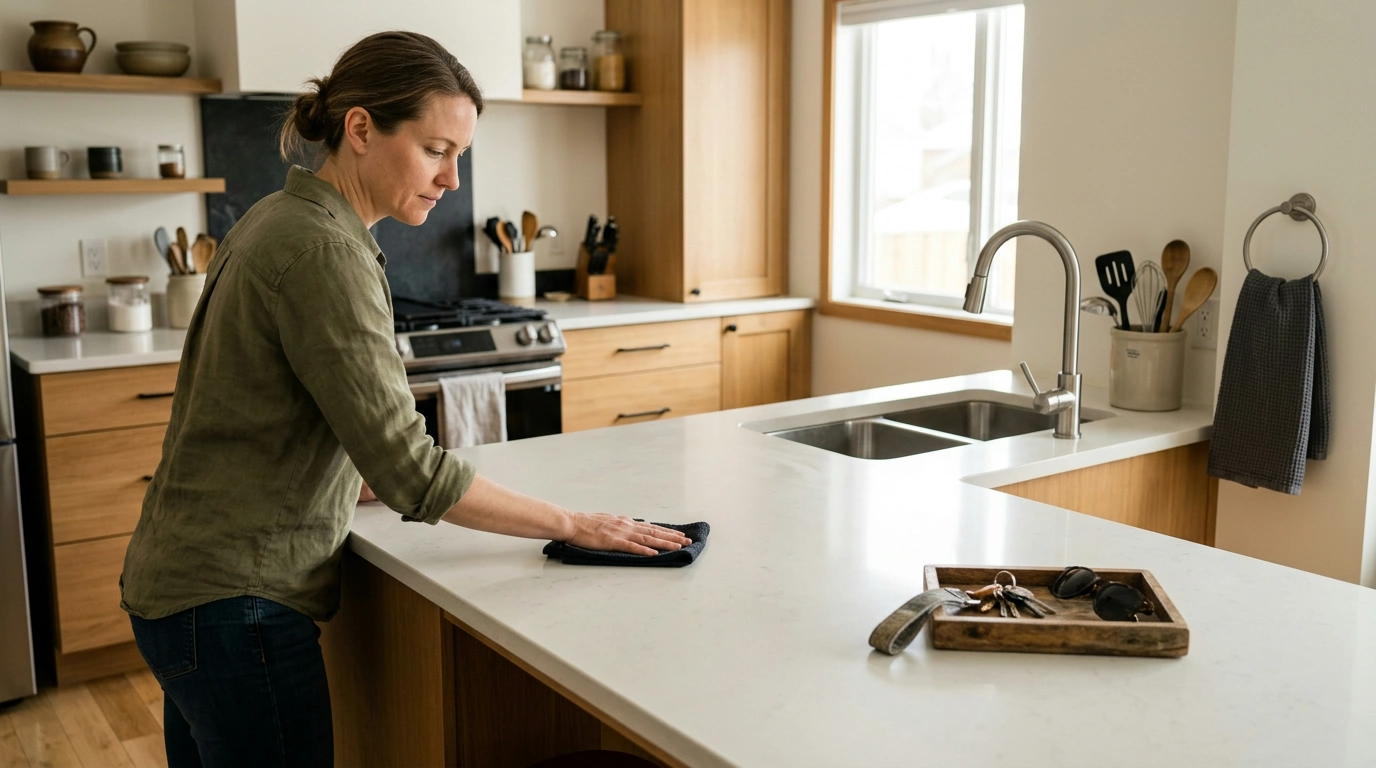
Simple Habits for a Tidy Kitchen: A Practical Checklist for Busy Homeowners
A tidy kitchen is less about marathon cleanups and more about small routines that prevent clutter from piling up. When a few repeatable habits are built into everyday cooking and snacking, counters stay clearer, dishes don’t snowball into a crisis, and “reset time” stays short. Use the ideas below to build a simple system that works even on busy weekdays—and consider saving a quick checklist so the routine becomes automatic.
Why counters get messy so fast
Kitchen counters are some of the hardest-working surfaces in the home, which is exactly why they collect everything. Understanding the patterns makes it easier to fix them without overhauling your whole kitchen.
- Flat surfaces become default storage when items don’t have a defined home—mail, small appliances, kids’ bottles, cooking tools, and random “I’ll deal with it later” stuff.
- Visual clutter grows overnight. A “temporary” pile left after dinner often turns into two piles by lunchtime the next day.
- Decision fatigue wins. At the end of the day, it feels easier to set something down than to choose where it belongs.
- A few high-friction zones create most of the mess: the sink area, the stove front, and the entry-to-kitchen drop spot.
Simple hacks that keep counters clear (without a full remodel)
Most counter clutter isn’t a cleaning problem—it’s a “too many steps” problem. These small changes reduce friction so putting things away feels easier than leaving them out.
1) Follow a one-touch rule
If something can be put away in one step (drawer, cabinet, bin), do it before starting the next task. The goal isn’t perfection; it’s preventing a second round of handling later.
2) Create a “landing pad” tray
Choose one small tray or basket for daily essentials (keys, mail to open, sunglasses). When these items have a single contained spot, they stop migrating across the prep area.
3) Store by frequency, not category
Keep daily tools within arm’s reach and move rarely used gadgets up high or into a closed cabinet. When the most-used items are easiest to grab (and easiest to put back), counters naturally stay clearer.
4) Limit countertop appliances
Keep only the top 1–2 appliances you use weekly. Everything else can rotate into a cabinet or pantry shelf. This instantly increases usable workspace and cuts down on wipe-down time.
5) Add micro-trash and micro-recycle near prep space
A small bin (or even a hanging bag) near the main prep zone keeps peels, wrappers, and packaging from drifting across the counter and “waiting” to be thrown away.
6) Use a clean-as-you-go sequence
While water boils or food simmers, clear packaging, rinse a few tools, and wipe one zone. This is also a smart food-safety habit; for more guidance on kitchen hygiene, see the CDC’s food safety resources and the USDA’s cleanup and sanitizing basics.
Counter-clearing habits by time available
| Time | Habit | Where it helps most |
|---|---|---|
| 30 seconds | Put 5 items back to their home (or into the landing pad tray) | General clutter |
| 2 minutes | Empty sink of cups/plates and start a quick soak | Sink pileups |
| 3 minutes | Wipe one zone (prep area or stove front) | Sticky/crumb buildup |
| 5 minutes | Reset counters: clear, wipe, put away appliances not used today | End-of-day reset |
| 10 minutes | Unload or load dishwasher + clear drying rack | Dish backlog |
The 10-minute daily kitchen reset (morning or night)
A daily reset works best when it’s short and predictable. You can do it after dinner, before bed, or while coffee brews—what matters is repeating the same order so your brain stops negotiating.
If you need a reminder in plain sight, a simple reference can help: Simple Habits for a Tidy Kitchen Checklist (digital download).
Weekly routines that make daily tidying easier
- Quick fridge sweep (maintenance day): toss expired items, consolidate leftovers, and wipe one shelf if needed.
- Pantry 5-minute straighten: return items to categories and pull forward what you use most.
- Reset the paper trail: open mail, recycle junk, and file or act on anything important once per week.
- One-in/one-out cabinet check: especially for water bottles, food containers, and mugs that multiply quickly.
- Wipe high-touch zones: fridge handle, microwave keypad, and cabinet pulls (these spots get grimy faster than most people notice). For more on common kitchen germ hot spots, see NSF consumer guidance.
Set up the kitchen so tidiness is the default
Printable-style checklist routine (digital download)
For an easy reference you can reuse, consider the Simple Habits for a Tidy Kitchen Checklist (digital download). If you’re building new routines, pairing it with small daily-life helpers can keep momentum—like a quick personal-care restock such as the Triple-Sided Ultra-Fine Soft Bristle Toothbrush for Enhanced Oral Health for the bathroom sink reset, or a practical organizer for on-the-go routines like the Universal Car Steering Wheel Phone Mount for Safe Navigation to keep your shopping list and timers visible when you’re out running errands.
FAQ
What are the simplest habits that keep kitchen counters clear every day?
Stick to a short daily reset: return items to their home, use a small landing pad tray, limit countertop appliances, and clear/wipe counters after dinner or before bed.
How long should a daily kitchen reset take?
Aim for 5–10 minutes. Prioritize sink/dishes first, then clear counters, then wipe one main zone—stop when the kitchen is functional, not perfect.
What if the kitchen gets messy because items don’t have a place?
Create dedicated homes for common clutter (mail, lunch gear, bottles, cords) using one tray and a few bins. Store by frequency so the items you touch daily are the easiest to put away.
Recommended for you



Was this article helpful?
Yes
No









Leave a comment