-
Shop
- Advanced Technologies
- AI Skills for Creators & Freelancers
- AI Client Management
- AI Ethics
- AI Mindset
- AI Tools & Prompts
- AI Writing & Content Creation
- Audio, Voice & Music
- Design & Visual Creation
- Email, Messaging & Communication
- Freelancing & Business
- Marketing, Ads & Conversion
- Productivity, Workflow & Automation
- SEO & Search Optimization
- Social Media Content & Growth
- Strategy, Planning & Analytics
- Video Creation & Editing
- AI Skills Mastery 2026 Collection
- Bathroom
- Best-Sellers
- Car Accessories
- Confidence
- Dating & Social Skills
- Digital Resources
- Easter Products
- Education & Learning
- Family & Parenting
- Fashion
- Fashion Accessories
- Furniture
- Gadgets
- Health & Beauty
- Health & Wellness
- Home & Garden
- Home Electronics
- Home Supplies
- Jewelry
- Kids & Babies
- Kitchen
- Lighting
- Patio, Lawn & Garden
- Personal Growth
- Pet Care
- Pet Supplies
- Pets
- Shoes
- Smart Home Living Guides
- Sport & Outdoors
- Stress Relief & Relaxation
- Super Deals
- TikTok Growth & Monetization Mastery
- Travel
- Travel & Adventure
- Wealth
- Wellness
160 PSI Tire Pump: Dual Valve Gauge for Bikes & Moto
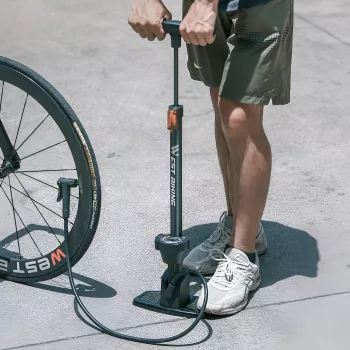
160 PSI High-Pressure Bike & Motorcycle Tire Pump with Dual Valve Gauge
Keeping tires at the right pressure improves grip, comfort, efficiency, and safety—whether it’s a road bike, commuter, or motorcycle. A high-pressure pump with a dual valve setup and an easy-to-read gauge makes routine top-ups fast, accurate, and less frustrating, especially when switching between Presta and Schrader valves.
If you want one dependable inflator for mixed garages and weekend plans, the 160 PSI High-Pressure Bike & Motorcycle Tire Pump with Dual Valve Gauge is built around two priorities that matter most: a secure valve connection and clear, repeatable pressure readings.
What This Pump Is Designed to Do
- Supports high-pressure inflation up to 160 PSI for applications that need precise pressure control.
- Works for both bicycles and motorcycles, reducing the need for multiple inflators in a garage or travel kit.
- Dual valve compatibility helps handle common valve types (Presta and Schrader) without time-consuming adapters.
- Integrated gauge provides at-a-glance confirmation during inflation to help avoid over- or under-inflation.
- Best for routine maintenance, pre-ride pressure checks, and topping up slow leaks after repairs.
Dual Valve Gauge: Why It Matters
Valve compatibility and pressure visibility are the two friction points that make “quick” inflation turn into a hassle. A dual valve head paired with an integrated gauge helps smooth out both.
- Faster setup: switching between bike and motorcycle tires is simpler when the valve head is designed to accommodate both major valve standards.
- Fewer leaks at the connection: a secure fit at the valve reduces air loss while pumping—especially important at higher pressures.
- More consistent results: an integrated gauge makes it easier to hit a target pressure repeatedly (useful for commuting routines and track-day prep).
- Better troubleshooting: a gauge reading that doesn’t rise can indicate a poor seal, a loose valve core, or a puncture that still needs attention.
- Confidence for mixed fleets: one pump can handle a road bike (higher PSI) and a motorcycle tire (lower PSI but higher volume) with clear visibility of pressure.
For a refresher on valve types and the small but important differences in how they seal, Park Tool’s guide is a reliable reference: Presta and Schrader valve basics.
Typical Tire Pressure Ranges (Quick Reference)
Always verify the correct pressure on the tire sidewall (bicycles) or the owner’s manual / placard (motorcycles) before inflating. Rider weight, cargo, terrain, temperature, and tire construction can shift the best pressure up or down, so treat ranges as context—not a rulebook.
| Tire type | Common PSI range | Notes |
|---|---|---|
| Road bike (clincher/tube) | 80–120 | Higher pressures reduce rolling resistance; avoid exceeding tire sidewall max. |
| Gravel / hybrid | 35–70 | Lower pressures improve comfort and traction; adjust for load and surface. |
| Mountain bike | 18–35 | Tubeless setups may run lower; too low can cause rim strikes or burping. |
| Motorcycle (street) | 28–42 | Follow manufacturer guidance; pressure differs front vs rear and with passenger/cargo. |
If you’d like a practical way to think about bike pressure tradeoffs (rolling resistance vs. comfort vs. grip), Schwalbe’s pressure guidance is a helpful starting point: tire pressure guidelines.
How to Inflate Accurately (Without Guesswork)
The goal isn’t “as hard as possible”—it’s repeatable pressure that matches the tire, the load, and the riding conditions. Using a pump with a built-in gauge makes each step more measurable.
- Check the target: read the tire sidewall for bike tires or consult the motorcycle manual/placard for front/rear targets.
- Prepare the valve: remove the valve cap; for Presta, loosen the small top nut before attaching the pump head.
- Attach securely: press the head straight onto the valve and lock it (if the head includes a lock lever) to minimize leakage.
- Pump in steady strokes: watch the gauge rise and slow down as pressure approaches the target to avoid overshooting.
- Fine-tune: if pressure goes slightly high, release small amounts of air and re-check with the gauge.
- Recheck after removal: a tiny pressure drop can occur when disconnecting—confirm the final reading and top up if needed.
Bike vs Motorcycle Use: What Changes
For motorcycle-focused safety reminders (including maintenance habits that reduce risk), NHTSA is a strong authority: motorcycle safety and maintenance.
Care, Storage, and Long-Term Reliability
Common Issues and Quick Fixes
Shop In-Stock Essentials
- 160 PSI High-Pressure Bike & Motorcycle Tire Pump with Dual Valve Gauge
- Universal Car Steering Wheel Phone Mount for Safe Navigation
- Triple-Sided Ultra-Fine Soft Bristle Toothbrush for Enhanced Oral Health
FAQ
Does it work with both Presta and Schrader valves?
Yes—this style of dual valve head is designed to fit both common valve types. For Presta valves, loosen the small top nut before attaching the pump head so air can flow during inflation.
Is 160 PSI necessary for most tires?
Most tires won’t require anywhere near 160 PSI, but the higher capacity is useful for road-bike pressures and provides headroom for accurate topping off. Always follow the pressure limits printed on the tire sidewall or listed in the motorcycle manual/placard.
How often should tire pressure be checked?
Bikes often benefit from weekly checks or a quick check before rides, especially for road tires that lose pressure faster. Motorcycles should be checked routinely and before longer rides, since temperature swings and small leaks can change PSI over time.
Recommended for you

Was this article helpful?
Yes
No









Leave a comment