-
Shop
- Advanced Technologies
- AI Skills for Creators & Freelancers
- AI Client Management
- AI Ethics
- AI Mindset
- AI Tools & Prompts
- AI Writing & Content Creation
- Audio, Voice & Music
- Design & Visual Creation
- Email, Messaging & Communication
- Freelancing & Business
- Marketing, Ads & Conversion
- Productivity, Workflow & Automation
- SEO & Search Optimization
- Social Media Content & Growth
- Strategy, Planning & Analytics
- Video Creation & Editing
- AI Skills Mastery 2026 Collection
- Bathroom
- Best-Sellers
- Car Accessories
- Confidence
- Dating & Social Skills
- Digital Resources
- Easter Products
- Education & Learning
- Family & Parenting
- Fashion
- Fashion Accessories
- Furniture
- Gadgets
- Health & Beauty
- Health & Wellness
- Home & Garden
- Home Electronics
- Home Supplies
- Jewelry
- Kids & Babies
- Kitchen
- Lighting
- Patio, Lawn & Garden
- Personal Growth
- Pet Care
- Pet Supplies
- Pets
- Shoes
- Smart Home Living Guides
- Sport & Outdoors
- Stress Relief & Relaxation
- Super Deals
- TikTok Growth & Monetization Mastery
- Travel
- Travel & Adventure
- Wealth
- Wellness
Beat Car Motion Sickness: A No‑Nausea Road Routine
No‑Nausea Ride: The Ultimate Digital Guide to Beating Motion Sickness on the Road
Motion sickness can turn a simple commute or long road trip into a miserable experience—nausea, cold sweats, dizziness, and fatigue. The good news: road-related motion sickness is often predictable and manageable when you understand what sets it off and you intervene early. Below is a practical, road-tested routine for passengers and drivers who want calmer, steadier travel, plus a quick-reference table you can use the moment symptoms start.
Why motion sickness hits on the road
Most car sickness comes down to a sensory mismatch. Your inner ear (vestibular system) detects movement and changes in speed, while your eyes may be focused on something that looks still—like a phone screen—or on a limited view from the back seat. Your body’s position cues can add more confusion during stop-and-go traffic, winding roads, and frequent acceleration or braking.
Common triggers stack quickly: reading or scrolling, looking down, strong smells (food, air fresheners, fuel), heat, dehydration, heavy meals, anxiety, and poor ventilation. High-risk situations include riding in the back seat (especially over the rear axle), mountain switchbacks, and congested city driving where speed changes are constant.
Some travelers are more susceptible: children, pregnant travelers, people prone to migraines, and anyone recovering from illness or running on too little sleep. Watch for early symptoms—yawning, mild queasiness, headache, pallor, and increased saliva. Catching it early is usually much easier than reversing a full wave of nausea.
For deeper medical background, see the CDC Yellow Book: Motion Sickness or the Mayo Clinic overview.
Set up the car for a steadier ride
Choose the best seat and sightline
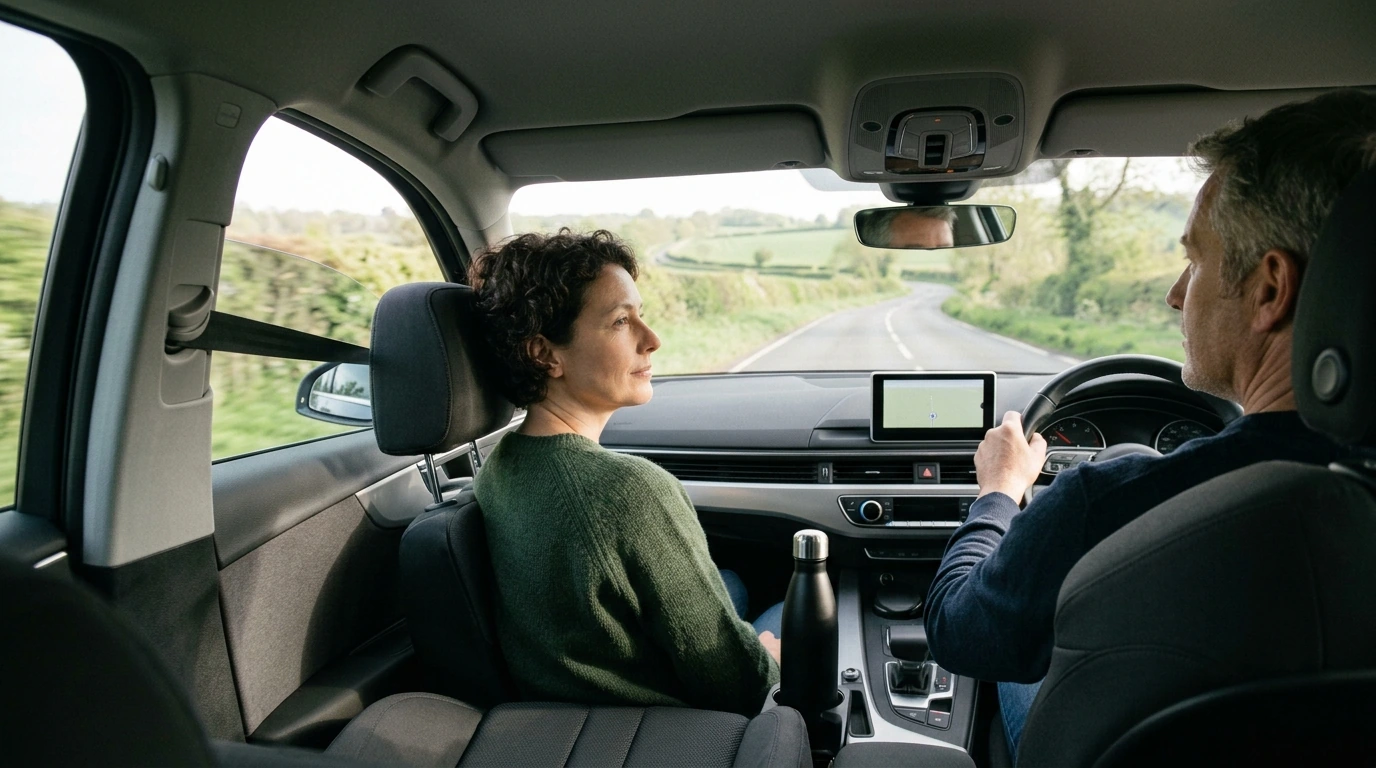
The front passenger seat often reduces symptoms because the view forward is clearer and the motion feels more “expected.” If you must ride in the back, the middle seat can be better than a side seat because it aligns closer to the car’s center of motion and can offer a more forward view.
Manage your view and head position
Keep your eyes on the horizon or far down the road. Avoid looking down at your lap, a book, or a screen—especially on winding roads. Try to keep your head stable and supported (resting lightly against a headrest) to reduce rapid head movements that can worsen dizziness.
Dial in air, temperature, and smells
Cool, fresh airflow helps many people quickly. Crack a window, aim a vent toward your face, and keep fragrances to a minimum. If possible, avoid eating strong-smelling foods in the car.
Drive smoother (or request smoother driving)
For drivers: smooth acceleration, gentle braking, wider turns, and avoiding aggressive lane changes can make a noticeable difference for passengers. In stop-and-go traffic, increase following distance to reduce abrupt speed changes.
Use practical accessories to reduce “head-down” moments
Repeatedly looking down to check directions can trigger symptoms. A stable, glanceable navigation setup helps keep your gaze up and your posture steady. If you want a simple, low-cost option, consider the Universal Car Steering Wheel Phone Mount for Safe Navigation to keep directions within a quick line of sight (always confirm it doesn’t block airbags or gauges, and prioritize safe driving).
A pre-trip routine that reduces nausea odds
Food timing and smart hydration
Sleep and clothing: the underrated factors
Medication and non-drug options
Pack a small “nausea kit”
What to do during a nausea wave (step-by-step)
1) Act at the first hint
2) Reset the air and temperature
3) Use a short breathing drill
4) Fix posture and minimize head movement
5) Take micro-breaks when possible
6) Snack strategically
Quick reference: triggers and fast counter-moves
| Trigger | What it feels like | Fast counter-move |
|---|---|---|
| Reading or scrolling | Queasiness, headache, eye strain | Stop screen use, look far ahead, stabilize head, use audio instead |
| Warm/stuffy cabin | Sweating, nausea rising quickly | Cool air to face, crack window, remove a layer |
| Winding roads | Dizziness, stomach flipping | Front seat if possible, horizon focus, slower turns, frequent short breaks |
| Strong smells | Sudden nausea | Fresh air, remove odor source, unscented wipes |
| Heavy meal | Fullness, reflux, nausea | Small sips of water, bland snack only, upright posture |
| Stop-and-go traffic | Gradual nausea build | Smooth driving, increased following distance, reduce rapid head movement |
Tools and resources for road-travel comfort
Consistency matters—especially when symptoms feel unpredictable. A portable, step-by-step routine can make it easier to act early rather than waiting until nausea is intense. If you want a structured plan you can follow trip after trip, the No‑Nausea Ride: The Ultimate Digital Guide to Beating Motion Sickness on the Road organizes the most helpful setup tips, pre-trip prep, and “what to do right now” actions into a simple reference.
If you want an additional clinical overview of symptoms and general prevention, the NHS motion sickness page is a helpful reference.
FAQ
Why does reading in the car make motion sickness worse?
Reading makes your eyes focus on something that appears still while your inner ear senses motion, creating a mismatch that can trigger nausea. Looking up at the horizon, switching to audiobooks, and taking short breaks usually helps.
What is the best seat in a car to reduce motion sickness?
The front passenger seat is often best because it provides a steady forward view and clearer motion cues. If you’re in the back, the center seat can help, especially when you can see forward and support your head.
Which remedies work fastest when nausea starts during a drive?
The fastest moves are acting early: stop screen use, look far ahead, get cool air on your face, and slow your breathing. If you can safely take a brief walking break, it often reduces symptoms quickly; medications generally work best when taken before travel and may cause drowsiness.
Recommended for you


Was this article helpful?
Yes
No









Leave a comment