-
Shop
- Advanced Technologies
- AI Skills for Creators & Freelancers
- AI Client Management
- AI Ethics
- AI Mindset
- AI Tools & Prompts
- AI Writing & Content Creation
- Audio, Voice & Music
- Design & Visual Creation
- Email, Messaging & Communication
- Freelancing & Business
- Marketing, Ads & Conversion
- Productivity, Workflow & Automation
- SEO & Search Optimization
- Social Media Content & Growth
- Strategy, Planning & Analytics
- Video Creation & Editing
- AI Skills Mastery 2026 Collection
- Bathroom
- Best-Sellers
- Car Accessories
- Confidence
- Dating & Social Skills
- Digital Resources
- Easter Products
- Education & Learning
- Family & Parenting
- Fashion
- Fashion Accessories
- Furniture
- Gadgets
- Health & Beauty
- Health & Wellness
- Home & Garden
- Home Electronics
- Home Supplies
- Jewelry
- Kids & Babies
- Kitchen
- Lighting
- Patio, Lawn & Garden
- Personal Growth
- Pet Care
- Pet Supplies
- Pets
- Shoes
- Smart Home Living Guides
- Sport & Outdoors
- Stress Relief & Relaxation
- Super Deals
- TikTok Growth & Monetization Mastery
- Travel
- Travel & Adventure
- Wealth
- Wellness
Cat-Safe Cleaning Checklist: Low-Fume, Fresh Home Tips
Purrfectly Safe Cleaning: A Cat-Friendly Checklist for a Fresh Home
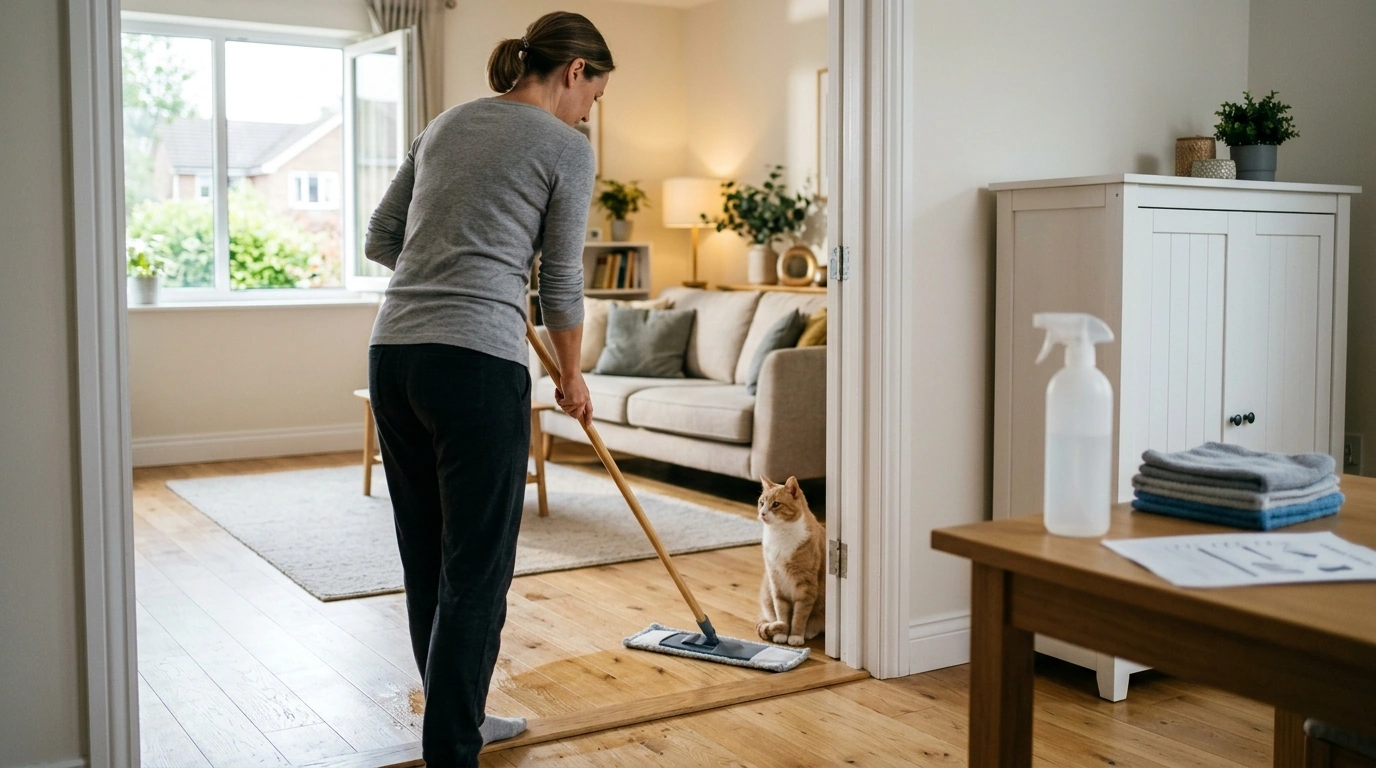
Cats explore with paws, noses, and tongues—so everyday cleaning choices can matter more than most households realize. A “clean” home shouldn’t come with lingering fumes, sticky residues, or tempting packaging that leads to accidental exposure. Below is a practical, cat-conscious approach: what to remove, what to swap, how to clean room-by-room, and how to reduce risk without giving up that freshly cleaned feeling.
Why cats are more sensitive to common cleaners
Cats often react differently than people to the same household products. Their routines and biology make low-level exposure more likely—and sometimes more serious.
- They groom constantly, so residues on floors, counters, and fabrics can end up being swallowed.
- Smaller body size means a relatively small amount of a chemical can have a bigger impact.
- Some ingredients are higher-risk, especially concentrated essential oils, phenols, and strong solvents that can irritate or harm when inhaled, absorbed, or ingested.
- Mixing products can create dangerous fumes (for pets and people), even if each product seems “normal” on its own.
Quick-start rules for safer cleaning days
- Ventilate: open windows or run exhaust fans during and after cleaning.
- Separate your cat from the area until surfaces are fully dry and odors have dissipated.
- Use the smallest effective amount of product; avoid heavy sprays that linger in the air.
- Never mix bleach with ammonia, acids (like vinegar), or other cleaners.
- Store concentrates, pods, and wipes in closed cabinets—many incidents happen from chewing packaging or licking spills.
Common household products to rethink (and safer swaps)
Focus on ingredients and use patterns: a “pet-friendly” label is not a guarantee if a product is overused, left wet, or applied on high-contact surfaces. When in doubt, choose fragrance-free options and rinse or wipe surfaces your cat touches.
Cat-conscious cleaning swaps
| Product type | Why it can be a problem | Lower-risk approach |
|---|---|---|
| Disinfectant sprays and wipes | Residue on paws/fur; strong fumes in small spaces | Use only when necessary; follow label dilution; wipe/rinse food-contact and pet-contact surfaces; keep cats away until fully dry |
| Bleach solutions | Irritating fumes; dangerous if mixed with other products | Use proper dilution; never mix; ventilate; rinse surfaces and allow to dry completely |
| Ammonia-based cleaners | Strong odor can irritate airways; can be dangerous if mixed with bleach | Choose mild, fragrance-free soap and water for routine messes; use targeted cleaners sparingly |
| Essential oil diffusers and strong fragrances | Some oils can be harmful if inhaled/licked; oils can settle on fur and be ingested during grooming | Skip diffusers; choose fragrance-free cleaning; if using scented products, ventilate well and keep cats out until odor fades |
| Floor cleaners and polishes | High-contact surface for paws and lounging; residue risk | Use mild detergent + water; mop with clean water rinse when needed; keep cats off floors until dry |
| Toilet bowl and drain cleaners | Caustic chemicals; splash/lick hazard | Close lids; store securely; use safer mechanical methods first (plunger, brush); keep cat out of bathroom during use |
Room-by-room checklist for a cat-friendly clean
Kitchen
- Wipe counters so there’s no lingering residue where cats might jump.
- Store dish pods and detergents securely—packaging can be irresistible to chew.
- Rinse sinks after using cleaners, especially if your cat likes to investigate drips.
- Avoid leaving wet disinfectant on surfaces; if you must disinfect, wipe/rinse after the dwell time on the label.
Bathroom
- Close the toilet lid and keep the door shut during strong cleaning tasks.
- Ventilate after sprays; lingering mist can irritate sensitive airways.
- Secure razors, chemicals, and small items that can be licked or batted into puddles.
- Don’t leave cleaner puddles in tubs or showers—rinse thoroughly.
Floors and baseboards
- Spot-clean spills quickly to avoid “bigger product” solutions later.
- Avoid heavy fragrance; cats experience smells intensely and may avoid areas that feel “chemically loud.”
- Rinse mop heads and buckets well so yesterday’s cleaner doesn’t become today’s residue.
- Let floors dry fully before letting cats roam (especially in homes with floor loungers).
Living areas
- Dust with a damp microfiber cloth to reduce airborne irritants.
- Wash throw blankets regularly—especially the ones that double as cat beds.
- Skip aerosol deodorizers; choose ventilation and fabric washing instead.
Laundry zone
Cat areas
Cleaning routines that reduce exposure (without lowering standards)
If a cat is exposed: what to watch for and what to do
Helpful references include the ASPCA Animal Poison Control, Pet Poison Helpline, and the FDA’s tips for using cleaning products safely.
Printable checklist to keep on hand
For a simple, organized one-page system, see Purrfectly Safe Cleaning: a printable cat-friendly checklist.
Helpful picks for a tidy, low-fume home
- Purrfectly Safe Cleaning: A Cat-Friendly Checklist | Digital Download for Cat Owners | Safe Cleaning Products for Cat Homes | Printable Pet-Safe Cleaning Guide (Digital Download)
- Triple-Sided Ultra-Fine Soft Bristle Toothbrush for Enhanced Oral Health (A practical add-on for keeping breath fresher without relying on scented room sprays.)
FAQ
What cleaning products are safest around cats?
Fragrance-free cleaners used sparingly, with good ventilation and careful rinsing/wiping of pet-contact surfaces, are typically lower-risk. “Safest” depends heavily on correct dilution, not mixing products, and keeping cats away until everything is fully dry.
Are essential oils and diffusers safe to use in a home with cats?
Some essential oils can be harmful to cats, and exposure can happen through inhalation or by oils settling on fur and being ingested during grooming. Avoiding diffusers and sticking to fragrance-free cleaning is the most cautious route.
How long should cats stay off freshly cleaned floors?
Keep cats away until the floor is completely dry and the odor has dissipated. If you’re concerned about residue, a clean-water rinse (when appropriate for the surface) plus ventilation can reduce what ends up on paws.
Recommended for you
Was this article helpful?
Yes
No









Leave a comment