-
Shop
- Advanced Technologies
- AI Skills for Creators & Freelancers
- AI Client Management
- AI Ethics
- AI Mindset
- AI Tools & Prompts
- AI Writing & Content Creation
- Audio, Voice & Music
- Design & Visual Creation
- Email, Messaging & Communication
- Freelancing & Business
- Marketing, Ads & Conversion
- Productivity, Workflow & Automation
- SEO & Search Optimization
- Social Media Content & Growth
- Strategy, Planning & Analytics
- Video Creation & Editing
- AI Skills Mastery 2026 Collection
- Bathroom
- Best-Sellers
- Car Accessories
- Confidence
- Dating & Social Skills
- Digital Resources
- Easter Products
- Education & Learning
- Family & Parenting
- Fashion
- Fashion Accessories
- Furniture
- Gadgets
- Health & Beauty
- Health & Wellness
- Home & Garden
- Home Electronics
- Home Supplies
- Jewelry
- Kids & Babies
- Kitchen
- Lighting
- Patio, Lawn & Garden
- Personal Growth
- Pet Care
- Pet Supplies
- Pets
- Shoes
- Smart Home Living Guides
- Sport & Outdoors
- Stress Relief & Relaxation
- Super Deals
- TikTok Growth & Monetization Mastery
- Travel
- Travel & Adventure
- Wealth
- Wellness
Baby Teething Signs: Printable Checklist & When to Call

Signs Your Baby Is Teething: A Calm, Practical Checklist for New Parents
Teething can look different from baby to baby, and many common behaviors overlap with normal development. A simple checklist helps track patterns, choose soothing options, and notice when symptoms don’t fit typical teething. Use the guide below to compare signs, keep notes, and know when to call a pediatrician. For pediatric, evidence-based guidance, see resources from American Academy of Pediatrics (HealthyChildren.org) and Mayo Clinic.
When teething usually starts (and what’s still normal)
Many babies start teething around 4–7 months, but it can be earlier or later without being a problem. The first teeth are often the lower front teeth, followed by the upper front teeth—though the order can vary. Teething-related discomfort often comes in waves for a few days, especially right before a tooth breaks through the gum. Some babies also cut teeth with very few noticeable signs, which can be reassuring if you’re not seeing “classic” symptoms.
Common signs that often point to teething
Teething tends to show up as a cluster of small changes rather than one dramatic symptom. Watch for patterns like these:
- Extra drooling that can cause a mild rash on the chin, cheeks, neck, or chest.
- Chewing or gnawing on hands, toys, bottle nipples, or fingers; biting pressure may feel stronger than usual.
- Gum swelling or tenderness, including a slightly raised or firmer spot where a tooth is emerging.
- Increased fussiness, especially later in the day, with brief calming after chewing or gum pressure.
- Pulling at ears or rubbing cheeks/jaw (sometimes teething-related, but it overlaps with ear issues).
- Sleep changes due to discomfort—typically short-lived and not accompanied by severe illness.
Behaviors that can be confusing (teething vs. something else)
It’s easy to blame every rough day on teething, but some symptoms deserve a closer look:
- Reduced appetite: Mild decreases are common; refusing multiple feeds or showing signs of dehydration is not.
- Low-grade temperature: Teething may coincide with slight temperature changes, but a true fever should be assessed.
- Loose stools: Swallowed drool may change texture slightly; watery diarrhea is not typical.
- Crying: Teething discomfort is usually intermittent; relentless crying can signal pain from another cause.
- Cough or heavy congestion: More consistent with infection or allergies than teething.
Quick guide: What fits teething and what needs a closer look
| What’s happening | Often fits teething | More likely something else |
|---|---|---|
| Drooling and chewing | Yes—common and sometimes intense | If paired with wheezing, trouble breathing, or choking episodes |
| Mild gum swelling | Yes—localized to one area | Widespread mouth sores or bleeding gums |
| Fussiness | Yes—waxing/waning, comforted by chewing | Inconsolable crying, extreme lethargy, or persistent pain |
| Temperature | Maybe—slight elevation can happen | Fever (per pediatric guidance) or fever lasting more than a day |
| Stool changes | Maybe—slightly looser | Watery diarrhea, blood in stool, signs of dehydration |
| Sleep disruption | Yes—temporary and improves | Ongoing sleep refusal with other illness signs |
How to use a printable checklist day to day
A checklist works best when it helps you notice trends—what’s happening repeatedly, what’s improving, and what’s escalating. A practical routine looks like this:
- Check off signs morning and evening so you’re tracking patterns rather than reacting to one tough hour.
- Note what helped (cool teether, gum massage, cuddling) and what didn’t, so soothing gets faster over time.
- Track feeding and wet diapers alongside symptoms to confirm baby is staying hydrated.
- Write down temperature readings and how they were taken (rectal, temporal, etc.).
- Bring notes to appointments if symptoms are persistent, confusing, or don’t match typical teething.
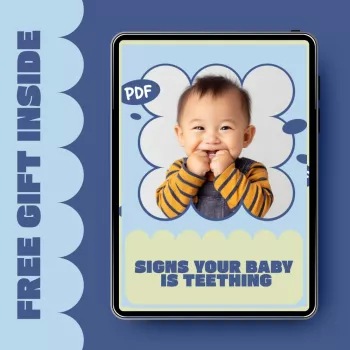
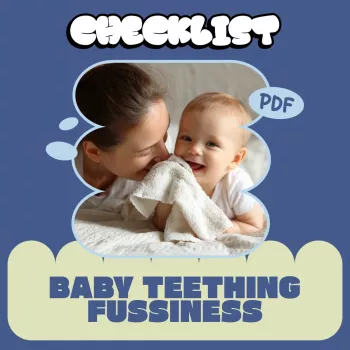
If you want a simple log you can keep on the fridge or tuck into a diaper bag, try the Printable teething signs checklist for quick daily check-ins and caregiver handoffs.
Comfort measures that are commonly recommended
Most teething comfort is about safe pressure, cool sensations, and skin protection:
- Offer a clean, cool teething ring; avoid freezing teethers solid if they become too hard for tender gums.
- Gently rub baby’s gums with a clean finger for brief pressure relief.
- Protect irritated skin with a soft bib, frequent gentle wiping, and a thin barrier ointment if drool rash appears.
- Stick to safe chewing options and avoid anything that can break, splinter, or pose a choking risk.
- Ask a pediatrician about pain relief options and dosing; avoid unapproved numbing gels or remedies not intended for infants.
Once teeth start appearing, brushing habits can begin with a soft, gentle tool. If you’re also stocking up for family oral care routines, the Triple-Sided Ultra-Fine Soft Bristle Toothbrush for Enhanced Oral Health can be a convenient option to keep on hand for supervised brushing (always follow pediatric dental guidance for age-appropriate brushing and toothpaste use).
When to call the pediatrician
Trust your instincts—especially if something feels “off” for your baby. Contact a pediatrician for:
Printable checklist and quick-reference guide
FAQ
Does teething cause fever?
Teething can coincide with slight temperature changes, but a true fever should be evaluated using your pediatrician’s guidance for your baby’s age. If a concerning temperature shows up or lasts more than a day, contact a clinician.
How long do teething symptoms last before a tooth appears?
Many babies show symptoms for a few days around when the tooth is close to erupting, and signs can come and go. Tracking morning/evening patterns on a checklist can help you see whether discomfort is following a teething-style cycle.
What teething remedies should be avoided?
Avoid unapproved numbing gels or medications not intended for infants, and skip chew items that can splinter, break apart, or create a choking hazard. If you’re unsure about a remedy’s ingredients or safety, check with a pediatrician first.
Recommended for you

Was this article helpful?
Yes
No









Leave a comment