-
Shop
- Advanced Technologies
- AI Skills for Creators & Freelancers
- AI Client Management
- AI Ethics
- AI Mindset
- AI Tools & Prompts
- AI Writing & Content Creation
- Audio, Voice & Music
- Design & Visual Creation
- Email, Messaging & Communication
- Freelancing & Business
- Marketing, Ads & Conversion
- Productivity, Workflow & Automation
- SEO & Search Optimization
- Social Media Content & Growth
- Strategy, Planning & Analytics
- Video Creation & Editing
- AI Skills Mastery 2026 Collection
- Bathroom
- Best-Sellers
- Car Accessories
- Confidence
- Dating & Social Skills
- Digital Resources
- Easter Products
- Education & Learning
- Family & Parenting
- Fashion
- Fashion Accessories
- Furniture
- Gadgets
- Health & Beauty
- Health & Wellness
- Home & Garden
- Home Electronics
- Home Supplies
- Jewelry
- Kids & Babies
- Kitchen
- Lighting
- Patio, Lawn & Garden
- Personal Growth
- Pet Care
- Pet Supplies
- Pets
- Shoes
- Smart Home Living Guides
- Sport & Outdoors
- Stress Relief & Relaxation
- Super Deals
- TikTok Growth & Monetization Mastery
- Travel
- Travel & Adventure
- Wealth
- Wellness
Tangle-Free Layered Necklaces: Perfect Stacking Guide
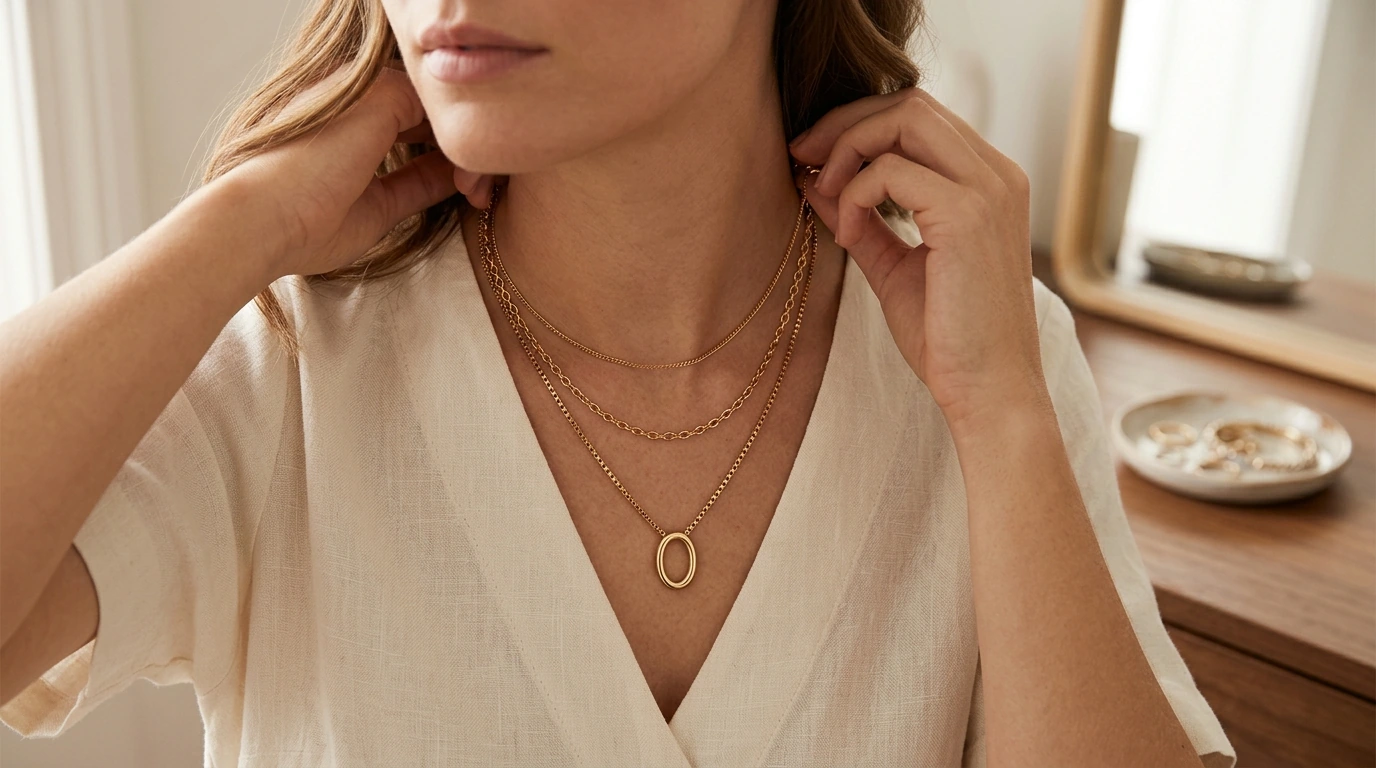
Layered Necklaces That Stay Tangle-Free All Day: A Step-by-Step Guide for Perfect Layering
Necklace layering looks effortless until chains start twisting, pendants flip, and lengths migrate throughout the day. A few smart choices—chain styles, spacing, clasps, and a simple “dress and lock” routine—can keep layered necklaces sitting neatly from morning to night, even with commuting, desk work, and movement.
Why necklaces tangle during the day
Most tangles aren’t random—they’re the result of normal movement plus friction and competing chain behavior.
- Chains rotate naturally with walking, turning the head, and shifting shoulders; when two chains rotate in opposite directions, they braid together.
- Similar lengths and weights drift into the same “lane,” increasing contact and friction.
- High-friction fabrics (wool, chunky knits) and hair can catch links and pull chains into overlapping loops.
- Lightweight chains are more likely to kink; very smooth chains can slide and swap positions unless spaced intentionally.
- Pendants that sit at the same height can hook each other, especially if one has sharp edges or an open bail.
If you’ve ever noticed tangles getting worse with sweaters or scarves, that’s friction at work (a quick refresher: Britannica’s overview of friction explains why surfaces “grab” and resist sliding).
Choose a stable layering set
The best all-day layering combinations are designed to reduce synchronized twisting and prevent layers from overlapping.
- Use varied chain types: pair a smooth chain (snake/box) with a link chain (cable/rolo) to reduce synchronized twisting.
- Mix weights: keep the shortest chain light-to-medium, and make the longest chain slightly heavier so it hangs straight.
- Plan distinct lengths: aim for at least 1.5–2 inches of separation between each layer to prevent overlap.
- Limit pendants: place one main pendant on the longest chain; keep upper layers either plain or with tiny stations to avoid hooking.
- Pick comfortable surfaces: avoid sharp-edged charms and overly textured chains for everyday, all-day wear.
Quick necklace layering blueprint (everyday wear)
| Layer | Typical length | Best chain/feature | Common mistake to avoid |
|---|---|---|---|
| Top layer | 14–16 in | Fine cable/box; minimal charm | Too tight so it rides up and drags other chains |
| Middle layer | 16–18 in | Different chain style than top; small station details | Matching the top length so both sit in the same spot |
| Bottom layer | 18–22 in | Slightly heavier chain; one main pendant | Multiple pendants that hook or flip into other layers |
Prep steps before putting necklaces on
Small prep details make a big difference because they reduce sliding, snagging, and accidental twisting from the start.
- Start with a smooth base: apply lotion or sunscreen first, then wait until skin is dry to reduce slip and residue on chains.
- Tame hair contact: keep hair behind shoulders or tied back while fastening; hair trapped in a clasp can force chains to twist.
- Check clasps and jump rings: a partially open jump ring or bent clasp makes the necklace “walk” and rotate over time.
- Remove existing twists: hold the chain at both ends and gently run fingers down its length to straighten before layering.
- Choose a neckline plan: V-necks and scoop necks naturally separate layers; high crew necks compress layers and can increase tangling.
Step-by-step layering that stays put
This routine is designed to reduce chain-to-chain contact and keep the “front” centered without constant fidgeting.
Tangle-proofing tricks for commuting, desk work, and active days
Care and storage to prevent future tangles
What happens after you take necklaces off often determines how they behave the next day. A little care keeps chains smoother and hardware more stable. For broader maintenance tips, see GIA’s jewelry care and cleaning guidance.
A ready-to-wear option for neat, effortless layering
Shop the featured set here:
Layered Necklaces That Stay Tangle-Free All Day: A Step-by-Step Guide for Perfect Layering.
Styling tip: if you’re pairing jewelry with an off-duty outfit (tee, denim jacket, clean kicks), these can complement a minimal layered look:
Armani Exchange Men’s Sneakers.
Before choosing, compare the product details with your daily routine, available space, care needs, and preferred setup. The strongest option is usually the one that fits the intended use clearly and remains simple to clean, store, and check before repeat use.
FAQ
How many necklaces can be layered without tangling?
Most people can wear 2–3 comfortably all day when lengths are spaced by about 1.5–2 inches and chain styles differ. Beyond that, tangling risk rises unless you use a layering clasp to make the necklaces move as one unit.
What necklace chains tangle the least for layering?
Box, wheat, and curb-style chains tend to resist kinks and hold their shape better during movement. Pairing a more structured chain with a different link style also helps prevent both chains from twisting in sync.
How can layered necklaces be stopped from flipping and turning around?
Use a slightly heavier bottom layer, keep pendants from sitting at the same height, and offset clasps so they don’t stack together. A connector or layering clasp can further stabilize the set by keeping closures aligned.
Recommended for you



Was this article helpful?
Yes
No









Leave a comment