-
Shop
- Advanced Technologies
- AI Skills for Creators & Freelancers
- AI Client Management
- AI Ethics
- AI Mindset
- AI Tools & Prompts
- AI Writing & Content Creation
- Audio, Voice & Music
- Design & Visual Creation
- Email, Messaging & Communication
- Freelancing & Business
- Marketing, Ads & Conversion
- Productivity, Workflow & Automation
- SEO & Search Optimization
- Social Media Content & Growth
- Strategy, Planning & Analytics
- Video Creation & Editing
- AI Skills Mastery 2026 Collection
- Bathroom
- Best-Sellers
- Car Accessories
- Confidence
- Dating & Social Skills
- Digital Resources
- Easter Products
- Education & Learning
- Family & Parenting
- Fashion
- Fashion Accessories
- Furniture
- Gadgets
- Health & Beauty
- Health & Wellness
- Home & Garden
- Home Electronics
- Home Supplies
- Jewelry
- Kids & Babies
- Kitchen
- Lighting
- Patio, Lawn & Garden
- Personal Growth
- Pet Care
- Pet Supplies
- Pets
- Shoes
- Smart Home Living Guides
- Sport & Outdoors
- Stress Relief & Relaxation
- Super Deals
- TikTok Growth & Monetization Mastery
- Travel
- Travel & Adventure
- Wealth
- Wellness
Daily Kitchen Reset Habits for a Tidy, Clutter-Free Space
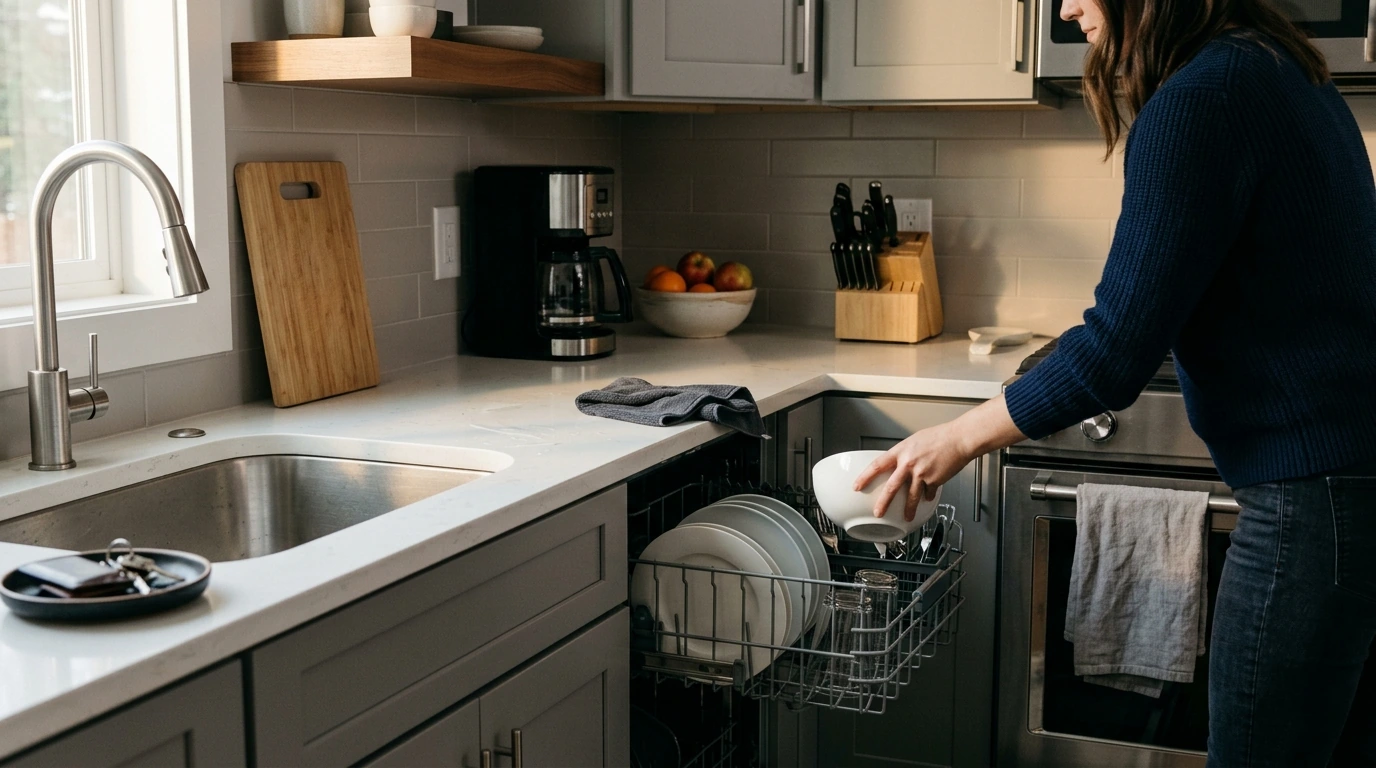
Daily Habits That Keep a Kitchen Tidy Without Big Cleanups
A consistently tidy kitchen usually comes down to a few small routines repeated at the right moments—after meals, during transitions, and before bed. When counters stay mostly clear and the sink doesn’t become a holding tank, the whole room feels cleaner (even before a deep scrub). The goal isn’t perfection; it’s a simple daily rhythm that prevents clutter, keeps dishes from piling up, and makes cooking feel easier and safer.
The “counter reset” rule: the fastest way to make a kitchen feel clean
If there’s one habit that changes everything, it’s treating the counter like a workspace—not storage. A clear counter makes even a busy kitchen feel “handled.”
- Define “clear” for the household: keep only daily-use essentials out (for many homes: coffee maker, knife block, maybe a fruit bowl). Everything else earns a cabinet or drawer home.
- Create a 2-minute reset trigger: pick repeatable moments—after coffee, after lunch prep, after dinner, and before bed—when counters get cleared fast.
- Use a single “landing zone” container: one bin or tray for items that belong elsewhere (mail, chargers, toys) keeps the counter from becoming a catch-all.
- Wipe in one pass: keep a dedicated cloth/sponge location so wiping the counter is frictionless, not a scavenger hunt.
For food-safe habits, it also helps to follow clean-and-chill basics from the CDC food safety guidance, especially when you’re wiping up after raw ingredients.
Morning micro-habits that prevent all-day mess
Mornings set the “baseline.” A few micro-steps keep breakfast from echoing into lunch and dinner cleanup.
- Empty (or run) the dishwasher first: that instant capacity makes it easy to load breakfast dishes instead of stacking them “for later.”
- Do a sink check: clear any leftover cups/utensils, rinse quickly, and treat an empty sink as the default state.
- Set out only what is used: coffee setup, one cutting board, one bowl—then put everything back once you’re done.
- Do a 60-second sweep: toss obvious trash, return stray items to their homes, and straighten towels.
If you like cooking with your phone nearby, consider keeping it off the counter entirely. A simple mount can help keep screens out of splash zones and free up space for prep; the Universal Car Steering Wheel Phone Mount for Safe Navigation can also serve as a dedicated “recipe viewing” holder in a non-food area so the counter stays clear.
A minimalist setup: fewer visible items means fewer decisions
Many kitchens feel messy because too many “almost useful” items live out in the open. Reducing what’s visible reduces the number of choices you make every time you clean.
For hard-to-reach detail cleaning (stove knob seams, grout lines, faucet bases), a small soft brush can be useful. Some people repurpose an ultra-fine brush for those crevices; the Triple-Sided Ultra-Fine Soft Bristle Toothbrush can work as a gentle detail tool when used exclusively for cleaning and stored separately from personal-care items.
The daily rhythm: what to do after each meal (without overcleaning)
Simple daily tidy routine (time + impact)
| Moment | Habit | Time | Why it works |
|---|---|---|---|
| Morning | Empty or start dishwasher | 3–5 min | Prevents sink pileups and makes cleanup automatic |
| After each meal | Load dishes + wipe counters | 2–4 min | Stops clutter from becoming a project |
| Midday | Trash/recycling reset | 1–2 min | Reduces overflow and random packaging on counters |
| Evening | Clear sink + quick floor sweep | 5–8 min | Wakes up to a calm, ready-to-cook kitchen |
Clutter hot spots and quick fixes (mail, bottles, cords, and kid items)
Germs also tend to concentrate in high-touch kitchen zones, so keeping clutter off surfaces makes it easier to wipe properly. The NSF’s insights on germy household hotspots can help you prioritize what to wipe when time is tight.
Make tidiness sustainable: prompts, boundaries, and a 10-minute closing shift
- Use visual prompts: keep only one multipurpose cleaner visible; store the rest so the counter looks “done” faster.
- Set boundaries for shared spaces: agree that the kitchen counter is not a storage surface for bags, keys, or unopened packages.
- Do a nightly “closing shift”: load the dishwasher, wash the sink, wipe counters, and do a quick prep for tomorrow (water filter filled, coffee ready).
- Plan a weekly mini-reset: 15 minutes to declutter a fridge shelf, toss expired items, and re-home anything that wandered. For safe storage timing and fridge temps, refer to the USDA refrigerator safety guidance.
A guided routine for consistency
If habit-building feels harder than cleaning, a simple checklist can remove the mental load. The Daily Habits for a Tidy Kitchen digital ebook guide is designed around short, repeatable reset loops, clear rules for what stays out, and an end-of-day kitchen “closing shift” that takes minutes—ideal for busy households and shared kitchens.
FAQ
How can counters stay clear when cooking every day?
Use a “one active project” rule: only the tools for the current step stay out, and everything else goes back immediately. Stage ingredients in one bowl/bin, limit countertop appliances to true daily essentials, and do a 2-minute reset after each meal.
What’s the best daily routine if there’s no dishwasher?
Rely on a sink-based system: wash as you cook, keep a small drying rack with a strict limit, and set a 10-minute evening wash window. Aim to keep the sink empty overnight so you start the next day with a clean baseline.
How long should a daily kitchen reset take?
Most kitchens can stay consistently tidy with about 5–15 minutes total per day, split into micro-steps after meals plus a short closing shift. Consistency reduces buildup, which is what turns cleanup into a long session.
Recommended for you



Was this article helpful?
Yes
No









Leave a comment