-
Shop
- Advanced Technologies
- AI Skills for Creators & Freelancers
- AI Client Management
- AI Ethics
- AI Mindset
- AI Tools & Prompts
- AI Writing & Content Creation
- Audio, Voice & Music
- Design & Visual Creation
- Email, Messaging & Communication
- Freelancing & Business
- Marketing, Ads & Conversion
- Productivity, Workflow & Automation
- SEO & Search Optimization
- Social Media Content & Growth
- Strategy, Planning & Analytics
- Video Creation & Editing
- AI Skills Mastery 2026 Collection
- Bathroom
- Best-Sellers
- Car Accessories
- Confidence
- Dating & Social Skills
- Digital Resources
- Easter Products
- Education & Learning
- Family & Parenting
- Fashion
- Fashion Accessories
- Furniture
- Gadgets
- Health & Beauty
- Health & Wellness
- Home & Garden
- Home Electronics
- Home Supplies
- Jewelry
- Kids & Babies
- Kitchen
- Lighting
- Patio, Lawn & Garden
- Personal Growth
- Pet Care
- Pet Supplies
- Pets
- Shoes
- Smart Home Living Guides
- Sport & Outdoors
- Stress Relief & Relaxation
- Super Deals
- TikTok Growth & Monetization Mastery
- Travel
- Travel & Adventure
- Wealth
- Wellness
40mm Automatic Dive Watch: Ceramic Bezel, Gradient Dial
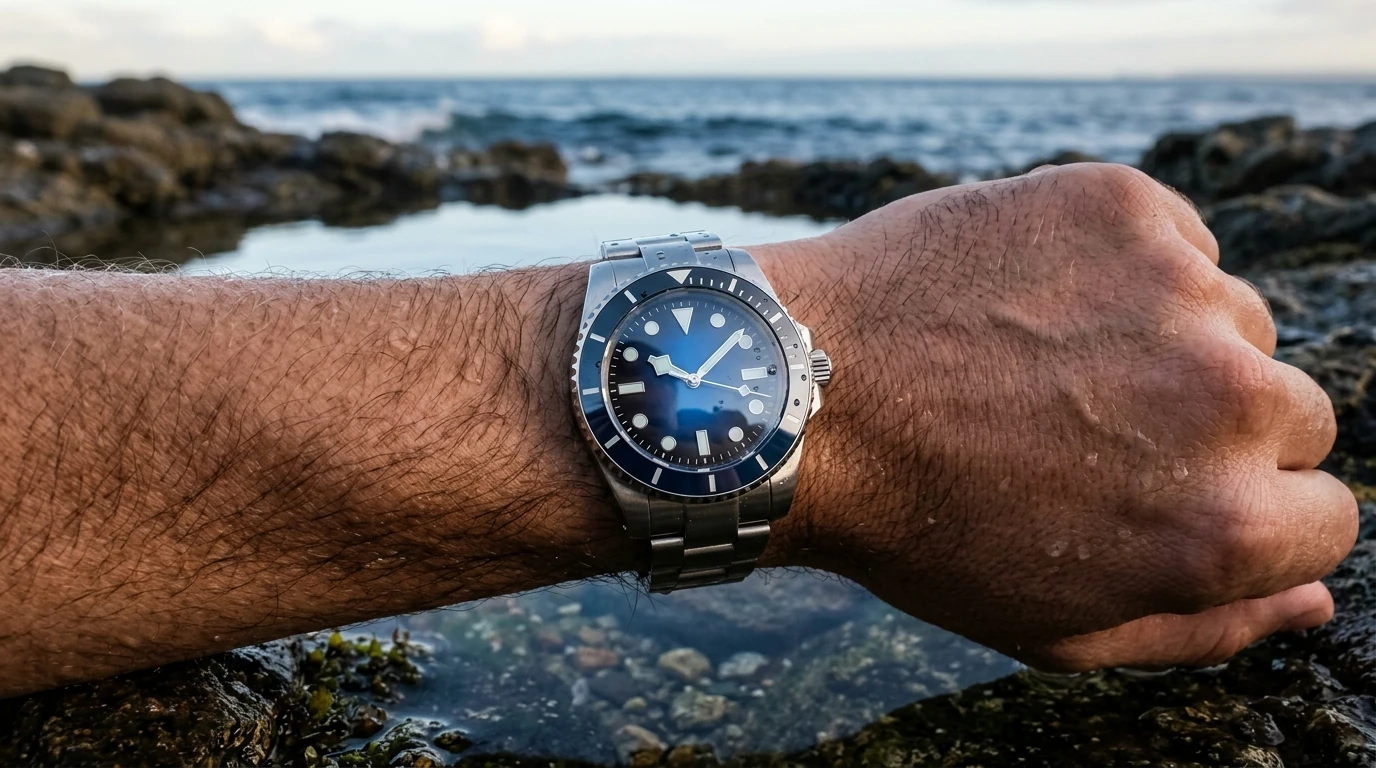
40mm Automatic Dive Watch with Ceramic Bezel & Gradient Dial
A 40mm dive watch hits a sweet spot: sporty enough to feel purpose-built, but sized for daily wear without the “oversized diver” bulk. This model pairs a ceramic bezel insert—chosen for its scratch resistance and lasting gloss—with a gradient dial that adds visual depth while staying easy to read in shifting light. Inside, an automatic movement keeps things simple: wear it regularly and it stays powered, making it a practical grab-and-go option for weekdays and a capable companion for weekends near the water.
Quick Look: What Stands Out
- 40mm case size that suits many wrists without the bulk of larger dive cases
- Ceramic bezel insert for improved scratch resistance and long-term appearance
- Gradient dial styling that adds dimensionality while staying legible
- Automatic movement for battery-free, wear-powered operation
- Dive-watch layout designed for at-a-glance reading and elapsed-time tracking
If you want to go straight to the product page, see the 40mm Automatic Dive Watch with Ceramic Bezel & Gradient Dial.
Design Details: Ceramic Bezel and Gradient Dial
Ceramic bezels have become a modern favorite because they resist the day-to-day scuffs that can quickly show on painted or anodized inserts. The payoff is mostly visual: a ceramic insert tends to keep its color and sheen looking “newer” for longer, especially if the watch is worn often and bumped against desks, door frames, and bag hardware.
Functionally, the bezel is there to time intervals—swim sets, cooking, parking meters, commute buffers, or any task where “how many minutes have passed?” matters. Look for clean alignment at 12 o’clock and a firm, consistent feel when turning; those details often make the timing experience feel more precise and less fussy.
The gradient dial does more than look good. Darker edges can frame the hands and hour markers, making the center feel brighter and easier to scan quickly. For a diver-style layout, the most important legibility check is the minute hand: it should stand out clearly since it’s the hand used for most elapsed-time reading on the bezel.
Ceramic Bezel vs. Common Alternatives
| Material | Everyday durability | Typical look over time | Best for |
|---|---|---|---|
| Ceramic | High scratch resistance | Holds gloss and color well | Daily wear and long-term aesthetics |
| Aluminum insert | Moderate; can scratch more easily | May show wear and fading | Lightweight feel, classic tool-watch vibe |
| Steel bezel (no insert) | Can scratch; can be refinished | Develops visible marks and patina | Vintage feel and easy refinishing |
Fit and Wear: Why 40mm Works
For many wrists, 40mm sits in the “do-it-all” range: enough presence to look like a true sports watch, but not so wide that it dominates smaller wrists or feels awkward with everyday clothing. Just as important as diameter are the proportions you feel on-wrist—lug-to-lug length, case thickness, and how the bracelet or strap drapes around the wrist.
Practicality is where mid-size divers shine. They’re more likely to slide under sleeves, feel balanced during desk work, and stay comfortable through a full day of wear. If you switch straps often, a bracelet is the durable, water-friendly default; rubber dries quickly and stays comfortable in heat; nylon is lightweight but can hold moisture longer if it stays soaked.
One small detail that makes a big difference: adjustment range. A clasp with micro-adjustment (or a strap with enough holes) helps accommodate wrist swelling during warm weather, travel, and activity.
Automatic Movement Basics (Without the Jargon)
For long-term care, avoid strong magnetic sources and sharp impacts. If you’re curious about how precise time standards are defined and maintained, the NIST Time and Frequency resources provide helpful background.
Water Use: What to Check Before Swimming or Diving
For dive-watch standards and testing concepts, see the overview of ISO 6425 — Divers’ watches. And if you’re planning actual diving activities, reviewing decompression fundamentals from NOAA is a smart safety refresher.
Pre-Water Checklist
| Check | Why it matters | Quick test |
|---|---|---|
| Crown fully secured | Prevents water entry at the most common leak point | Gently confirm it’s tightened/closed |
| Crystal clear (no fogging) | Fogging can indicate compromised seals | Look at the dial after temperature changes |
| Bezel aligns cleanly | Accurate timing depends on alignment | Set bezel to 12 and confirm it’s centered |
| Strap/bracelet secure | Loss prevention in water | Tug lightly on each spring bar/connection |
Everyday Durability and Long-Term Care
Who This Watch Suits
In-Stock Picks to Round Out the Rotation
- 40mm Automatic Dive Watch with Ceramic Bezel & Gradient Dial (automatic, ceramic bezel, versatile 40mm sizing)
- Armani Exchange Men’s Sneakers (an easy smart-casual pairing for an everyday sports watch)
- Universal Car Steering Wheel Phone Mount for Safe Navigation (helpful for commuting while keeping hands free)
FAQ
Is a ceramic bezel better than aluminum for daily wear?
Ceramic usually wins on scratch resistance and long-term color retention, so it tends to look newer after months of regular wear. Aluminum is more likely to show scratches or fading, but it’s also less likely to chip from a sharp impact. The better choice depends on whether your daily routine is more about abrasion (ceramic advantage) or hard knocks (aluminum can be more forgiving).
How often does an automatic watch need servicing?
Many automatic watches are commonly serviced about every 3–7 years, but the right interval depends on usage, environment, and the specific movement. If you notice a sudden accuracy change, rough winding, or any moisture/condensation under the crystal, it’s worth getting it checked sooner.
Can it be worn for swimming and snorkeling?
It can be, as long as the stated water-resistance rating supports it and the crown is fully secured (especially if it’s screw-down). Before entering the water, check for fogging and confirm the bezel and strap are secure; after saltwater, rinse with fresh water and dry thoroughly.
Recommended for you

Was this article helpful?
Yes
No









Leave a comment