-
Shop
- Advanced Technologies
- AI Skills for Creators & Freelancers
- AI Client Management
- AI Ethics
- AI Mindset
- AI Tools & Prompts
- AI Writing & Content Creation
- Audio, Voice & Music
- Design & Visual Creation
- Email, Messaging & Communication
- Freelancing & Business
- Marketing, Ads & Conversion
- Productivity, Workflow & Automation
- SEO & Search Optimization
- Social Media Content & Growth
- Strategy, Planning & Analytics
- Video Creation & Editing
- AI Skills Mastery 2026 Collection
- Bathroom
- Best-Sellers
- Car Accessories
- Confidence
- Dating & Social Skills
- Digital Resources
- Easter Products
- Education & Learning
- Family & Parenting
- Fashion
- Fashion Accessories
- Furniture
- Gadgets
- Health & Beauty
- Health & Wellness
- Home & Garden
- Home Electronics
- Home Supplies
- Jewelry
- Kids & Babies
- Kitchen
- Lighting
- Patio, Lawn & Garden
- Personal Growth
- Pet Care
- Pet Supplies
- Pets
- Shoes
- Smart Home Living Guides
- Sport & Outdoors
- Stress Relief & Relaxation
- Super Deals
- TikTok Growth & Monetization Mastery
- Travel
- Travel & Adventure
- Wealth
- Wellness
60-Minute Seasonal Wardrobe Reset Checklist for Women
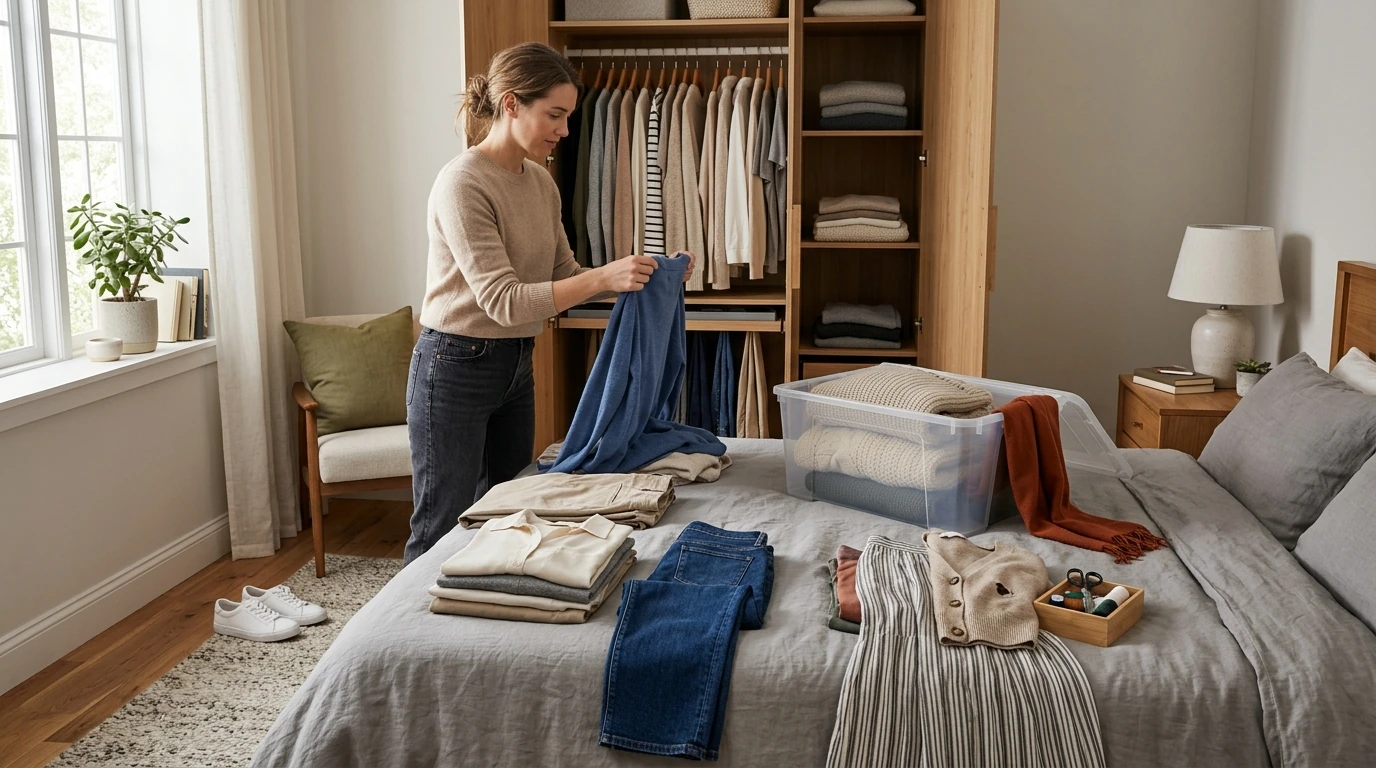
The Seasonal Reset Checklist for a Smarter Women’s Wardrobe
A seasonal wardrobe reset keeps daily outfits easy, reduces clutter, and helps repeat-wear favorites with confidence. The best part is that it doesn’t need to be a full-day overhaul—just a fast, repeatable routine: review what worked last season, refresh essentials, store what’s off-season, and set a simple plan for filling true gaps without overbuying.
If you want a step-by-step workflow you can reuse every season, The Seasonal Reset Checklist for a Smarter Women’s Wardrobe – Seasonal Wardrobe Checklist for Women is a simple printable that keeps the process moving (and prevents the “half-finished closet” problem).
A 60-minute seasonal reset plan
This is designed to be quick enough that you’ll actually do it four times a year. Set your space up for speed, not perfection.
- Set a timer and choose a clear surface (bed or floor) for sorting.
- Pull out only the clothing for the current season plus year-round basics.
- Use three piles: Keep Now, Store, and Decide (repair/alter/donate).
- End the session by rehanging and folding everything that stays—no loose stacks.
- Schedule a 10-minute follow-up within 7 days for the “Decide” pile so it doesn’t linger.
Step 1: Edit with clear keep/store/let-go rules
Indecision is what turns “organizing” into a never-ending project. Use clear rules so each item has one obvious next step.
- Keep Now: fits comfortably, matches at least two bottoms/tops, and is appropriate for expected weather in the next 6–8 weeks.
- Store: seasonal pieces in good condition that were worn and enjoyed, plus special-occasion items not needed soon.
- Decide: anything with fit issues, missing buttons, stains, pilling, or discomfort; move it here if there’s uncertainty.
- Quick fit check: if it needs “special” undergarments or constant adjusting to feel okay, it belongs in Decide.
- Sentimental items: store separately in a small memory box/bin instead of keeping them in daily wardrobe space.
For anything you’re donating, stick to practical guidelines so your bags actually help someone. Good places to start: Goodwill’s donation guidelines and a quick check of local rules for textiles and recycling.
Step 2: Reset your core outfit formulas
Outfit formulas turn a closet into a system. They reduce decision fatigue and make it easier to spot true gaps (instead of buying a random “cute top” that doesn’t go with your real life).
If sneakers are part of your everyday formula, keep one pair designated as your “clean casual” option and another for true walking/errands. A simple rotation helps shoes last longer and keeps outfits looking sharper. If you’re looking to refresh a sneaker slot, Armani Exchange Men’s Sneakers can work as a streamlined, wear-often choice depending on your style and fit preferences.
Step 3: Inspect, refresh, and repair what you already own
When you do need to let items go, donating or recycling is often more responsible than trashing. For context on textile waste, see the U.S. Environmental Protection Agency (EPA) textile data, and for broader action guidance, WRAP’s textiles and clothing resources.
Step 4: Organize so the right clothes are visible
| Area | Small change | Result |
|---|---|---|
| Hanging space | Move current-season items to the center and group by type | Outfits are faster to assemble |
| Drawer tops | Fold vertically or file-fold tees and knits | Everything is visible at once |
| Accessories | One tray for daily jewelry + one bin for special pieces | Less tangling and fewer lost items |
| Shoes | Front row = current season; wipe soles before storing off-season | Cleaner storage and easier rotation |
| Outerwear | Limit to what fits the next 6–8 weeks; store the rest | Entryway feels calmer and functional |
Step 5: Build a smart seasonal shopping list (only for real gaps)
Small add-on tip: if errands and drop-offs are part of your reset day, set up your car so it’s easier to stay focused (and safer) while running around town. A simple option is the Universal Car Steering Wheel Phone Mount for Safe Navigation for hands-free directions.
Printable checklist to keep the reset effortless
- Use a single-page checklist for each season: edit, refresh, organize, and plan.
- Keep the checklist near the closet or saved to a phone notes app for quick repeat use.
- Re-run a mini version monthly: 10 minutes to return stray items, remove unworn pieces, and note any new gaps.
- Pair the checklist with a simple donation/repair routine so clutter doesn’t rebuild.
- Recommended tool: The Seasonal Reset Checklist for a Smarter Women’s Wardrobe – Seasonal Wardrobe Checklist for Women for a step-by-step printable workflow.
FAQ
How often should a seasonal wardrobe reset be done?
Four times per year is a practical rhythm (one reset each season), with a quick 10-minute monthly maintenance to keep things from drifting. If you move, change jobs, or live in a climate with longer transitional weather, adjust the timing to match your real conditions.
What should be stored vs kept out year-round?
Store weather-specific items you won’t reasonably wear in the next 6–8 weeks (heavy coats, thick winter knits, summer linen, and special-occasion pieces). Keep year-round basics accessible—tees, jeans, lightweight layers, and core shoes you wear across multiple seasons.
What’s the fastest way to declutter without regret?
Use a Keep/Store/Decide system and give the Decide pile a short deadline for repairs or alterations so it doesn’t become permanent clutter. For sentimental items, taking a quick photo before storing or letting go can preserve the memory without taking up daily closet space.
Recommended for you



Was this article helpful?
Yes
No









Leave a comment