-
Shop
- Advanced Technologies
- AI Skills for Creators & Freelancers
- AI Client Management
- AI Ethics
- AI Mindset
- AI Tools & Prompts
- AI Writing & Content Creation
- Audio, Voice & Music
- Design & Visual Creation
- Email, Messaging & Communication
- Freelancing & Business
- Marketing, Ads & Conversion
- Productivity, Workflow & Automation
- SEO & Search Optimization
- Social Media Content & Growth
- Strategy, Planning & Analytics
- Video Creation & Editing
- AI Skills Mastery 2026 Collection
- Bathroom
- Best-Sellers
- Car Accessories
- Confidence
- Dating & Social Skills
- Digital Resources
- Easter Products
- Education & Learning
- Family & Parenting
- Fashion
- Fashion Accessories
- Furniture
- Gadgets
- Health & Beauty
- Health & Wellness
- Home & Garden
- Home Electronics
- Home Supplies
- Jewelry
- Kids & Babies
- Kitchen
- Lighting
- Patio, Lawn & Garden
- Personal Growth
- Pet Care
- Pet Supplies
- Pets
- Shoes
- Smart Home Living Guides
- Sport & Outdoors
- Stress Relief & Relaxation
- Super Deals
- TikTok Growth & Monetization Mastery
- Travel
- Travel & Adventure
- Wealth
- Wellness
Stainless Steel Rotary Grater: Fast Cheese & Veg Prep
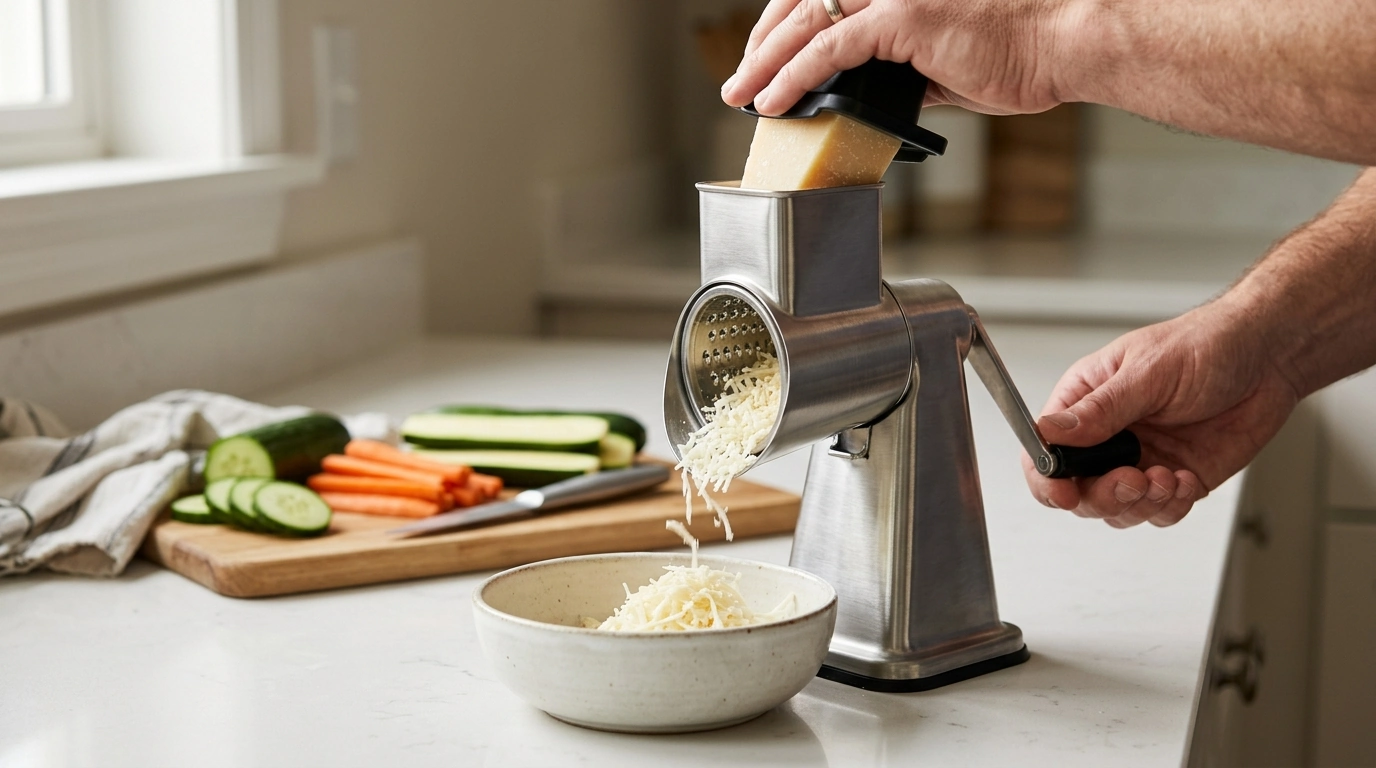
Stainless Steel Rotary Cheese Grater & Multi-Purpose Vegetable Slicer: Fast Prep With Less Mess
A rotary grater can make everyday prep feel smoother—shredding cheese for pasta night, slicing cucumbers for salads, or grating carrots for slaw—without the knuckle-scraping and countertop scatter that often comes with a flat grater. A stainless steel rotary cheese grater and multi-purpose vegetable slicer is built for quick, controlled cutting with a simple hand-crank motion, a more contained work area, and straightforward cleanup.
What a Rotary Grater Helps With
Rotary graters are handy when the goal is speed and a more consistent cut. Instead of rubbing food directly against a flat surface, you load pieces into a hopper and crank, letting the cutting drum do the work.
- Shreds hard and semi-hard cheeses for pizza, tacos, salads, and casseroles
- Grates vegetables like carrots, potatoes, zucchini, and cucumbers for slaws and fritters
- Helps create consistent texture for faster melting and more even cooking
- Keeps hands farther from cutting surfaces compared to many handheld graters
- Cuts down on stray shreds by guiding food into a catch area
Key Parts to Look For in Stainless Steel Rotary Graters
The best rotary graters combine durable cutting surfaces with stability and easy cleaning. Stainless steel is a popular choice for the cutting drum because it resists corrosion and holds up well to frequent use.
- Stainless steel cutting surfaces for durability and corrosion resistance
- A stable base or grip to reduce slipping during fast cranking
- Comfortable handle/crank that stays easy to turn under load (hard cheese, potatoes)
- Food pusher/guard to keep fingers away and maintain consistent pressure
- Easy disassembly so residue doesn’t build up around blades and seams
Rotary Grater Feature Checklist
| Feature | Why it matters | What to check |
|---|---|---|
| Stainless steel cutting drum | Stays sharp longer and resists rust | No visible burrs; smooth rotation |
| Secure grip/base | Prevents wobble and uneven cuts | Non-slip contact points; stable on counter |
| Food pusher | Improves safety and consistency | Fits securely; easy to hold |
| Quick-release design | Faster cleaning and fewer trapped bits | Parts separate without tools |
| Comfortable crank | Less effort for firm foods | Handle turns smoothly without sticking |
Using It for Better Results (Cheese, Veg, and More)
A rotary grater works best when food is sized correctly and the drum can “bite” cleanly. Small tweaks—like chilling cheese or draining watery vegetables—can improve texture and reduce sticking.
- Cheese: Chill for 10–15 minutes before grating to reduce smearing and clumping.
- Soft cheeses: Use lighter pressure and shorter bursts to avoid paste-like buildup.
- Potatoes: Rinse briefly after grating if a recipe needs less starch (for example, crispier hash browns), then squeeze dry.
- Watery vegetables (cucumber, zucchini): Salt and drain if making fritters or salads that can get soggy.
- Batch prep: Grate into a bowl, portion, and refrigerate for quick weeknight cooking.
For food safety during batch prep, cool and store grated ingredients promptly. The USDA’s guidance on refrigerator storage is a helpful reference, and the FDA also offers practical tips for people at higher risk of foodborne illness.
Cleaning and Care
Cleaning is easiest when you do it right away. Cheese oils and vegetable starches can dry into sticky films if they sit too long, especially around seams and drum openings.
- Disassemble soon after use so cheese oils and starches don’t dry and harden
- Rinse under warm water first, then wash with mild soap; use a brush for the drum openings
- Dry thoroughly to prevent water spots and keep moving parts turning smoothly
- Avoid forcing oversized chunks; cut food into manageable pieces to protect the drum edges
- Store parts together so the cutting surfaces aren’t knocked against other utensils
Who It’s Best For
A stainless steel rotary grater is a strong fit for cooks who want fast, repeatable results without turning the counter into a cleanup project.
- Home cooks who grate cheese often and want quicker, more uniform shreds
- Meal-preppers who need fast veggie prep for salads, slaws, and stir-fries
- Small kitchens that prefer one compact tool instead of multiple flat graters and slicers
- Anyone who wants more distance between fingers and cutting edges than a traditional grater provides
Product Spotlight: Stainless Steel Rotary Cheese Grater & Multi-Purpose Vegetable Slicer
If the goal is quicker cheese and vegetable prep with a more controlled process, the Stainless Steel Rotary Cheese Grater & Multi-Purpose Vegetable Slicer is designed for everyday grating and slicing tasks. Stainless steel construction supports durability, while the rotary format helps produce consistent cuts that melt evenly and cook more predictably.
It’s a practical, budget-friendly option for simple meals—topping pasta, building tacos, prepping salad add-ins, or getting potatoes ready for breakfast. Before ordering, it’s smart to confirm current price and availability on the product page.
Current Listing Snapshot
| Item | Details |
|---|---|
| Name | Stainless Steel Rotary Cheese Grater & Multi-Purpose Vegetable Slicer |
| Price | $10.82 USD |
| Availability | In stock |
| Product page | View product |
More In-Stock Picks
- Triple-Sided Ultra-Fine Soft Bristle Toothbrush for Enhanced Oral Health
- Universal Car Steering Wheel Phone Mount for Safe Navigation
FAQ
What foods work best in a rotary cheese grater?
Hard and semi-hard cheeses (like Parmesan, cheddar, and mozzarella blocks) usually grate cleanly, along with firm vegetables such as carrots and potatoes. Very soft foods can smear, so chilling them first and using lighter pressure helps.
How do you keep cheese from sticking or clumping while grating?
Chill the cheese for 10–15 minutes, use steady moderate pressure, and grate in shorter bursts if it starts to warm up. Cleaning the drum promptly also prevents oily buildup that can make sticking worse.
Is a rotary grater easier to clean than a box grater?
It depends on how easily it disassembles: models that separate into a few parts can be quick to wash. Rinse right after use and use a brush to reach into the drum holes for best results.
Recommended for you



Was this article helpful?
Yes
No









Leave a comment