-
Shop
- Advanced Technologies
- AI Skills for Creators & Freelancers
- AI Client Management
- AI Ethics
- AI Mindset
- AI Tools & Prompts
- AI Writing & Content Creation
- Audio, Voice & Music
- Design & Visual Creation
- Email, Messaging & Communication
- Freelancing & Business
- Marketing, Ads & Conversion
- Productivity, Workflow & Automation
- SEO & Search Optimization
- Social Media Content & Growth
- Strategy, Planning & Analytics
- Video Creation & Editing
- AI Skills Mastery 2026 Collection
- Bathroom
- Best-Sellers
- Car Accessories
- Confidence
- Dating & Social Skills
- Digital Resources
- Easter Products
- Education & Learning
- Family & Parenting
- Fashion
- Fashion Accessories
- Furniture
- Gadgets
- Health & Beauty
- Health & Wellness
- Home & Garden
- Home Electronics
- Home Supplies
- Jewelry
- Kids & Babies
- Kitchen
- Lighting
- Patio, Lawn & Garden
- Personal Growth
- Pet Care
- Pet Supplies
- Pets
- Shoes
- Smart Home Living Guides
- Sport & Outdoors
- Stress Relief & Relaxation
- Super Deals
- TikTok Growth & Monetization Mastery
- Travel
- Travel & Adventure
- Wealth
- Wellness
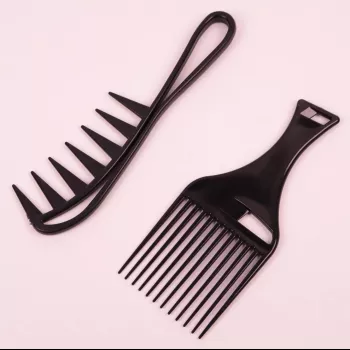
Black Wide-Tooth Comb Set: Detangle Natural Hair & Wigs

Black Wide-Tooth Comb Set for Natural Hair & Real Hair Wigs
A wide-tooth comb set is a simple tool that can make detangling gentler for curls, coils, and textured styles—especially when working with real hair wigs that need careful handling. With the right technique, you can reduce snagging, keep curl definition intact, and avoid unnecessary stress on fragile areas like edges, nape hair, and wig knots. Below is a practical guide to choosing and using wide-tooth combs, plus easy maintenance habits that help both natural hair and real hair wigs look smooth, defined, and healthy.
Why a wide-tooth comb helps textured hair and real hair wigs
Textured hair often tangles in “clusters,” and tight curl patterns can wrap around themselves. A wide-tooth comb is designed to separate hair in larger, gentler passes—helpful for both natural hair and wigs made with real human hair.
- Less snagging and breakage: Wider spacing helps the comb glide around knots instead of catching and ripping through them.
- Better curl definition: Wide teeth support curl clumps by avoiding over-separation that can create frizz.
- More even product distribution: On wash day, a comb helps spread conditioner or detangler through dense sections without needing aggressive brushing.
- Wig-friendly tension control: Compared with fine-tooth combs (and some brushes), wide teeth can detangle with less pulling near wefts, stitching, and lace knots.
For general hair health and breakage prevention, reputable guidance from sources like the American Academy of Dermatology Association and the Cleveland Clinic emphasizes gentle handling—especially when hair is wet, chemically treated, or prone to tangling.
What’s in a practical comb set (and when to use each piece)
A useful set usually includes two sizes so you can match the tool to the job instead of forcing one comb to do everything.
- Large wide-tooth comb: Best for first-pass detangling on thick curls/coils and for longer wig lengths where tangles form at the ends.
- Small wide-tooth comb: Convenient for travel, quick refreshes, and smaller areas like bangs, face-framing layers, and edge-adjacent sections.
- Sturdy spine/handle: Adds control while working in sections, especially on wet hair when strands are more elastic and vulnerable.
- Smooth, rounded teeth: Helps reduce friction and micro-snags that can contribute to split ends over time.
Quick guide: choosing the right tool for the job
| Task | Recommended tool | Best on | Tip to prevent damage |
|---|---|---|---|
| Initial detangling after wash | Large wide-tooth comb | Natural curls/coils; real hair wigs | Start at the ends and work upward in small sections |
| Conditioner distribution | Wide-tooth comb (either size) | Wash day for natural hair; wig conditioning | Comb only when hair is well-saturated with conditioner |
| Refreshing curls | Smaller wide-tooth comb | Day-2/Day-3 hair; wig curls/waves | Use minimal passes to preserve curl clumps |
| Wig styling prep (before heat) | Wide-tooth comb | Blowout/straightening prep | Detangle fully first to avoid heat-catching knots |
How to detangle natural hair with a wide-tooth comb (low-tension method)
A low-tension routine is about controlling friction and avoiding “tug stacking” (small pulls that add up). The goal is to let slip and sectioning do most of the work.
- Detangle on damp or conditioned hair: Water plus conditioner or detangler creates slip that helps the comb glide.
- Section first: Use 4–8 sections for medium density; increase sections for very dense hair to keep tension low.
- Support at the base: Hold hair near the roots while you comb the ends so the scalp isn’t taking the force.
- Work from ends to roots: Clear smaller knots first rather than pushing tangles upward into bigger ones.
- Use fewer passes: Once the comb moves through easily, stop—over-combing can raise frizz and disturb curl pattern.
If the comb stalls, pause. Finger-detangle that spot, add more product, then try again with smaller motions rather than forcing the comb through.
How to detangle and maintain real hair wigs without stressing knots and wefts
Real hair wigs can look incredibly natural, but the cap construction (wefts, lace, knots, and stitching) needs gentle handling to reduce shedding and prolong wear.
Common mistakes that cause breakage (and easy fixes)
Cleaning and care for long-lasting comb performance
Product spotlight: Black Wide-Tooth Comb Set for Natural Hair & Real Hair Wigs
If you want a simple, affordable upgrade to your detangling routine, the Black Wide-Tooth Comb Set for Natural Hair & Real Hair Wigs is designed to support gentle detangling on textured hair and reduce snagging on real hair wigs. Keeping two sizes on hand makes it easier to handle everything from wash-day sections to quick refreshes on the go.
You may also like (in stock)
- Triple-Sided Ultra-Fine Soft Bristle Toothbrush for Enhanced Oral Health
- Universal Car Steering Wheel Phone Mount for Safe Navigation
FAQ
Is a wide-tooth comb better than a brush for natural hair?
A wide-tooth comb often reduces snagging and tension for curls and coils, especially on damp, conditioned hair. Some detangling brushes can work well too, but gentle technique and enough slip matter more than the tool alone.
Can a wide-tooth comb be used on a real hair wig without causing shedding?
Yes—detangle from the ends upward, secure the wig on a stand, and keep the comb teeth away from knots and wefts. Gentle handling (and detangling before washing) helps reduce unnecessary shedding over time.
Should detangling be done on wet or dry hair?
Many textured hair types do best with damp/conditioned detangling because slip lowers friction. Some prefer detangling before washing to prevent matting, but either way, use product and low tension to avoid breakage.
Recommended for you


Was this article helpful?
Yes
No









Leave a comment