-
Shop
- Advanced Technologies
- AI Skills for Creators & Freelancers
- AI Client Management
- AI Ethics
- AI Mindset
- AI Tools & Prompts
- AI Writing & Content Creation
- Audio, Voice & Music
- Design & Visual Creation
- Email, Messaging & Communication
- Freelancing & Business
- Marketing, Ads & Conversion
- Productivity, Workflow & Automation
- SEO & Search Optimization
- Social Media Content & Growth
- Strategy, Planning & Analytics
- Video Creation & Editing
- AI Skills Mastery 2026 Collection
- Bathroom
- Best-Sellers
- Car Accessories
- Confidence
- Dating & Social Skills
- Digital Resources
- Easter Products
- Education & Learning
- Family & Parenting
- Fashion
- Fashion Accessories
- Furniture
- Gadgets
- Health & Beauty
- Health & Wellness
- Home & Garden
- Home Electronics
- Home Supplies
- Jewelry
- Kids & Babies
- Kitchen
- Lighting
- Patio, Lawn & Garden
- Personal Growth
- Pet Care
- Pet Supplies
- Pets
- Shoes
- Smart Home Living Guides
- Sport & Outdoors
- Stress Relief & Relaxation
- Super Deals
- TikTok Growth & Monetization Mastery
- Travel
- Travel & Adventure
- Wealth
- Wellness
How to Wash Pet Beds Without Damage (Fresh & Fluffy)
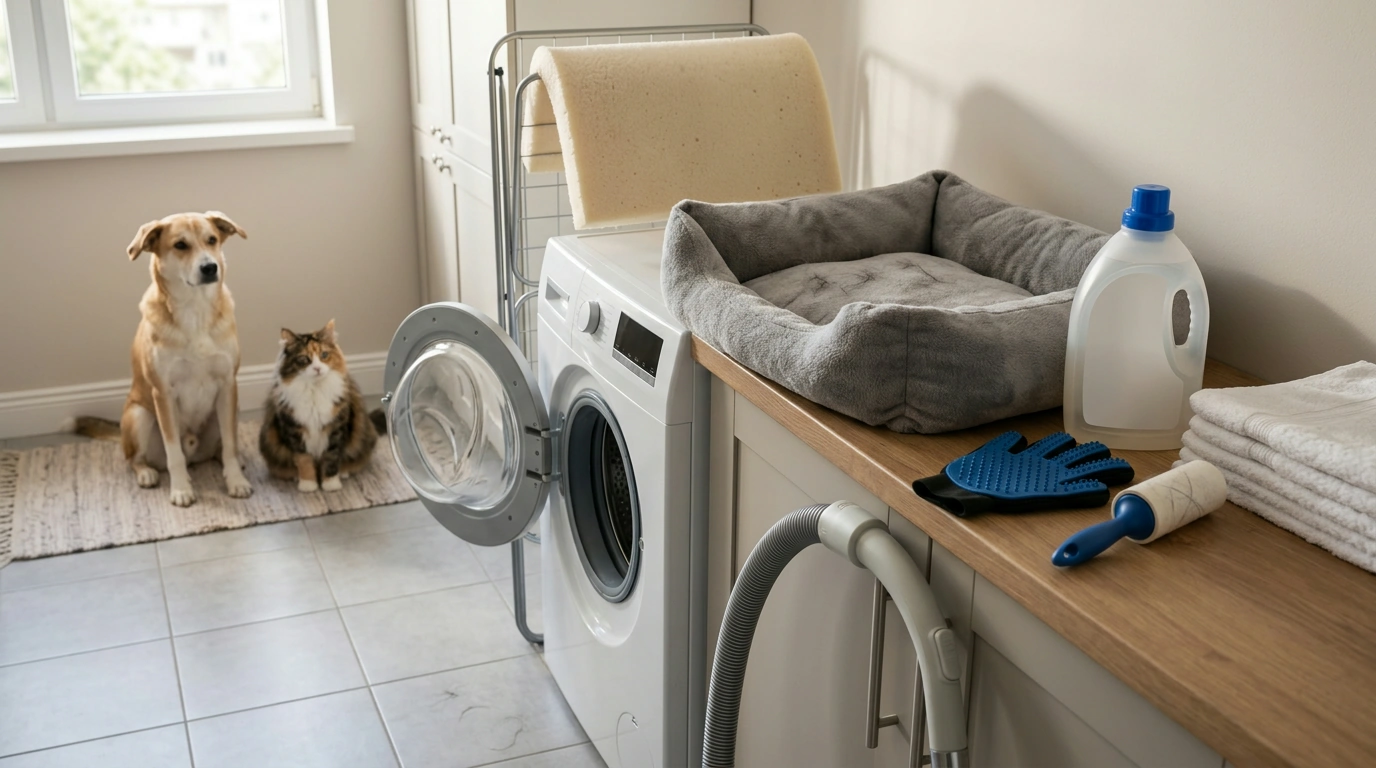
Fresh & Fluffy: Wash Pet Beds Safely Without Damage
Pet beds collect hair, dander, dirt, and odors fast—especially in multi-pet homes. The goal is to get them truly clean while keeping covers, seams, foam, and stuffing intact. Use the steps below to match the washing method to the bed’s materials, prevent clumping and shrinkage, and dry thoroughly to avoid mildew.
Start With a Quick Bed Check
- Find the care label and note what you’re dealing with: a machine-washable cover, a waterproof liner, a foam insert, cedar filling, or memory foam.
- Inspect seams, zippers, and corners. If anything looks weak, fix it before washing so the bed doesn’t “blow out” in the washer.
- Size up the mess: routine refresh (hair + light odor), muddy paws, or bio-messes (urine/vomit) that need enzyme treatment.
- Remove toys, collars, and crumbs or litter tucked into creases.
Pre-Cleaning That Makes Washing Safer
- Take the bed outside, shake it vigorously, and vacuum every panel—especially seams—so loose hair doesn’t redeposit during washing.
- For embedded hair, use a lint roller or a rubber grooming glove to “grab” fibers that the vacuum leaves behind.
- Spot-treat stains before the main wash. For urine/vomit, use an enzyme cleaner and give it the full dwell time on the label.
- For odor without harsh chemicals, sprinkle baking soda over the surface, wait 15–30 minutes, then vacuum thoroughly.
- If the cover is removable, separate cover, liner, and insert. Washing everything together often causes clumping and slow drying.
Choose the Right Wash Method (Cover, Insert, and Liner)
Most “bed damage” happens when one setting is used for every material. Use the safest method for each layer.
Bed Type and Safe Cleaning Settings
| Bed material/type | Wash approach | Water & cycle | Drying approach |
|---|---|---|---|
| Removable cotton/poly cover | Machine wash cover separately | Cold/warm, gentle, extra rinse | Low heat or air-dry; fluff mid-way |
| Faux-fur / sherpa cover | Machine wash inside-out | Cold, gentle; mild detergent | Air-dry preferred; low heat only if label allows |
| Waterproof liner | Wipe first; machine wash if allowed | Cold, gentle | Air-dry or low heat; avoid high heat |
| Polyfill stuffed bed (no removable cover) | Machine wash whole bed (large washer) | Cold, gentle, low spin; extra rinse | Low heat + tennis balls; dry fully |
| Memory foam/orthopedic insert | Spot clean or hand wash only | N/A (avoid soaking if label warns) | Air-dry 24–48 hrs; rotate for even drying |
- Removable fabric cover: usually safest to machine wash cold or warm on gentle; close zippers and turn inside-out to reduce pilling.
- Waterproof liners: wipe down first. If machine-washable, use cold water and avoid bleach/high heat to protect the coating.
- Foam/memory foam inserts: avoid machine washing unless the label explicitly allows it; surface clean or hand wash and dry completely.
- Stuffed beds without removable covers: use the largest washer possible, gentle cycle, low spin, and rinse twice to reduce residue.
- Delicate faux-fur or sherpa: cold water, mild detergent, no fabric softener (it can reduce loft and trap residue).
Detergents and Add-Ins That Won’t Ruin the Bed
- Choose a mild, fragrance-free detergent to reduce irritation and cut down on residue that attracts dirt.
- Skip fabric softener—it can coat fibers, reduce absorbency, and leave buildup.
- Avoid bleach unless the label allows it; it can weaken fibers and damage waterproof membranes.
- For odor control, add 1/2 cup white vinegar to the rinse (never combine vinegar with bleach).
- If allergies are a concern, run an extra rinse to help remove lingering detergent and dander.
Step-by-Step: Machine Washing Without Clumping or Tearing
Step-by-Step: Hand Washing Inserts and Foam Safely
Drying: Keep Loft, Prevent Shrink, Avoid Mildew
Handling Accidents, Fleas, and Tough Odors
- Urine/vomit: blot first, then treat with an enzyme cleaner and wash ASAP to prevent set-in odor.
- Flea concerns: wash washable parts using the warmest water allowed by the label and dry thoroughly; pair cleaning with vet-recommended flea control to prevent reinfestation (see ASPCA flea guidance).
- Skunk or strong odors: pre-soak washable covers if the label allows, then prioritize extra rinses. Heavy perfumes can irritate pets and often “mask” instead of removing odor.
- When odor persists after washing, the usual culprits are incomplete drying or detergent buildup—re-rinse, then dry longer with better airflow.
Simple Maintenance Schedule for a Cleaner Home
A Handy Reference Guide
If you want a simple, printable-friendly walkthrough you can keep near the laundry area, see Fresh & Fluffy: Wash Pet Beds Safely – The Ultimate Guide on How to Wash Pet Beds Without Damage.
Helpful Picks In Stock
- Fresh & Fluffy: Wash Pet Beds Safely – The Ultimate Guide on How to Wash Pet Beds Without Damage
- Triple-Sided Ultra-Fine Soft Bristle Toothbrush for Enhanced Oral Health
Safety Note on Cleaning Products
When you’re choosing cleaning and disinfecting products for the home, follow label directions carefully and prioritize good ventilation. For general guidance on cleaning versus disinfecting, reference the CDC cleaning and disinfecting recommendations.
FAQ
How often should a pet bed be washed?
Vacuum weekly, then wash removable covers every 2–4 weeks as a baseline. Wash more often for heavy shedders, allergy flare-ups, lots of outdoor time, accidents, or multi-pet households.
Can a pet bed go in the dryer?
Use the care label as your rule: many covers can handle low heat, while foam and some faux-fur or waterproof liners do best with air-drying or very low heat. Always check thick corners and bolsters for hidden dampness to prevent mildew.
What removes urine smell from a pet bed without damage?
Blot first, then use an enzyme cleaner pre-treatment and wash with a mild detergent plus an extra rinse. White vinegar in the rinse can help neutralize odor (never mix with bleach), and thorough drying is essential so smells don’t return.
Recommended for you



Was this article helpful?
Yes
No









Leave a comment