-
Shop
- Advanced Technologies
- AI Skills for Creators & Freelancers
- AI Client Management
- AI Ethics
- AI Mindset
- AI Tools & Prompts
- AI Writing & Content Creation
- Audio, Voice & Music
- Design & Visual Creation
- Email, Messaging & Communication
- Freelancing & Business
- Marketing, Ads & Conversion
- Productivity, Workflow & Automation
- SEO & Search Optimization
- Social Media Content & Growth
- Strategy, Planning & Analytics
- Video Creation & Editing
- AI Skills Mastery 2026 Collection
- Bathroom
- Best-Sellers
- Car Accessories
- Confidence
- Dating & Social Skills
- Digital Resources
- Easter Products
- Education & Learning
- Family & Parenting
- Fashion
- Fashion Accessories
- Furniture
- Gadgets
- Health & Beauty
- Health & Wellness
- Home & Garden
- Home Electronics
- Home Supplies
- Jewelry
- Kids & Babies
- Kitchen
- Lighting
- Patio, Lawn & Garden
- Personal Growth
- Pet Care
- Pet Supplies
- Pets
- Shoes
- Smart Home Living Guides
- Sport & Outdoors
- Stress Relief & Relaxation
- Super Deals
- TikTok Growth & Monetization Mastery
- Travel
- Travel & Adventure
- Wealth
- Wellness
Menopause Skincare Checklist: Products, Routine, Glow
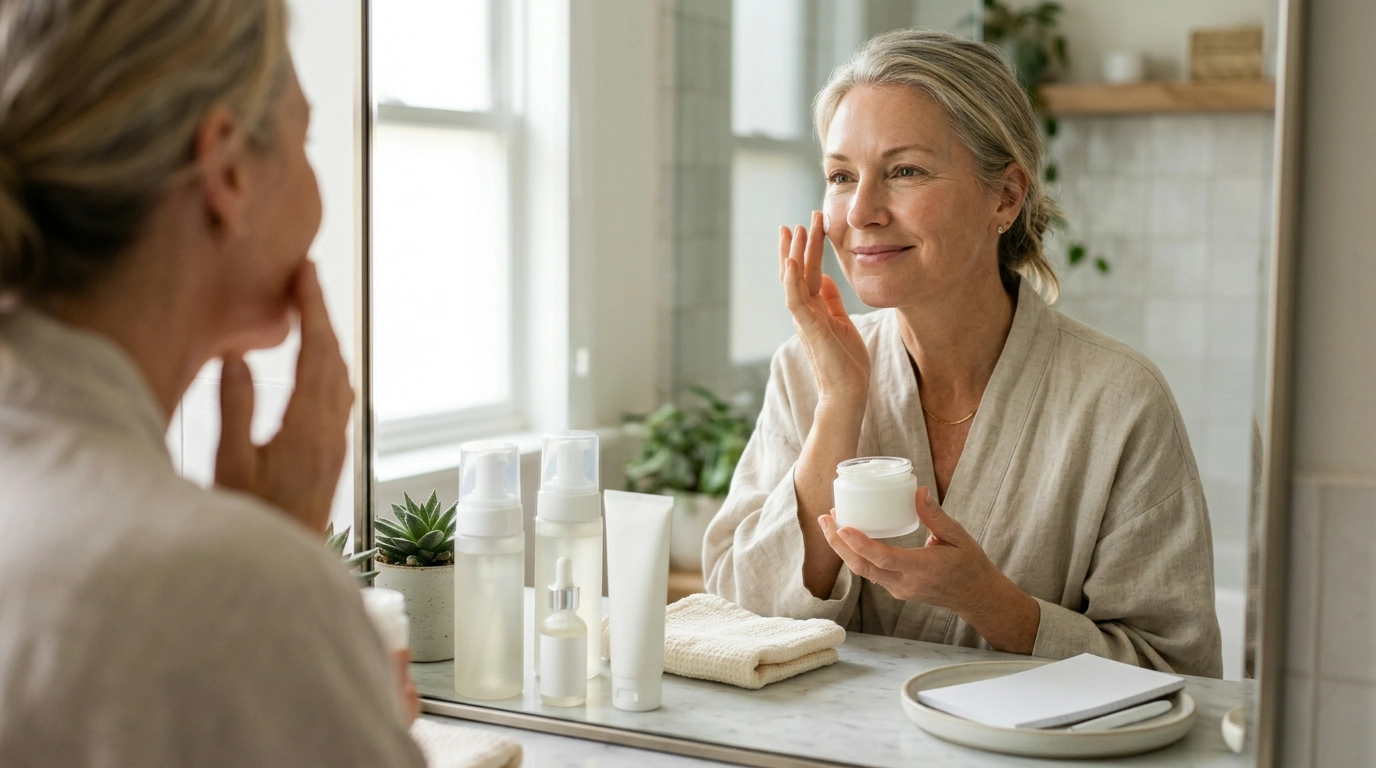
Glow Through Menopause: A Practical Checklist for Choosing Beauty Products and Building a Skin-Friendly Routine
Menopause can shift skin toward dryness, sensitivity, uneven tone, and changes in firmness. The most reliable way to get consistent results is to simplify: choose barrier-supportive formulas, add targeted actives carefully, and adjust makeup and body care to match new texture and hydration needs. Use the checklist below to assess products quickly and assemble a routine that feels comfortable day to day.
For medical context on why these changes happen, helpful overviews are available from the American Academy of Dermatology Association, The North American Menopause Society (NAMS), and Mayo Clinic.
What changes in menopausal skin (and what that means for product choices)
- Lower estrogen can reduce skin lipids and natural hydration, so dryness and tightness become more common—richer moisturizers and gentler cleansing matter more than ever.
- Barrier function may weaken, which can increase stinging from fragranced products, essential oils, and aggressive actives. “Less, but better” often wins.
- Slower cell turnover can look like dullness; mild exfoliation and daily sunscreen typically make a noticeable difference over time.
- Collagen shifts can affect firmness and fine lines; retinoids and peptides can help, but only when introduced gradually and buffered with moisturizer.
- Hot flashes and flushing can amplify redness; soothing ingredients and non-stripping cleansers help reduce day-to-day reactivity.
The core checklist: how to evaluate a product before buying
- Start with one primary goal (dryness/itch, sensitivity, redness, breakouts, uneven tone, or fine lines). Adding one product for one job makes reactions easier to spot.
- Go fragrance-free and essential-oil-free if you sting easily, flush often, or feel “reactive” after cleansing.
- Look for barrier helpers: ceramides, glycerin, hyaluronic acid, squalane, petrolatum, dimethicone, panthenol, colloidal oatmeal.
- For uneven tone: vitamin C (stable derivatives if sensitive), niacinamide, azelaic acid, and daily sunscreen.
- For fine lines: retinoids (retinal/retinol) or a gentler alternative (bakuchiol) if tolerance is low—add slowly.
- For redness: azelaic acid, centella asiatica, allantoin, bisabolol; avoid harsh scrubs and high-alcohol formulas.
- Check the vehicle: creams and balms suit dryness; gels/light lotions suit oilier skin; sensitive skin often does best with minimal, non-foaming cleansers.
- Patch test along the jawline or behind the ear for 3–7 days; introduce only one new product at a time.
- Avoid stacking strong actives (retinoid + exfoliating acids + strong vitamin C) until you know your tolerance.
- Set a realistic timeline: hydration can improve in days; tone and fine lines usually need 8–12 weeks of consistent use.
Quick product-fit checklist for menopausal skin
| Skin concern | Helpful ingredients | Common irritants to avoid | Best texture types |
|---|---|---|---|
| Dryness/tightness | Ceramides, glycerin, hyaluronic acid, squalane, petrolatum, urea (low %) | High fragrance, high alcohol, harsh foaming surfactants | Creams, balms, oil-serums, gentle milky cleansers |
| Sensitivity/stinging | Panthenol, colloidal oatmeal, allantoin, centella, ceramides | Essential oils, strong acids, exfoliating scrubs | Minimal-ingredient creams, non-foaming cleansers |
| Redness/flushing | Azelaic acid, niacinamide (low–moderate %), green tea, licorice | Heat-activating menthol/camphor, heavy fragrance | Soothing lotions/creams, mineral sunscreen |
| Dullness/rough texture | Lactic acid (gentle), PHA, low-strength glycolic (if tolerated), vitamin C | Daily strong acids, gritty physical exfoliants | Serums + nourishing moisturizer |
| Fine lines/firmness | Retinol/retinal, peptides, antioxidants, sunscreen | Over-layering actives, drying acne treatments | Serums at night + richer moisturizer |
If you want a ready-to-use, compare-as-you-shop format, the printable planner can make the process faster: Glow Through Menopause – Checklist | How to Choose Beauty Products for Menopausal Skin | Skincare & Beauty Routine Guide.
A simple daily routine that supports glow and comfort
Morning
- Cleanse lightly: rinse with water, or use a gentle non-stripping cleanser if you wake up oily or sweaty.
- Hydrate, then seal: apply a humectant serum (glycerin or hyaluronic acid) to slightly damp skin, then follow with moisturizer.
- Treat (optional): niacinamide or azelaic acid can support tone and redness without feeling harsh for many people.
- Protect: broad-spectrum SPF 30+ daily; mineral formulas can be easier if chemical filters sting.
Night
Weekly upgrades: exfoliation and masks without overdoing it
Makeup and hair-adjacent tweaks for menopausal texture changes
Small comfort upgrades add up, including daily-care basics like a gentle brush for sensitive gums: Triple-Sided Ultra-Fine Soft Bristle Toothbrush for Enhanced Oral Health.
Troubleshooting: when products backfire and how to reset
Printable checklist and routine builder
- Compare products side by side: ingredients, texture, fragrance, active strength, patch-test notes, and how your skin feels by midday.
- Build a 2-week starter routine first: cleanse, moisturize, sunscreen—then add one targeted step at a time.
- Track comfort signals: tightness after cleansing, flushing triggers, and how makeup wears through the day.
- Keep recovery staples: gentle cleanser, barrier moisturizer, and sunscreen—everything else is optional until your skin feels steady.
- Use a guided format: Glow Through Menopause – Checklist | How to Choose Beauty Products for Menopausal Skin | Skincare & Beauty Routine Guide.
FAQ
What ingredients are most helpful for menopausal dry, crepey skin?
Prioritize barrier and hydration ingredients like ceramides, glycerin, hyaluronic acid, squalane, panthenol, and an occlusive such as petrolatum or dimethicone. If texture feels rough, a gentle exfoliant like lactic acid once or twice weekly can help, and daily sunscreen helps prevent crepey-looking dehydration from getting worse.
Can retinol be used during menopause if skin is sensitive?
Yes—often successfully—when started low and slow (1–2 nights per week) and paired with a moisturizer “sandwich” to reduce irritation. Avoid combining it with exfoliating acids at first, and switch to gentler alternatives like bakuchiol if persistent irritation continues.
Why does makeup suddenly look cakey during menopause?
Dryness, slower cell turnover, and texture changes can make matte foundations and heavy powders cling to dry patches. Hydrating prep (moisturizer/primer), lighter base products, minimal powder, and gentle weekly exfoliation typically make makeup sit smoother.
Recommended for you



Was this article helpful?
Yes
No









Leave a comment