-
Shop
- Advanced Technologies
- AI Skills for Creators & Freelancers
- AI Client Management
- AI Ethics
- AI Mindset
- AI Tools & Prompts
- AI Writing & Content Creation
- Audio, Voice & Music
- Design & Visual Creation
- Email, Messaging & Communication
- Freelancing & Business
- Marketing, Ads & Conversion
- Productivity, Workflow & Automation
- SEO & Search Optimization
- Social Media Content & Growth
- Strategy, Planning & Analytics
- Video Creation & Editing
- AI Skills Mastery 2026 Collection
- Bathroom
- Best-Sellers
- Car Accessories
- Confidence
- Dating & Social Skills
- Digital Resources
- Easter Products
- Education & Learning
- Family & Parenting
- Fashion
- Fashion Accessories
- Furniture
- Gadgets
- Health & Beauty
- Health & Wellness
- Home & Garden
- Home Electronics
- Home Supplies
- Jewelry
- Kids & Babies
- Kitchen
- Lighting
- Patio, Lawn & Garden
- Personal Growth
- Pet Care
- Pet Supplies
- Pets
- Shoes
- Smart Home Living Guides
- Sport & Outdoors
- Stress Relief & Relaxation
- Super Deals
- TikTok Growth & Monetization Mastery
- Travel
- Travel & Adventure
- Wealth
- Wellness
Large Multi-Level Cat Tree Guide: Posts, Caves & Perches
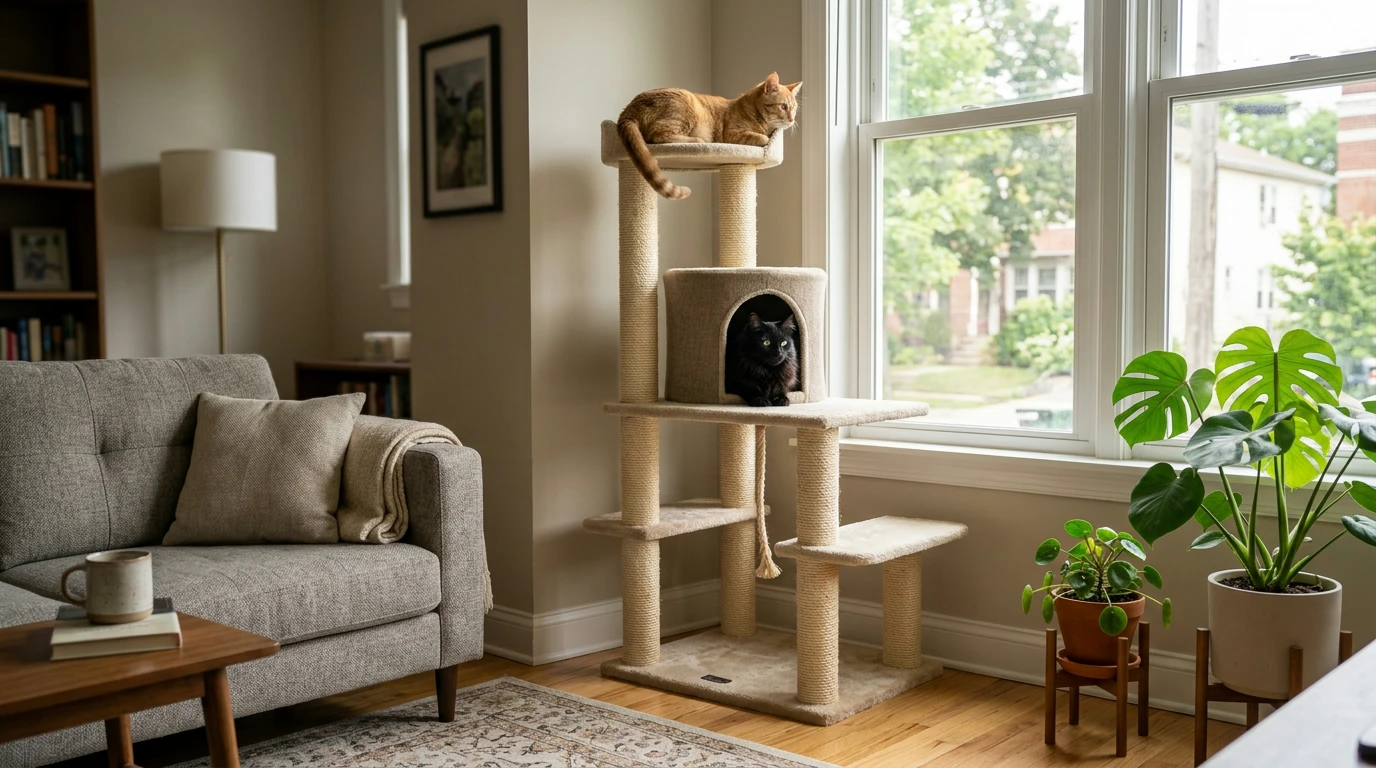
Large Multi-Level Cat Trees: A One-Spot Upgrade for Indoor Cats
Indoor cats do best when their home includes safe vertical space, dedicated scratching areas, and cozy places to retreat. A large multi-level cat tree that combines scratching posts, enclosed caves, and elevated perches supports everyday climbing, lounging, and stress relief—especially in apartments, busy households, or multi-cat homes. Enrichment guidelines from organizations like the American Association of Feline Practitioners (AAFP) and International Cat Care highlight how important “choice” and “space to retreat” can be for feline well-being.
What a Multi-Level Cat Tree Adds to an Indoor Home
A multi-level setup works like a mini “cat zone” that stacks key behaviors into one footprint. Instead of spreading scratchers, beds, and perches across multiple corners, a vertical tower concentrates activity and helps cats feel like they have their own territory.
- Vertical territory: “Up-high” options can lower tension between cats by offering escape routes and separate rest zones.
- Healthy scratching outlets: Dedicated scratch surfaces protect furniture while supporting natural claw maintenance.
- Covered caves: Enclosed dens provide a quiet, secure place for naps and decompression.
- Perches and platforms: Elevated lounging encourages calm observation—especially when placed near a window.
- Space efficiency: A single, upward-stacked footprint often fits more easily than multiple separate cat items.
Key Features to Look For (and Why They Matter)
Not all cat trees get used equally. The difference is usually in practical details: stability, climbability, and whether each “zone” feels comfortable and easy to reach.
- Stable base: A wide, weighty base helps prevent tipping during jumping, zoomies, and play.
- Multiple scratching posts: Scratch zones at different heights support full-body stretching and provide alternatives to chair legs.
- Enclosed caves: At least one hideaway supports timid cats and provides a warm sleep nook.
- Elevated perches: Higher resting spots satisfy climbing instincts and can reduce stress by improving “control of the room.”
- Platform spacing: Step-like levels help kittens, seniors, and less confident cats move safely.
- Materials and texture: Plush resting areas plus durable scratch-wrapped posts improve comfort and long-term use.
Quick Feature Checklist
| Feature | What to Check | Why It Helps |
|---|---|---|
| Scratching posts | More than one post; placed on different levels | Encourages consistent scratching and reduces furniture targeting |
| Caves | At least one enclosed hideout with easy entry | Supports stress relief and uninterrupted rest |
| Perches | Raised, flat lounging areas; ideally near a window | Provides observation points and calming vertical space |
| Stability | Wide base and balanced design | Reduces wobble and tipping during play |
| Level spacing | Short “steps” between platforms | Easier climbing for kittens and older cats |
Where This Style of Cat Tree Fits Best at Home
Placement can determine whether the cat tree becomes the top hangout or an ignored corner piece. Cats generally pick locations that offer comfort, visibility, and predictable traffic.
- Near a window: Turns the highest perch into a daily entertainment spot with sunlight and outdoor views.
- In the main living area: Many cats prefer resting where household activity happens—especially when they can observe it from above.
- Away from startle zones: Avoid placing it beside slamming doors, loud speakers, or narrow high-traffic hallways.
- Near existing scratch targets: If a sofa corner is the frequent scratch zone, place the tree right beside it to redirect behavior.
- Multi-cat layout tip: Position it so cats can approach and leave without getting cornered (two approach paths when possible).
Daily Use: Helping Cats Actually Choose the Tree
A good cat tree is only “good” if your cats use it. The goal is to make the tree the easiest and most rewarding place to climb, scratch, and rest.
Product Snapshot: Large Multi-Level Cat Tree with Scratching Posts, Caves, and Perches
If the goal is one main “cat hub” that supports play, rest, and daily routines, a consolidated multi-level design can replace separate scratchers and beds while keeping a tidy footprint. The Large Multi-Level Cat Tree with Scratching Posts, Caves, and Perches for Indoor Cats is built around that all-in-one concept, combining climbing routes, scratch zones, cozy caves, and elevated lookout spots.
At-a-Glance Details
| Item | Details |
|---|---|
| Name | Large Multi-Level Cat Tree with Scratching Posts, Caves, and Perches for Indoor Cats |
| Price | 84.82 USD |
| Availability | In stock |
| Product page | View details |
More Handy Picks for Pet Parents (In Stock)
- Universal Car Steering Wheel Phone Mount for Safe Navigation (helpful for hands-free navigation on vet trips and errands).
- Triple-Sided Ultra-Fine Soft Bristle Toothbrush for Enhanced Oral Health (a quick, convenient option for human oral care when your schedule is packed).
Care and Longevity Tips
FAQ
How tall should a multi-level cat tree be for indoor cats?
Choose a height that provides at least one elevated resting perch, but prioritize stability over maximum height. Look for step-like platform spacing that matches your cat’s age and mobility so climbing feels safe and natural.
How do you stop a cat from scratching furniture and use the posts instead?
Place the cat tree directly next to the usual scratch spot, then reward any interaction with the posts using treats or praise. Make the posts more attractive with catnip (if your cat responds) and temporarily cover or block the furniture corner while the new habit forms.
Are enclosed caves good for cats or do they encourage hiding?
Enclosed caves are typically calming and support uninterrupted rest, especially for shy or easily startled cats. Balance caves with open perches and interactive play so your cat has both retreat options and positive engagement.
Recommended for you
Was this article helpful?
Yes
No









Leave a comment