-
Shop
- Advanced Technologies
- AI Skills for Creators & Freelancers
- AI Client Management
- AI Ethics
- AI Mindset
- AI Tools & Prompts
- AI Writing & Content Creation
- Audio, Voice & Music
- Design & Visual Creation
- Email, Messaging & Communication
- Freelancing & Business
- Marketing, Ads & Conversion
- Productivity, Workflow & Automation
- SEO & Search Optimization
- Social Media Content & Growth
- Strategy, Planning & Analytics
- Video Creation & Editing
- AI Skills Mastery 2026 Collection
- Bathroom
- Best-Sellers
- Car Accessories
- Confidence
- Dating & Social Skills
- Digital Resources
- Easter Products
- Education & Learning
- Family & Parenting
- Fashion
- Fashion Accessories
- Furniture
- Gadgets
- Health & Beauty
- Health & Wellness
- Home & Garden
- Home Electronics
- Home Supplies
- Jewelry
- Kids & Babies
- Kitchen
- Lighting
- Patio, Lawn & Garden
- Personal Growth
- Pet Care
- Pet Supplies
- Pets
- Shoes
- Smart Home Living Guides
- Sport & Outdoors
- Stress Relief & Relaxation
- Super Deals
- TikTok Growth & Monetization Mastery
- Travel
- Travel & Adventure
- Wealth
- Wellness
Cordless Electric Spin Scrubber: 8 Heads + Adjustable Arm
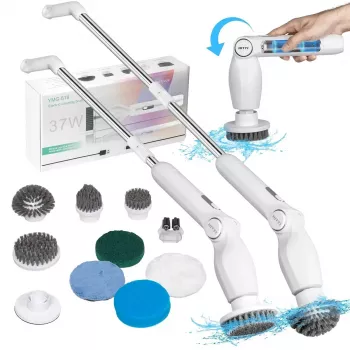
Electric Spin Scrubber with 8 Brush Heads & Adjustable Arm – Cordless Power Scrubber
Tough soap scum, grout haze, and baked-on grime often demand more force than most hands and sponges can deliver comfortably. A cordless spin scrubber pairs rotating power with specialized brush heads and an adjustable arm to clean tubs, tile, sinks, and hard-to-reach corners while reducing bending and wrist strain. Instead of grinding away with repetitive motion, you let the scrubber provide consistent agitation—then you focus on guiding it where it needs to go.
What It Is and Where It Helps Most
An electric spin scrubber is a handheld, battery-powered tool that spins an attached brush head to lift residue with less manual effort. It’s especially useful in bathrooms where buildup returns quickly—think tubs, shower walls, grout lines, tile edges, faucet bases, and shower door tracks. In kitchens, it can help with sink basins, stove knobs, backsplash tile, and even textured cookware exteriors (depending on the finish).
The adjustable arm is a comfort upgrade for everyday cleaning: it helps reach lower wall tile, tub surrounds, corners, and areas behind fixtures without as much crouching or bending. For best results, match the right brush head with the right cleaner, and give the cleaner enough dwell time to do the heavy lifting before you scrub.
Common Cleaning Spots and Recommended Brush Head Type
| Area | Typical grime | Brush head type to start with | Tip |
|---|---|---|---|
| Grout lines | Mildew staining, embedded dirt | Narrow/pointed detail brush | Use a grout-safe cleaner and avoid lingering in one spot on soft grout |
| Shower tile & walls | Soap scum, mineral film | Flat brush | Let cleaner sit 3–5 minutes before scrubbing |
| Bathtub floor | Body oils, residue | Large flat brush | Work in sections; rinse often to prevent redeposit |
| Corners & caulk edges | Mildew, buildup in tight seams | Small detail brush | Light pressure to avoid damaging caulk |
| Sink & faucet base | Hard-water spots, toothpaste/soap | Medium round brush | Finish with microfiber wipe for a streak-free look |
| Shower door tracks | Grit and soap scum | Detail brush | Vacuum/flush loose grit first to prevent scratching |
Key Features That Change the Cleaning Experience
The biggest difference between manual scrubbing and a cordless power scrubber is consistency. A steady rotating head maintains even agitation across the surface, which can improve results with less elbow grease.
- Cordless use: Move freely around bathrooms and kitchens without managing a power cord near water.
- Adjustable arm: Extend reach for low tile, baseboards, and awkward angles; shorten it for close-up control at the sink.
- Multiple brush heads: Separate heads for flat surfaces, corners, grout, and delicate areas help avoid over-scrubbing.
- Ergonomic handling: Rotating action reduces repetitive wrist motion compared to manual scrubbing.
- Swappable, dedicated heads: Keep one head for the bathroom and another for the kitchen to support more hygienic cleaning.
For broader guidance on cleaning and disinfecting routines, the CDC provides practical recommendations for everyday settings at CDC.gov.
Using an Electric Spin Scrubber Effectively
A spin scrubber works best when it’s part of a simple process—prep, dwell, scrub, rinse, dry. Skipping the prep step is where people most often run into scratches or smeared residue.
- Pre-rinse or wipe loose grit: This reduces scratching on glossy tile, acrylic tubs, and stainless steel.
- Apply cleaner and allow dwell time: Let chemistry break down residue before mechanical scrubbing (often 3–5 minutes, depending on the product label).
- Start gentle: Begin with the least aggressive brush head that can do the job, then step up only if needed.
- Use steady, moderate pressure: Let the rotation do the work and keep the head moving to help prevent uneven wear on softer finishes.
- Rinse and dry: A final microfiber pass reduces water spots on tile and fixtures.
- Post-clean care: Remove the brush head, rinse thoroughly, and air-dry to reduce odor and bacterial growth.
If you prefer products with safer ingredient standards, the EPA’s Safer Choice program is a helpful reference point: EPA.gov.
Brush Head Matchups: What to Use and What to Avoid
Care, Charging, and Storage
When a Cordless Spin Scrubber Is a Better Choice Than Manual Tools
Product Options Available Now
- Electric Spin Scrubber with 8 Brush Heads & Adjustable Arm – Cordless Power Scrubber ($47.82) — designed to cover flat surfaces, corners, and detail work while extending reach for floors and low tile.
- Triple-Sided Ultra-Fine Soft Bristle Toothbrush for Enhanced Oral Health ($1.52) — a simple add-on for keeping sinks and bathrooms feeling “reset” after cleaning.
- Universal Car Steering Wheel Phone Mount for Safe Navigation ($1.80) — a small convenience upgrade for keeping navigation visible on busy days.
At-a-Glance Purchase Details
| Item | Price | Availability |
|---|---|---|
| Electric Spin Scrubber with 8 Brush Heads & Adjustable Arm – Cordless Power Scrubber | $47.82 | In stock |
FAQ
Can an electric spin scrubber be used on grout and tile without damaging them?
Yes—use an appropriate brush head, moderate pressure, and keep the head moving. Avoid aggressive scrubbing on soft grout or damaged sealant, and choose a grout-safe cleaner for best results.
How should brush heads be cleaned and stored after use?
Remove the head, rinse it thoroughly (a little mild soap helps if there’s residue), shake off excess water, and air-dry completely. Store heads in a ventilated spot to reduce odor and prevent mildew.
Is an adjustable arm mainly for floors, or does it help in showers too?
It helps in both places: extension reduces bending for floors and lower wall tiles, and it also improves reach into corners and around fixtures while maintaining control.
Recommended for you


Was this article helpful?
Yes
No









Leave a comment