-
Shop
- Advanced Technologies
- AI Skills for Creators & Freelancers
- AI Client Management
- AI Ethics
- AI Mindset
- AI Tools & Prompts
- AI Writing & Content Creation
- Audio, Voice & Music
- Design & Visual Creation
- Email, Messaging & Communication
- Freelancing & Business
- Marketing, Ads & Conversion
- Productivity, Workflow & Automation
- SEO & Search Optimization
- Social Media Content & Growth
- Strategy, Planning & Analytics
- Video Creation & Editing
- AI Skills Mastery 2026 Collection
- Bathroom
- Best-Sellers
- Car Accessories
- Confidence
- Dating & Social Skills
- Digital Resources
- Easter Products
- Education & Learning
- Family & Parenting
- Fashion
- Fashion Accessories
- Furniture
- Gadgets
- Health & Beauty
- Health & Wellness
- Home & Garden
- Home Electronics
- Home Supplies
- Jewelry
- Kids & Babies
- Kitchen
- Lighting
- Patio, Lawn & Garden
- Personal Growth
- Pet Care
- Pet Supplies
- Pets
- Shoes
- Smart Home Living Guides
- Sport & Outdoors
- Stress Relief & Relaxation
- Super Deals
- TikTok Growth & Monetization Mastery
- Travel
- Travel & Adventure
- Wealth
- Wellness
Lavender Wind-Down Checklist for Calm and Better Sleep
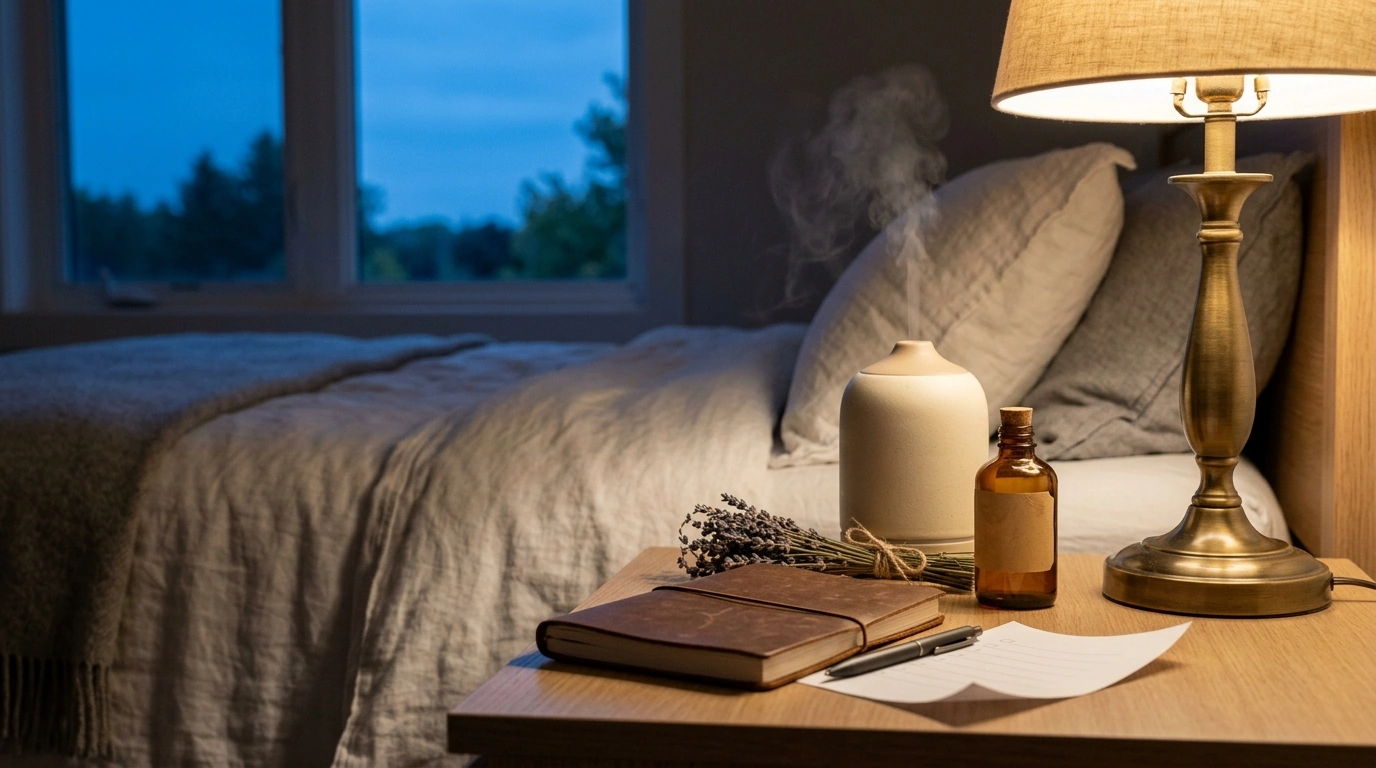
Lavender Bliss Relaxation Checklist: A Simple Digital Routine for Stress Relief, Sleep, and Calm
A steady, repeatable wind-down routine can make it easier to shift from a busy day into genuine rest. The Lavender Bliss approach keeps things simple: a short digital checklist that pairs calming habits with lavender essential oil, so the steps stay consistent whether the goal is a calmer evening, better sleep, or a quick reset during stressful moments. For more guidance, see Can Aromatherapy With Essential Oils Provide Stress Relief?.
What the Lavender Bliss checklist is (and who it helps most)
The Lavender Bliss Relaxation Checklist (digital download) is a printable/trackable guide built around a short relaxation routine. Instead of improvising every night, you follow a few small steps that combine a lavender scent cue with low-effort calming habits. For further reading, see Lavender and the Nervous System – PMC.
- Best for “tired but wired” evenings: when the body feels exhausted but the mind keeps running.
- Helpful for nighttime overthinking: a structure for breathing, body release, and mental offloading.
- Great for beginners: clear steps remove the guesswork, especially when stress makes decision-making harder.
- Also ideal for routine-lovers: a consistent checklist you can print, mark up, and repeat.
- Flexible by design: use it nightly, after work to decompress, or as a weekend reset.
Why lavender is a popular relaxation tool
Lavender is widely used in aromatherapy for relaxation and sleep support. While results vary person to person, many people find the aroma comforting—especially when it’s paired with a consistent wind-down routine. Over time, scent can become a reliable “transition cue” that signals the brain it’s time to downshift.
- Habit-friendly: using the same lavender cue at the same point in your evening can reinforce a predictable rhythm.
- Pairs well with simple practices: slow breathing, gentle stretching, and short journaling all match lavender’s low-effort vibe.
- Easy to use in multiple ways: diffuser, gentle inhalation, diluted topical application, or a light linen spray.
For a helpful overview of essential oil basics and safety, see the National Center for Complementary and Integrative Health (NCCIH) — Essential Oils. For sleep-focused context, the Sleep Foundation’s aromatherapy guide is a practical reference.
How to use the checklist for a 10–20 minute wind-down
The goal is not to build the “perfect” nighttime routine. It’s to create a repeatable sequence that’s easy enough to do even on stressful days. Most nights, 10–20 minutes is plenty.
- Set the scene: dim lights, reduce noise, and choose one lavender method (diffuser, inhalation, diluted topical, or linen spray).
- Run the core sequence: breathe slowly for a few minutes, then do a quick body scan (jaw, shoulders, hands, stomach).
- Add one calming action: gentle stretching, a warm shower, or a simple “brain dump” list to offload worries.
- Finish with a sleep-friendly cue: put the phone away, set tomorrow’s first task, and keep the bedroom cool and quiet.
- Repeat when possible: consistency matters more than intensity. The routine should feel automatic over time.
Example checklist flow (choose one option per step)
| Step | Pick 1 option | Time |
|---|---|---|
| Lavender cue | Diffuse lavender OR inhale from tissue/cotton pad OR apply diluted lavender to wrists/neck | 1–2 min |
| Breathing | 4-7-8 breathing OR box breathing OR slow nasal breaths | 2–4 min |
| Body release | Neck/shoulder stretch OR legs-up-the-wall OR gentle forward fold | 3–6 min |
| Mind declutter | Brain dump list OR 3-line journal OR gratitude note | 2–5 min |
| Sleep handoff | Set alarm + water nearby OR read 2 pages OR progressive muscle relaxation | 2–5 min |
Best ways to use lavender essential oil in the routine
Pick one method and keep it consistent. A light, repeatable scent cue is often enough—no need to overpower the room or pile on multiple applications.
Safety notes and common mistakes to avoid
For a broader overview of aromatherapy as a complementary approach, the Cleveland Clinic’s aromatherapy resource is a useful primer.
Make it stick: personalization ideas for different nights
Get the digital download and start tonight
If you want a simple system you can follow without thinking, the Lavender Bliss Relaxation Checklist (digital download) is designed for instant access and easy use on a tablet/phone—or printing for a physical, check-it-off routine.
To support your overall self-care routine beyond bedtime, a few small everyday upgrades can help reduce friction. If you like keeping routines streamlined, consider adding practical essentials like the Triple-Sided Ultra-Fine Soft Bristle Toothbrush for Enhanced Oral Health for a gentler nighttime hygiene step, or the Universal Car Steering Wheel Phone Mount for Safe Navigation to make commutes less stressful and more hands-free.
FAQ
How long should the lavender wind-down routine take?
A practical range is 10–20 minutes, long enough to shift your nervous system without turning bedtime into a project. On busy nights, use a 5-minute minimum version: lavender cue + 2 minutes of slow breathing + a quick body scan.
Can lavender essential oil help with sleep?
Lavender is commonly used for relaxation and may support sleep for some people, especially when it becomes part of a consistent wind-down routine. It’s not a cure-all, but it can work well as a gentle cue that it’s time to rest.
Is it safe to put lavender essential oil on skin or on a pillow?
For skin, use a carrier oil for proper dilution, patch test first, and avoid eyes and broken skin. For pillows/linens, use a lightly diluted spray and avoid over-applying; use extra caution around sensitivities, children, pregnancy, asthma, migraines, and pets.
Recommended for you


Was this article helpful?
Yes
No









Leave a comment