-
Shop
- Advanced Technologies
- AI Skills for Creators & Freelancers
- AI Client Management
- AI Ethics
- AI Mindset
- AI Tools & Prompts
- AI Writing & Content Creation
- Audio, Voice & Music
- Design & Visual Creation
- Email, Messaging & Communication
- Freelancing & Business
- Marketing, Ads & Conversion
- Productivity, Workflow & Automation
- SEO & Search Optimization
- Social Media Content & Growth
- Strategy, Planning & Analytics
- Video Creation & Editing
- AI Skills Mastery 2026 Collection
- Bathroom
- Best-Sellers
- Car Accessories
- Confidence
- Dating & Social Skills
- Digital Resources
- Easter Products
- Education & Learning
- Family & Parenting
- Fashion
- Fashion Accessories
- Furniture
- Gadgets
- Health & Beauty
- Health & Wellness
- Home & Garden
- Home Electronics
- Home Supplies
- Jewelry
- Kids & Babies
- Kitchen
- Lighting
- Patio, Lawn & Garden
- Personal Growth
- Pet Care
- Pet Supplies
- Pets
- Shoes
- Smart Home Living Guides
- Sport & Outdoors
- Stress Relief & Relaxation
- Super Deals
- TikTok Growth & Monetization Mastery
- Travel
- Travel & Adventure
- Wealth
- Wellness
5-Minute Self-Talk Reset: Flip Negative Scripts Fast

The Self-Talk Glow-Up Checklist: Flip Your Script, Boost Your Vibe
Self-talk is the running commentary that can either steady the nervous system and support follow-through—or quietly drain confidence. A “glow-up” in mindset rarely comes from one dramatic breakthrough; it’s usually a repeatable set of small, specific language shifts practiced in real moments: before a meeting, after a mistake, or when motivation drops. This checklist-style approach turns vague positivity into doable prompts: notice the script, name the pattern, replace it with a believable reframe, and reinforce it with one tiny behavior. Over time, the result is a calmer baseline, clearer boundaries, and a more consistent sense of self-trust.
What a self-talk glow-up actually changes
- Moves from automatic criticism to intentional coaching language
- Builds confidence through consistency: small promises kept, then repeated
- Improves emotional regulation by reducing catastrophizing and all-or-nothing thinking
- Creates a “reset routine” for setbacks so one bad moment doesn’t become a bad week
- Helps decisions feel clearer by separating facts, feelings, and stories
This isn’t about denying stress or forcing a smile through it. It’s closer to what cognitive behavioral therapy teaches: thoughts shape emotions and choices, and thoughts can be questioned and updated. If you want a deeper overview of that framework, the American Psychological Association’s CBT resources are a solid starting point: American Psychological Association (APA) — Cognitive Behavioral Therapy.
Spot the scripts that dim your vibe
- Listen for absolutes: “always,” “never,” “everyone,” “no one”
- Identify the role your inner voice is playing: critic, perfectionist, mind-reader, fortune-teller
- Notice body cues that signal a script is running: tight chest, jaw clench, shallow breathing
- Track common triggers: mornings, social media scrolls, work feedback, family conversations
- Write the exact sentence down; changing self-talk starts with precision, not vague intention
Common negative scripts and what they usually protect
| Script pattern | Hidden fear underneath | Healthier goal |
|---|---|---|
| “I’m not good enough.” | Rejection or being judged | Practice and progress with support |
| “If it’s not perfect, it’s pointless.” | Failure or embarrassment | Iterate and learn safely |
| “They probably think I’m annoying.” | Not belonging | Ask, clarify, and stay present |
| “I’ll never change.” | Hopelessness after setbacks | Build a tiny repeatable habit |
Flip your script: believable reframes that still feel true
- Start with a bridge statement when positivity feels fake: “This is hard, and I can take one step.”
- Replace identity labels (“I’m a mess”) with behavior language (“Today got messy; I can reset.”)
- Use “yet” to reopen possibility: “I don’t know how to do this… yet.”
- Swap mind-reading for curiosity: “I’m unsure how it landed—let me check.”
- Aim for supportive accuracy, not hype: confidence grows fastest from realistic self-trust
Flip-the-script examples you can copy
| Moment | Old script | New script | Next tiny action |
|---|---|---|---|
| Before starting | “I’ll mess it up.” | “I can do a rough first draft.” | Set a 10-minute timer and begin |
| After feedback | “I’m terrible at this.” | “This is data I can use.” | Choose one improvement to try next time |
| When comparing | “They’re ahead; I’m behind.” | “Different timelines; I’m building mine.” | List 3 wins from the last 30 days |
| When anxious | “I can’t handle this.” | “I can handle the next step.” | Name the step; take one action now |
The checklist method: a 5-minute mindset reset
Stress isn’t “all in your head”—it shows up in the body, too. When you pair a thought shift with a longer exhale or a relaxed jaw, you teach your nervous system that the moment is manageable. The APA’s overview on how stress affects the body can help connect those dots: American Psychological Association (APA) — Stress effects on the body.
Confidence that lasts: daily prompts that compound
Simple prompt schedule (use as a weekly loop)
| Time | Prompt | Purpose |
|---|---|---|
| Morning | “What matters most today?” | Focus and direction |
| Midday | “What story am I telling right now?” | Catch spirals early |
| Afternoon | “What’s one brave action?” | Build self-trust through behavior |
| Evening | “What did I do well?” | Reinforce competence and progress |
Use the ebook checklist when motivation dips
Recommended tools (in stock)
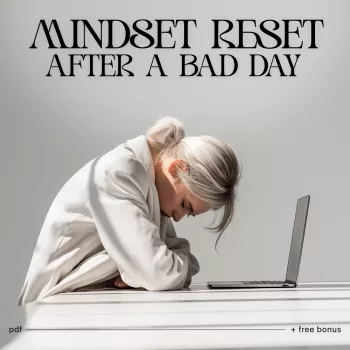
- The Self-Talk Glow-Up Checklist: Flip Your Script, Boost Your Vibe | Ebook Guide on how to create positive self talk, Confidence & Mindset Reset (quick prompts you can reuse when you’re spiraling)
- Universal Car Steering Wheel Phone Mount for Safe Navigation (handy for “one-breath reset” reminders before you step out of the car)
- Triple-Sided Ultra-Fine Soft Bristle Toothbrush for Enhanced Oral Health (a simple daily cue to practice calm, steady self-talk during routine habits)
Quick-start plan
| Day | Focus | Outcome to look for |
|---|---|---|
| Day 1–2 | Catch and write the exact negative script | Awareness without shame |
| Day 3–4 | Test 2–3 believable reframes | Reduced intensity of spirals |
| Day 5–7 | Pair reframes with a micro-action | More follow-through and calm |
FAQ
How long does it take to change negative self-talk?
Noticeable shifts can happen in a few days when you practice the same reframe in the same situations, but deeper habit change often takes weeks. Repetition matters most when you pair new phrases with small actions that prove the new story is believable.
What if positive affirmations feel fake or cringey?
Use bridge statements and supportive accuracy instead of hype—try “This is hard, and I can take one step.” Focus on realistic language and one behavior you can complete today, because evidence beats enthusiasm.
Can self-talk really improve confidence?
Yes—self-talk influences what you notice, how strongly you react, and whether you persist after setbacks. Confidence tends to grow when your inner voice helps you recover faster and keep making small promises you can keep.
Recommended for you


Was this article helpful?
Yes
No









Leave a comment