-
Shop
- Advanced Technologies
- AI Skills for Creators & Freelancers
- AI Client Management
- AI Ethics
- AI Mindset
- AI Tools & Prompts
- AI Writing & Content Creation
- Audio, Voice & Music
- Design & Visual Creation
- Email, Messaging & Communication
- Freelancing & Business
- Marketing, Ads & Conversion
- Productivity, Workflow & Automation
- SEO & Search Optimization
- Social Media Content & Growth
- Strategy, Planning & Analytics
- Video Creation & Editing
- AI Skills Mastery 2026 Collection
- Bathroom
- Best-Sellers
- Car Accessories
- Confidence
- Dating & Social Skills
- Digital Resources
- Easter Products
- Education & Learning
- Family & Parenting
- Fashion
- Fashion Accessories
- Furniture
- Gadgets
- Health & Beauty
- Health & Wellness
- Home & Garden
- Home Electronics
- Home Supplies
- Jewelry
- Kids & Babies
- Kitchen
- Lighting
- Patio, Lawn & Garden
- Personal Growth
- Pet Care
- Pet Supplies
- Pets
- Shoes
- Smart Home Living Guides
- Sport & Outdoors
- Stress Relief & Relaxation
- Super Deals
- TikTok Growth & Monetization Mastery
- Travel
- Travel & Adventure
- Wealth
- Wellness
Wooden Pretend Coffee Machine for Toddler Café Play
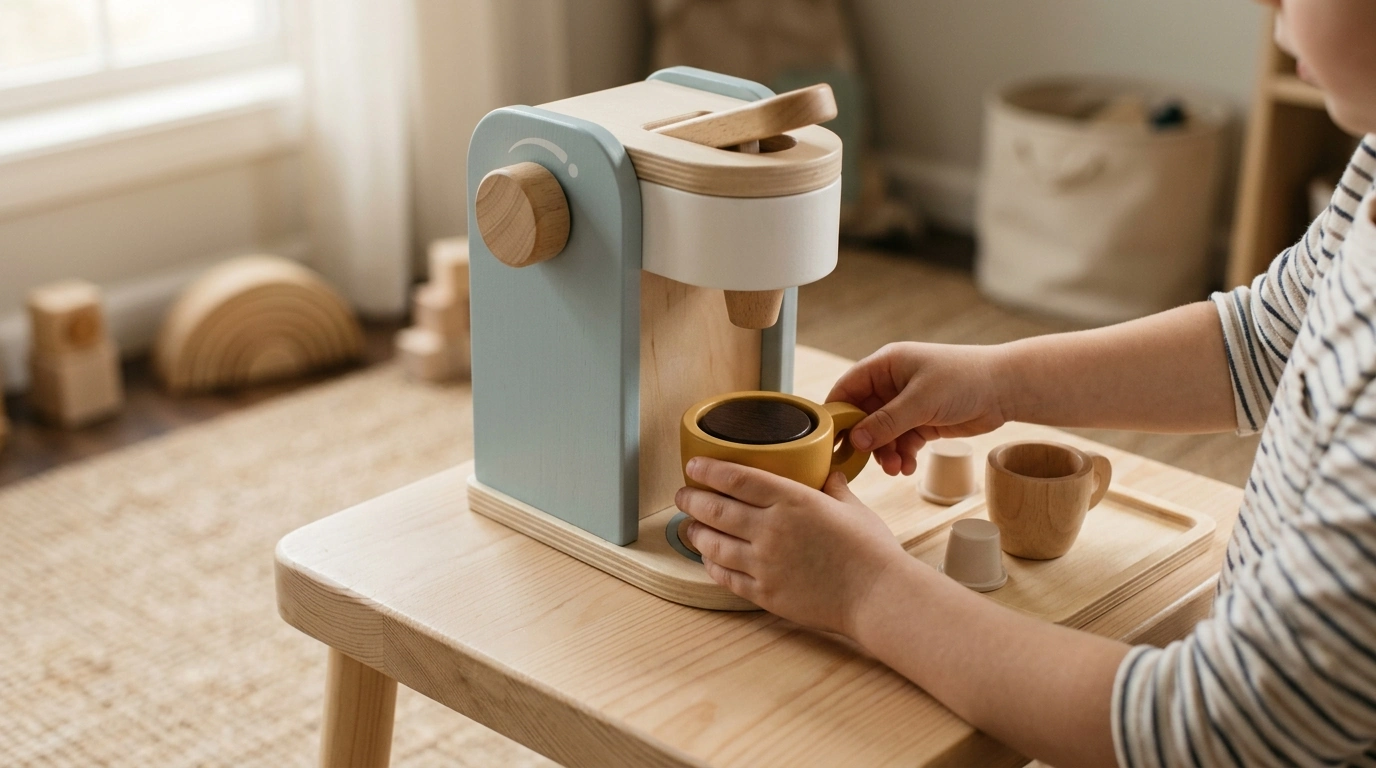
Wooden Pretend Play Coffee Machine for Toddlers: A Cozy Coffee-Shop Role Play Set for Learning
A wooden pretend coffee machine turns everyday routines into imaginative play that builds language, social skills, and early problem-solving. With café-style pretend orders, “brewing,” serving, and cleanup, toddlers and preschoolers practice turn-taking and sequencing while enjoying a screen-free activity that works for solo play or siblings. For more guidance, see 10 Best Toy Coffee Makers We’ve Found in 2026.
What Makes a Wooden Coffee Machine Set So Engaging
There’s something instantly inviting about a tiny coffee station that looks like the real thing—just made for small hands. A wooden pretend coffee machine set feels familiar and comforting, which helps kids jump into play without needing lots of instructions.
- Familiar routine, kid-sized: Coffee-shop actions mirror what children see at home or in cafés, so pretend play starts naturally.
- Open-ended storytelling: Kids can be the barista, customer, or even the delivery driver—switching roles keeps the “shop” busy.
- Hands-on cause and effect: Turning knobs, placing cups, and choosing pretend flavors supports early logic and attention.
- Screen-free calm: Tabletop role play can become a predictable daily quiet-time activity with gentle pacing and simple steps.
Play isn’t just entertainment—it’s one of the most powerful ways young children learn and practice real-life skills. For more on why play matters, see the American Academy of Pediatrics’ guidance on the importance of play in healthy child development.
Learning Benefits: Skills Toddlers Practice During Café Role Play
A pretend café is a mini learning lab: kids communicate, plan, negotiate, and repeat steps until they feel confident. Those repeated “orders” and “brews” create a playful structure that supports several areas of early development.
- Language growth: Greeting a customer, taking an order, naming items, and using polite phrases expands vocabulary and conversational turns.
- Social-emotional skills: Switching roles builds empathy (“What would you like today?”) and patience while waiting for a turn.
- Early math: Counting cups, sorting pieces, comparing sizes, and simple pretend “pricing” introduce numbers naturally.
- Fine motor development: Grasping accessories, aligning parts, and manipulating controls strengthens hand muscles used later for writing.
- Executive function: Following a sequence (order → prepare → serve → clean) builds planning and memory through repetition.
If you like tracking skills as they emerge, the CDC’s developmental milestones are a helpful reference for what many children practice from toddlerhood through preschool.
What to Look For in a Toddler-Friendly Wooden Pretend Coffee Machine
The best sets feel sturdy, simple, and satisfying to use—without tiny parts or tricky mechanisms that stop the story mid-play.
- Smooth, rounded edges and sturdy construction to handle enthusiastic play.
- Non-toxic, child-safe finishes and paints suitable for young children.
- Chunky accessories that are easier to grasp and less likely to disappear under the couch.
- Simple mechanisms (knobs, buttons, levers) that work without frustration.
- Pieces that encourage sharing: at least two cups or items so siblings can play at once.
- Easy storage: a tray, compartment, or consistent “home” for accessories helps kids learn cleanup routines.
Café Role Play by Age: How the Same Set Grows With Your Child
| Age range | Typical play style | Skills practiced | Simple caregiver prompt |
|---|---|---|---|
| 18–24 months | Imitating actions (push, turn, pour) | Cause-and-effect, basic words, grasp control | “Push the button—coffee is ready!” |
| 2–3 years | Short story play (order and serve) | Turn-taking, naming items, sequencing | “Can I have one cup, please?” |
| 3–4 years | Longer role play with choices and rules | Problem-solving, early counting, self-regulation | “Two customers—how will you serve them?” |
| 4–5 years | Pretend menus, pricing, and café scenarios | Early math, storytelling, negotiation | “What’s today’s special? How much?” |
For more family-friendly ideas on how play supports learning, the NAEYC shares practical guidance on play and learning.
Play Ideas That Keep the Coffee Shop Busy
Once the basic “brew and serve” routine is mastered, small twists keep kids engaged without adding complexity.
- Morning routine café: “Open the shop,” serve breakfast, then “close” and tidy up.
- Color-and-choice orders: Assign pretend flavors by color (“green cup is mint”) to build matching skills.
- Kindness café: Practice sharing and manners with a short script (“Hello, thank you, you’re welcome”).
- Drive-through: Line up stuffed animals and take quick orders to build memory and listening skills.
- Sibling teamwork: One child takes orders while another “prepares,” then swap roles to practice flexibility.
A helpful trick for longer play: add a “cleanup check” at the end—cups back on the tray, pieces back in their spot, and the café is ready for tomorrow.
Safety, Care, and Setup Tips for Everyday Use
Featured Products for Screen-Free Routines
- Wooden Pretend Play Coffee Machine – Educational Role Play Toy for Toddlers, Boys & Girls, Learning Toy ($51.51)
- Triple-Sided Ultra-Fine Soft Bristle Toothbrush for Enhanced Oral Health ($1.52)
FAQ
What age is a wooden pretend coffee machine best for?
Most sets work well from the toddler to preschool years: simple imitation often starts around 18–24 months, and more detailed role play typically grows from ages 3–5. Always check the manufacturer’s age guidance and supervise if the set includes smaller accessories.
How does pretend café play support learning?
Pretend café play builds language through ordering, naming items, and practicing manners, while also supporting social skills like turn-taking and empathy. Kids naturally explore early math by counting and sorting, and they strengthen executive function by repeating a sequence such as order → prepare → serve → clean.
Are wooden pretend play toys safe for toddlers?
They can be safe when designed well: look for smooth edges, sturdy construction, and non-toxic finishes, plus pieces sized appropriately for your child’s age. Supervise play when needed and keep the toy in good condition by wiping it clean and storing accessories consistently.
Recommended for you


Was this article helpful?
Yes
No









Leave a comment