-
Shop
- Advanced Technologies
- AI Skills for Creators & Freelancers
- AI Client Management
- AI Ethics
- AI Mindset
- AI Tools & Prompts
- AI Writing & Content Creation
- Audio, Voice & Music
- Design & Visual Creation
- Email, Messaging & Communication
- Freelancing & Business
- Marketing, Ads & Conversion
- Productivity, Workflow & Automation
- SEO & Search Optimization
- Social Media Content & Growth
- Strategy, Planning & Analytics
- Video Creation & Editing
- AI Skills Mastery 2026 Collection
- Bathroom
- Best-Sellers
- Car Accessories
- Confidence
- Dating & Social Skills
- Digital Resources
- Easter Products
- Education & Learning
- Family & Parenting
- Fashion
- Fashion Accessories
- Furniture
- Gadgets
- Health & Beauty
- Health & Wellness
- Home & Garden
- Home Electronics
- Home Supplies
- Jewelry
- Kids & Babies
- Kitchen
- Lighting
- Patio, Lawn & Garden
- Personal Growth
- Pet Care
- Pet Supplies
- Pets
- Shoes
- Smart Home Living Guides
- Sport & Outdoors
- Stress Relief & Relaxation
- Super Deals
- TikTok Growth & Monetization Mastery
- Travel
- Travel & Adventure
- Wealth
- Wellness
10-Minute Daily Cleaning Reset + Printable Checklist
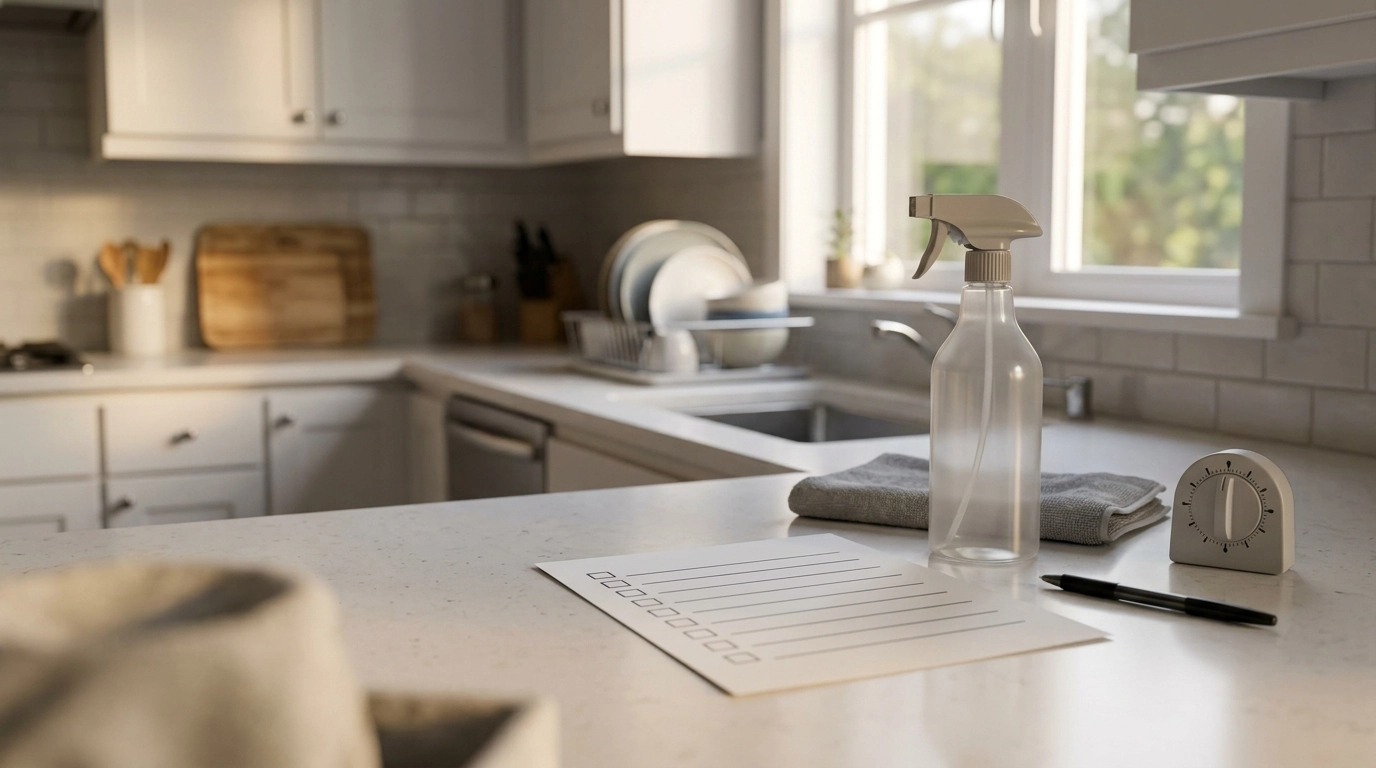
Clean Daily, Shine Always: A Minimalist Daily Cleaning Routine That Sticks
A calm home doesn’t require marathon cleaning days—just a short, repeatable routine. When cleaning is broken into small daily actions, it stops feeling like a looming project and starts feeling like a simple “reset” that protects your time and energy. Below is a minimalist approach that’s easy to maintain on busy weeks, plus a printable checklist option to keep the routine visible and consistent.
Why small daily resets beat weekend deep-cleaning
Weekend deep-cleans can work, but they often come with two downsides: buildup and burnout. A daily reset shifts the work into micro-tasks that are easier to repeat and harder to dread.
- Daily micro-tasks prevent buildup, which reduces total time and decision fatigue later.
- A consistent “close the day” reset keeps high-traffic areas presentable with minimal effort.
- Short sessions are easier to repeat, making cleanliness feel automatic rather than overwhelming.
- A checklist removes guesswork and helps keep standards consistent across the household.
For health-focused guidance on what “cleaning” means versus “disinfecting,” the CDC’s overview is a helpful reference: CDC: Cleaning and Disinfecting.
Set the baseline: what “clean enough” looks like in a busy home
A routine sticks when it’s realistic. Instead of aiming for “guest-ready,” define what “clean enough” means for day-to-day comfort—then protect that baseline with a timer.
- Pick 3 focus zones that impact daily comfort most (often the kitchen, bathroom sink area, and floors in the entry/living space).
- Define a minimum standard for each zone (example: clear counters, wiped surfaces, no visible crumbs, towels hung).
- Keep supplies where the work happens (spray + cloth under each sink; broom or vacuum within reach).
- Use a timer (5–15 minutes) to prevent the routine from expanding into an all-evening project.
If choosing products feels overwhelming, look for clearer labeling and safer options using EPA Safer Choice as a quick guide.
How to make cleaning a habit (without relying on motivation)
Motivation is unreliable; cues and convenience are not. The goal is to make the next right action obvious and easy, even on tired days.
- Anchor: attach one cleaning action to an existing daily cue (after coffee, after dinner, before shower, before bed).
- Shrink the start: create a “2-minute version” for hectic days (wipe sink + quick tidy) to keep the streak alive.
- Make the next step obvious: leave the cloth/spray visible in the right location; store items in open bins if needed.
- Use a simple reward loop: finish the routine, then allow a preferred activity (show, reading, scrolling) guilt-free.
- Track completion visually: a printable checklist reinforces consistency and reduces the mental load of deciding what to do next.
For a deeper look at why small repeated actions become automatic over time, the APA’s habit resources are a solid starting point: American Psychological Association: Habits.
A minimalist daily routine organizer: what to do each day in 10 minutes
This is a “minimum viable clean” reset—fast enough to do daily, effective enough to prevent chaos. Adjust the order to match your household rhythm (morning, after dinner, or right before bed).
- Kitchen (3–4 minutes): clear counters, load/unload dishwasher, wipe sink and stove front, quick sweep of crumbs.
- Bathroom (2–3 minutes): wipe sink/counter, quick toilet swish if needed, replace hand towel, spot-check mirror.
- Living areas (2–3 minutes): fast pickup to baskets, straighten cushions/throws, clear coffee table surfaces.
- Floors/entry (1–2 minutes): shoes to designated spot, quick vacuum/sweep high-traffic strip.
- Finish (30 seconds): a final “reset scan” to catch clutter before it becomes tomorrow’s problem.
| Zone | Minimum task | Time | When to do it |
|---|---|---|---|
| Kitchen | Counters clear + sink wipe | 3–4 min | After dinner |
| Bathroom | Sink/counter wipe + towel reset | 2–3 min | After morning routine |
| Living area | Quick pickup to basket + surfaces clear | 2–3 min | Before bed |
| Entry/Floors | Shoes away + quick sweep/vac strip | 1–2 min | Anytime/after arriving home |
Using a printable home cleaning checklist to stay consistent
A checklist isn’t about being strict—it’s about removing daily decision-making. When you’re busy, “what should I do first?” is often the biggest blocker.
Printable checklist digital download: what’s included and how to use it
If you want a simple visual tracker you can print and post where you’ll actually see it, the Clean Daily, Shine Always printable home cleaning checklist (digital download) is designed to keep the routine minimalist and repeatable.
To make the bathroom portion of your routine easier to maintain, consider keeping everyday hygiene tools stocked and easy to grab, such as the Triple-Sided Ultra-Fine Soft Bristle Toothbrush for Enhanced Oral Health for quick, consistent sink-area routines.
Common roadblocks (and quick fixes that keep the routine alive)
FAQ
How long does it take to build a daily cleaning habit?
It varies by person and how complex the routine is, but consistency matters more than intensity. Anchor a 2–10 minute reset to an existing cue (like after dinner) and track it daily so the behavior becomes automatic over time.
What should be on a daily cleaning checklist for a busy household?
Keep it minimal: dishes/counters, a quick sink wipe, a visible clutter pickup, a bathroom sink wipe, a trash spot-check, and a quick sweep/vac of high-traffic areas. If you can do it in 10 minutes, it’s more likely to happen.
Is a printable checklist better than using an app?
For many households, print is more visible and frictionless because it stays in your line of sight. Apps can work well if notifications help; testing one week with a printed sheet in a high-traffic spot is an easy way to see what you’ll actually use.
Recommended for you



Was this article helpful?
Yes
No









Leave a comment