-
Shop
- Advanced Technologies
- AI Skills for Creators & Freelancers
- AI Client Management
- AI Ethics
- AI Mindset
- AI Tools & Prompts
- AI Writing & Content Creation
- Audio, Voice & Music
- Design & Visual Creation
- Email, Messaging & Communication
- Freelancing & Business
- Marketing, Ads & Conversion
- Productivity, Workflow & Automation
- SEO & Search Optimization
- Social Media Content & Growth
- Strategy, Planning & Analytics
- Video Creation & Editing
- AI Skills Mastery 2026 Collection
- Bathroom
- Best-Sellers
- Car Accessories
- Confidence
- Dating & Social Skills
- Digital Resources
- Easter Products
- Education & Learning
- Family & Parenting
- Fashion
- Fashion Accessories
- Furniture
- Gadgets
- Health & Beauty
- Health & Wellness
- Home & Garden
- Home Electronics
- Home Supplies
- Jewelry
- Kids & Babies
- Kitchen
- Lighting
- Patio, Lawn & Garden
- Personal Growth
- Pet Care
- Pet Supplies
- Pets
- Shoes
- Smart Home Living Guides
- Sport & Outdoors
- Stress Relief & Relaxation
- Super Deals
- TikTok Growth & Monetization Mastery
- Travel
- Travel & Adventure
- Wealth
- Wellness
Workout Habit Checklist: Build a Routine That Sticks
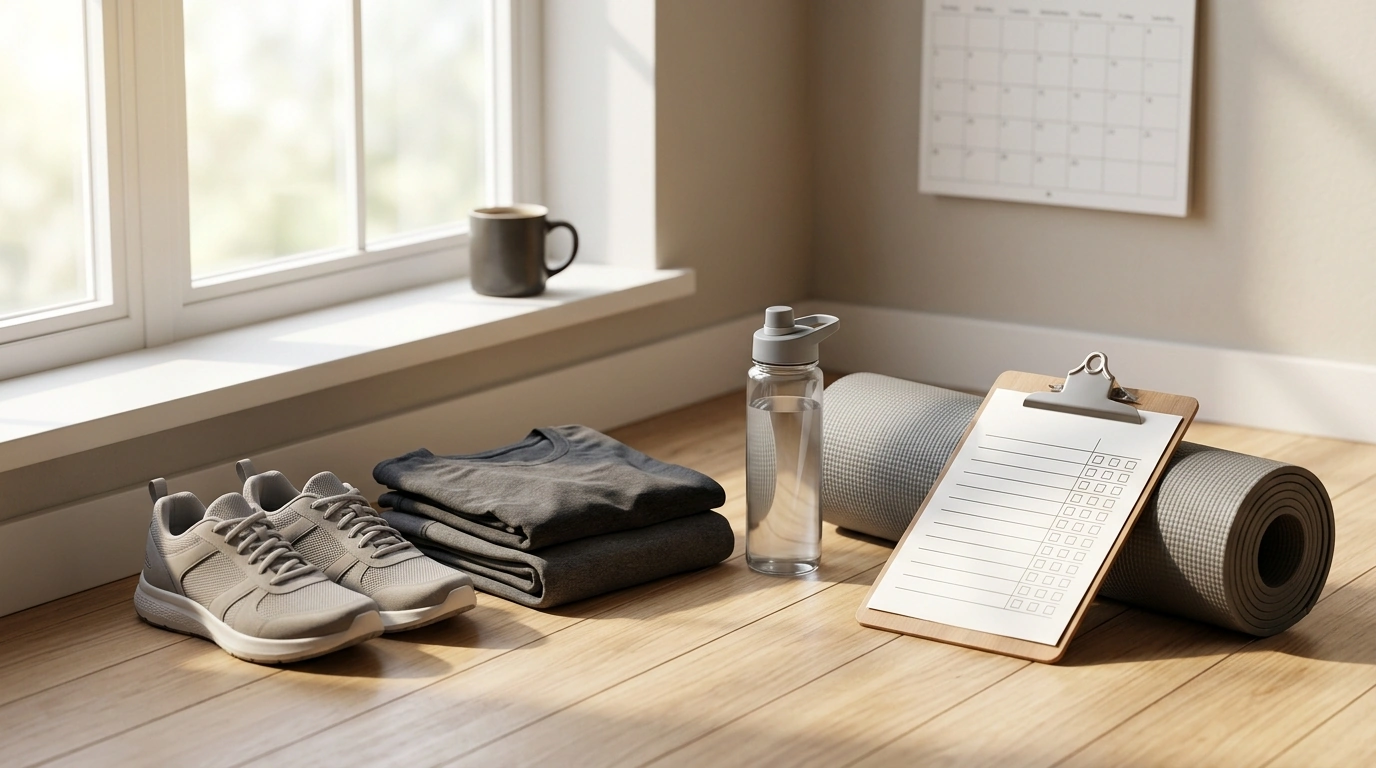
Workout Habit Builder Checklist: A Simple System for Consistent Training
Consistency is rarely about motivation—it’s about making workouts easier to start, easier to finish, and easier to repeat. A checklist-based approach turns vague goals into clear actions: when to work out, what to do, how to reduce friction, and what to do when life interrupts the plan. This guide lays out a practical routine-building system and includes a ready-to-use printable that keeps the process simple.
What Makes a Workout Habit “Stick”
Long-term training doesn’t come from willpower; it comes from a setup that works even on average days. Focus on the fundamentals that make “showing up” the default.
- Start with identity and purpose: choose a reason that stays true even when progress feels slow (energy, stress relief, longevity, strength for daily life).
- Make the first step tiny: focus on showing up (5–10 minutes) before optimizing intensity or duration.
- Use a clear trigger: attach workouts to a dependable cue (after morning coffee, right after work, before dinner).
- Reduce decision fatigue: repeat the same weekly schedule for 4–6 weeks before changing it.
- Plan for disruption: a habit survives because it has a fallback option (short session, alternate day, walk-only day).
If you want a low-friction way to keep these pieces visible, a printable planner can help. The Workout Habit Builder Checklist (Digital Download PDF) is designed for quick checkmarks and simple weekly planning.
The Habit Loop: Cue, Routine, Reward (Made Practical)
Most “I’ll work out more” plans fail because they rely on memory and mood. The habit loop turns training into a repeatable sequence.
- Cue: pick one reliable anchor time and location; consistency of context matters more than perfect timing.
- Routine: choose a minimum viable workout (MVW) that can be done even on low-energy days.
- Reward: define an immediate win (checkmark streak, relaxing shower, favorite podcast reserved for workouts).
- Keep the loop visible: a printed checklist on a wall or planner outperforms “remembering” in an app for many people.
- If the cue fails, swap the cue—don’t abandon the routine: move from 6 a.m. to lunchtime rather than quitting entirely.
| Goal | Cue | Minimum workout | Immediate reward |
|---|---|---|---|
| General fitness | After morning coffee | 10-minute full-body circuit | Check off the day + upbeat playlist |
| Stress reduction | After closing laptop | 20-minute brisk walk | Hot shower + calm tea |
| Strength building | Before dinner | 3 main lifts or 15-minute dumbbell set | Protein shake + track the set numbers |
| Cardio consistency | After dropping kids off / commute | 10-minute bike or jog | Podcast episode reserved for training |
When walking or running is your go-to MVW, comfort matters. If you’re refreshing your training basics, Armani Exchange Men’s Sneakers can be an easy upgrade for daily movement and errands that double as “walk days.”
Set Up Your Weekly Plan in 10 Minutes
A plan that’s realistic beats a plan that’s impressive. Your goal is a schedule you can repeat without negotiating with yourself.
- Pick a frequency that fits real life: 2–3 days/week is enough to build momentum; add days only after it feels automatic.
- Choose fixed days and a backup day: example: Mon/Wed/Fri + Sat backup.
- Define “done” for each session: one sentence describing the workout (e.g., “warm-up + 3 exercises + stretch”).
- Batch prep the environment: lay out shoes/clothes, charge headphones, keep a water bottle ready.
- Decide the stop point in advance: ending on time builds trust with the schedule and reduces dread.
If you’re aiming to meet general health recommendations, the Physical Activity Guidelines for Americans (2nd edition) provide a clear baseline for weekly activity and strength training.
Use the Checklist to Remove Friction (Before It Shows Up)
Friction hides in small moments: looking for socks, choosing a workout, debating whether you have time. A checklist solves those problems before they happen.
For people who do best with visual reminders, a printed tool like the Workout Habit Builder Checklist (Digital Download PDF) keeps cues, minimum workouts, and fallback options in one place—no scrolling required.
When Motivation Drops: Recovery, Plateaus, and Busy Weeks
Need extra accountability during walk days or treadmill sessions? Setting up a safe way to view directions or a timer can reduce “tiny hassles” that derail consistency. The Universal Car Steering Wheel Phone Mount for Safe Navigation is a simple option for keeping your phone visible when you’re organizing your day around the gym, trailhead, or park.
For a quick refresher on why consistent movement matters beyond aesthetics, the CDC overview of the benefits of physical activity highlights improvements in mood, sleep, and long-term health outcomes.
Printable Support: Workout Habit Builder Checklist (Digital PDF)
A good system should feel simple on the day you’re tired. The Workout Habit Builder Checklist (Digital Download PDF) is built to translate intentions into a repeatable weekly routine—cue, schedule, minimum workout, and fallback plan—without complicated tracking.
FAQ
How long does it take to build a workout habit?
Timelines vary, but repeating the same schedule for about 4–6 weeks is a practical target. Use a minimum workout on low-energy days and measure success by sessions completed, not by perfect performance.
What’s the best weekly workout frequency for consistency?
Starting with 2–3 days per week plus one backup day is usually sustainable. Once that feels automatic, add days gradually rather than jumping to an ambitious routine you can’t repeat.
What should happen if a workout is missed?
Follow a simple rule like “never miss twice” and return to the next planned session. If needed, do the shorter version of your workout and avoid overcompensating with a punishing catch-up session.
Recommended for you



Was this article helpful?
Yes
No









Leave a comment