-
Shop
- Advanced Technologies
- AI Skills for Creators & Freelancers
- AI Client Management
- AI Ethics
- AI Mindset
- AI Tools & Prompts
- AI Writing & Content Creation
- Audio, Voice & Music
- Design & Visual Creation
- Email, Messaging & Communication
- Freelancing & Business
- Marketing, Ads & Conversion
- Productivity, Workflow & Automation
- SEO & Search Optimization
- Social Media Content & Growth
- Strategy, Planning & Analytics
- Video Creation & Editing
- AI Skills Mastery 2026 Collection
- Bathroom
- Best-Sellers
- Car Accessories
- Confidence
- Dating & Social Skills
- Digital Resources
- Easter Products
- Education & Learning
- Family & Parenting
- Fashion
- Fashion Accessories
- Furniture
- Gadgets
- Health & Beauty
- Health & Wellness
- Home & Garden
- Home Electronics
- Home Supplies
- Jewelry
- Kids & Babies
- Kitchen
- Lighting
- Patio, Lawn & Garden
- Personal Growth
- Pet Care
- Pet Supplies
- Pets
- Shoes
- Smart Home Living Guides
- Sport & Outdoors
- Stress Relief & Relaxation
- Super Deals
- TikTok Growth & Monetization Mastery
- Travel
- Travel & Adventure
- Wealth
- Wellness
4-Pack Ratchet Straps w/ Double J Hooks: Safe Hauling
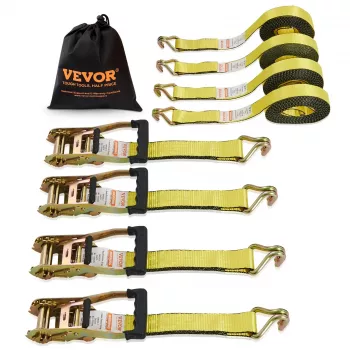
4-Pack Ratchet Tie Down Straps with Double J Hooks for Heavy Cargo Securing
Securing motorcycles, ATVs, lumber, appliances, or palletized freight calls for tie-downs that are simple to tension, resistant to abrasion, and reliable when the road gets rough. A 4-pack ratchet strap kit with Double J hooks gives you repeatable tension control and versatile attachment options for trailers, pickups, flatbeds, and roof or utility racks. Below is a practical breakdown of what’s included, how strength ratings work, where Double J hooks excel, and how to set up and re-check your load so it stays stable mile after mile.
What’s Included and What It’s Built For
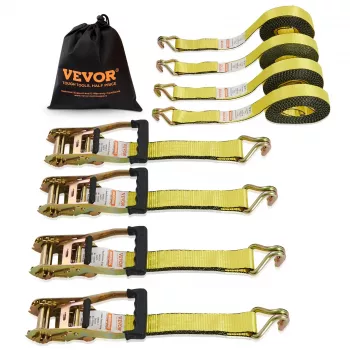
This set is a 4-pack of ratchet straps designed for everyday cargo control on common hauling platforms. The ratcheting tensioners let you remove slack in a controlled way, and the Double J hook ends are shaped to seat into many standard anchor styles when used correctly.
- 4-pack ratchet strap set intended for cargo securement on trailers, pickups, flatbeds, and utility racks
- Double J hooks help connect to suitable anchor points such as trailer D-rings and rated rails (and to stake pockets only when the pocket and edge geometry allow full seating without deformation)
- Ratchet action provides stronger, more consistent tensioning than many cam buckle straps, especially for heavier items
- Best for medium-to-heavy loads where maintaining tension through vibration and bumps matters
If you’re shopping for a heavy-duty set, see the 4PK Ratchet Tie Down Straps 10000 lb Break Strength with Double J Hook for Cargo (in stock).
Understanding Break Strength vs Working Load Limit
Strength labels can look impressive, but safe cargo securement depends on using the correct rating for real-world planning. Break strength is a lab-style maximum; Working Load Limit (WLL) is the service rating you should base decisions on whenever it’s provided. Also remember: the system is only as strong as your anchor points and your setup geometry.
- Break strength is the maximum force observed under test conditions before failure; it is not the recommended everyday load
- Working Load Limit (WLL) is a conservative service limit often derived from break strength using a safety factor
- Total securement depends on strap count, angles, and anchor point strength—not just the strap label
- For important or high-risk loads, favor tie-downs that clearly state WLL on the label and follow the securement practices appropriate for your cargo
Strength Ratings and Practical Use Guide
| Rating term | What it means | How to use it when securing cargo |
|---|---|---|
| Break strength | Force at which the strap system may fail in testing | Use as a reference, not as the target load |
| Working Load Limit (WLL) | Recommended maximum load for service | Plan cargo securement based on WLL and required tie-down counts |
| Anchor point capacity | Strength of D-rings/rails/hooks on trailer or vehicle | Ensure anchor points exceed the forces the straps can apply |
| Tie-down angle | Angle between strap and load/bed | Avoid shallow angles; better angles reduce slipping and improve hold |
For deeper background on securement expectations, review the FMCSA cargo securement rules and guidance from the Web Sling & Tie Down Association (WSTDA).
Double J Hooks: Where They Shine (and Where to Be Careful)
Double J hooks are popular because the profile can fit a range of tie-down points while staying relatively quick to attach. Their advantage is also their risk: if the hook isn’t fully seated, it can slip, twist, or deform under shock loading.
- Versatile hook shape for many common trailer and truck anchors
- Confirm the hook fully seats in the anchor; partial engagement can bend hardware or slip under impact
- Avoid sharp edges, thin sheet metal, and improvised tie points that can deform
- Use edge protection or sleeves if the webbing touches corners to reduce abrasion and cutting risk
A quick habit that pays off: after you tension the strap, look at each hook and confirm it’s loaded in a straight pull and not “side-loaded” against a lip or corner.
How to Use Ratchet Straps Correctly
Ratchet straps are straightforward, but consistent results come from a repeatable routine. Use the steps below to minimize slack, avoid over-tensioning, and reduce the chance of loosening over time.
While you’re making those early checks, it also helps to keep navigation in your line of sight without fumbling—consider the Universal Car Steering Wheel Phone Mount for Safe Navigation (in stock) for quick glances when you’re parked or stopped safely.
Common Tie-Down Setups for Typical Loads
Care, Storage, and When to Replace
Product Snapshot
| Item | Details |
|---|---|
| Product | 4PK Ratchet Tie Down Straps 10000 lb Break Strength with Double J Hook for Cargo |
| Pack count | 4 |
| Break strength | 10000 lb (as listed) |
| Hooks | Double J hook |
| Availability | In stock |
FAQ
How many ratchet straps are needed to secure a load safely?
The right number depends on the load’s weight, shape, tie-down angles, strap WLL, and the securement rules that apply to what you’re hauling. In practice, using multiple straps to prevent forward motion and side-to-side shift is safer than relying on a single strap.
Can ratchet straps be over-tightened?
Yes. Over-tension can crush cargo, bend anchor points, or overstress strap hardware. Tighten until the load is stable, then re-check after a short drive instead of forcing extra clicks.
What’s the difference between break strength and working load limit?
Break strength is the maximum force observed in testing before failure, while WLL is the recommended limit for real-world use. Securement planning should be based on WLL (when provided), along with proper strap count, angles, and rated anchor points.
Recommended for you


Was this article helpful?
Yes
No









Leave a comment