-
Shop
- Advanced Technologies
- AI Skills for Creators & Freelancers
- AI Client Management
- AI Ethics
- AI Mindset
- AI Tools & Prompts
- AI Writing & Content Creation
- Audio, Voice & Music
- Design & Visual Creation
- Email, Messaging & Communication
- Freelancing & Business
- Marketing, Ads & Conversion
- Productivity, Workflow & Automation
- SEO & Search Optimization
- Social Media Content & Growth
- Strategy, Planning & Analytics
- Video Creation & Editing
- AI Skills Mastery 2026 Collection
- Bathroom
- Best-Sellers
- Car Accessories
- Confidence
- Dating & Social Skills
- Digital Resources
- Easter Products
- Education & Learning
- Family & Parenting
- Fashion
- Fashion Accessories
- Furniture
- Gadgets
- Health & Beauty
- Health & Wellness
- Home & Garden
- Home Electronics
- Home Supplies
- Jewelry
- Kids & Babies
- Kitchen
- Lighting
- Patio, Lawn & Garden
- Personal Growth
- Pet Care
- Pet Supplies
- Pets
- Shoes
- Smart Home Living Guides
- Sport & Outdoors
- Stress Relief & Relaxation
- Super Deals
- TikTok Growth & Monetization Mastery
- Travel
- Travel & Adventure
- Wealth
- Wellness
Speedy Smarts Cleaning Checklist: Clean Faster, Smarter
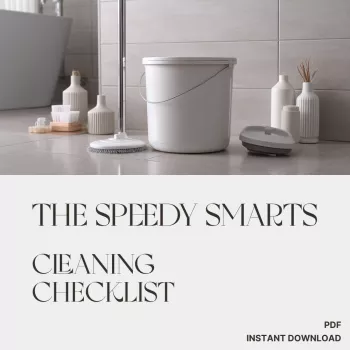
The Speedy Smarts Cleaning Checklist: A Faster, Smarter Routine for Homes, Offices, and Teams
A clear checklist turns “clean the place” into a quick sequence of small, repeatable steps. The Speedy Smarts Cleaning Checklist is a digital download designed to cut decision fatigue, standardize results, and make it easy to split work across rooms or team members—whether it’s a home reset, an office tidy-up, or a shared space that needs consistent upkeep.
If keeping things clean feels like it takes too long (or never “sticks”), the fix is rarely more effort. It’s a better order of operations, a simpler definition of “done,” and a routine that’s easy to repeat on busy days.
What the Speedy Smarts Checklist Helps Solve
- Cuts wasted time by grouping tasks in a practical order (top-to-bottom, dry-to-wet, left-to-right).
- Reduces re-cleaning by emphasizing high-touch areas and “finish steps” that prevent quick mess return.
- Creates a consistent standard for shared spaces (roommates, families, small offices, cleaning teams).
- Supports quick resets (10–30 minutes) and deeper sessions without starting from scratch each time.
- Helps prevent overwhelm by turning big cleaning goals into short, check-off wins.
What’s Included in the Digital Download
- A printable checklist designed for repeat use (print multiple copies or laminate for dry-erase use).
- A structured flow that can be followed solo or assigned across multiple people.
- Sections that fit common spaces: kitchens, bathrooms, bedrooms, living areas, offices, and shared zones.
- A format that works both digitally (tablet/phone) and as a paper guide at the point of use.
- A quick-reference approach that keeps the routine simple enough to maintain consistently.
Get the download here: The Speedy Smarts Cleaning Checklist (digital download).
Set Up a “Clean Faster” Session in 5 Minutes
- Choose the goal: quick reset (visible clutter + surfaces) or full clean (surfaces + floors + detail).
- Set a timer (15/25/45 minutes) to keep momentum and avoid getting stuck on perfection.
- Stage supplies first: all-purpose cleaner, microfiber cloths, trash bag, vacuum/broom, bathroom cleaner, glass cleaner if needed.
- Do a fast pickup pass before wiping anything: trash out, items back to their zones, dishes to sink/dishwasher.
- Follow an efficient order: declutter → dust/wipe → disinfect high-touch points → floors last.
That order matters because it prevents backtracking. If you vacuum before the pickup pass, you’ll step on crumbs again. If you spray before you dry-dust, you’ll make sticky grime that takes longer to remove.
Room-by-Room Speed Plan (Timeboxed)
Use this timeboxed map to get consistent results without overthinking. Start with the “5-minute essentials” to reset the room, then add the upgrade if your timer allows.
| Area | 5-minute essentials | 10–15 minute upgrade | Finish step |
|---|---|---|---|
| Kitchen | Trash + dishes + wipe counters | Sink + stovetop front + handles | Quick floor sweep/spot mop |
| Bathroom | Toilet wipe + sink/counter wipe | Mirror + shower touchpoints | Floor edges + restock paper/soap |
| Living room | Pickup + clear surfaces | Dust/wipe tables + vacuum paths | Reset pillows/throws + empty cups |
| Bedroom | Make bed + pickup | Wipe nightstands + handles | Vacuum/sweep around bed |
| Office | Clear desk + empty trash | Wipe desk surface + sanitize touchpoints | Reset supplies + cable tidy |
How to Use the Checklist With a Team (No Micromanaging)
- Assign by zones, not by vague chores: one person owns kitchen surfaces, another owns bathroom, another does floors.
- Use a “definition of done”: specify visible outcomes (empty bin, streak-free mirror, counters clear, floor crumbs gone).
- Run a two-pass system: Pass 1 = pickup and reset; Pass 2 = wipe/disinfect and floors.
- Standardize supplies per zone so anyone can step in (a small caddy per bathroom or per kitchenette).
- Do a 2-minute final walkthrough using the checklist to catch missed touchpoints (handles, switches, remotes).
This approach works especially well for offices and shared housing because it prevents the “I did my part” mismatch. Everyone knows what “done” looks like, and no one has to guess what matters most.
Smarter Techniques That Make Cleaning Feel Easier
Cleaning vs. Disinfecting: Where to Spend Effort
For deeper guidance on shared facilities and safe product use, refer to CDC: Cleaning and Disinfecting Your Facility and check approved options via EPA: Selected EPA-Registered Disinfectants.
Printing and Reusing the Checklist
Quick Start Routine: Daily, Weekly, and Monthly Rhythm
Helpful Add-Ons to Keep the Routine Moving
A checklist makes the plan effortless; a couple of small, easy-to-replace items can keep momentum up when you’re restocking. For personal hygiene routines that fit the same “quick, consistent, repeatable” mindset, consider the Triple-Sided Ultra-Fine Soft Bristle Toothbrush for Enhanced Oral Health. For organizing your phone while you run errands after a reset, the Universal Car Steering Wheel Phone Mount for Safe Navigation is a simple, low-fuss add-on.
FAQ
Is this checklist better for quick resets or deep cleaning?
It supports both. Use a 10–30 minute timer for a reset (pickup + surfaces + key touchpoints), then extend into the room-by-room steps for a deeper clean when you have more time.
Can it be used for an office or shared workspace?
Yes—assign zones, define “done” with visible outcomes, and prioritize high-touch disinfecting so results are consistent across multiple people. A two-pass system (pickup first, then wipe/disinfect and floors) keeps teams moving without micromanaging.
How do you reuse it without printing constantly?
Slip it into a sheet protector or laminate it and use a dry-erase marker, or keep it on a tablet/phone for tap-to-check use. Many teams also keep one copy per room so it stays where the work happens.
Recommended for you



Was this article helpful?
Yes
No









Leave a comment