-
Shop
- Advanced Technologies
- AI Skills for Creators & Freelancers
- AI Client Management
- AI Ethics
- AI Mindset
- AI Tools & Prompts
- AI Writing & Content Creation
- Audio, Voice & Music
- Design & Visual Creation
- Email, Messaging & Communication
- Freelancing & Business
- Marketing, Ads & Conversion
- Productivity, Workflow & Automation
- SEO & Search Optimization
- Social Media Content & Growth
- Strategy, Planning & Analytics
- Video Creation & Editing
- AI Skills Mastery 2026 Collection
- Bathroom
- Best-Sellers
- Car Accessories
- Confidence
- Dating & Social Skills
- Digital Resources
- Easter Products
- Education & Learning
- Family & Parenting
- Fashion
- Fashion Accessories
- Furniture
- Gadgets
- Health & Beauty
- Health & Wellness
- Home & Garden
- Home Electronics
- Home Supplies
- Jewelry
- Kids & Babies
- Kitchen
- Lighting
- Patio, Lawn & Garden
- Personal Growth
- Pet Care
- Pet Supplies
- Pets
- Shoes
- Smart Home Living Guides
- Sport & Outdoors
- Stress Relief & Relaxation
- Super Deals
- TikTok Growth & Monetization Mastery
- Travel
- Travel & Adventure
- Wealth
- Wellness
AI Bedtime Checklist: Fall Asleep Faster, Calm Mornings
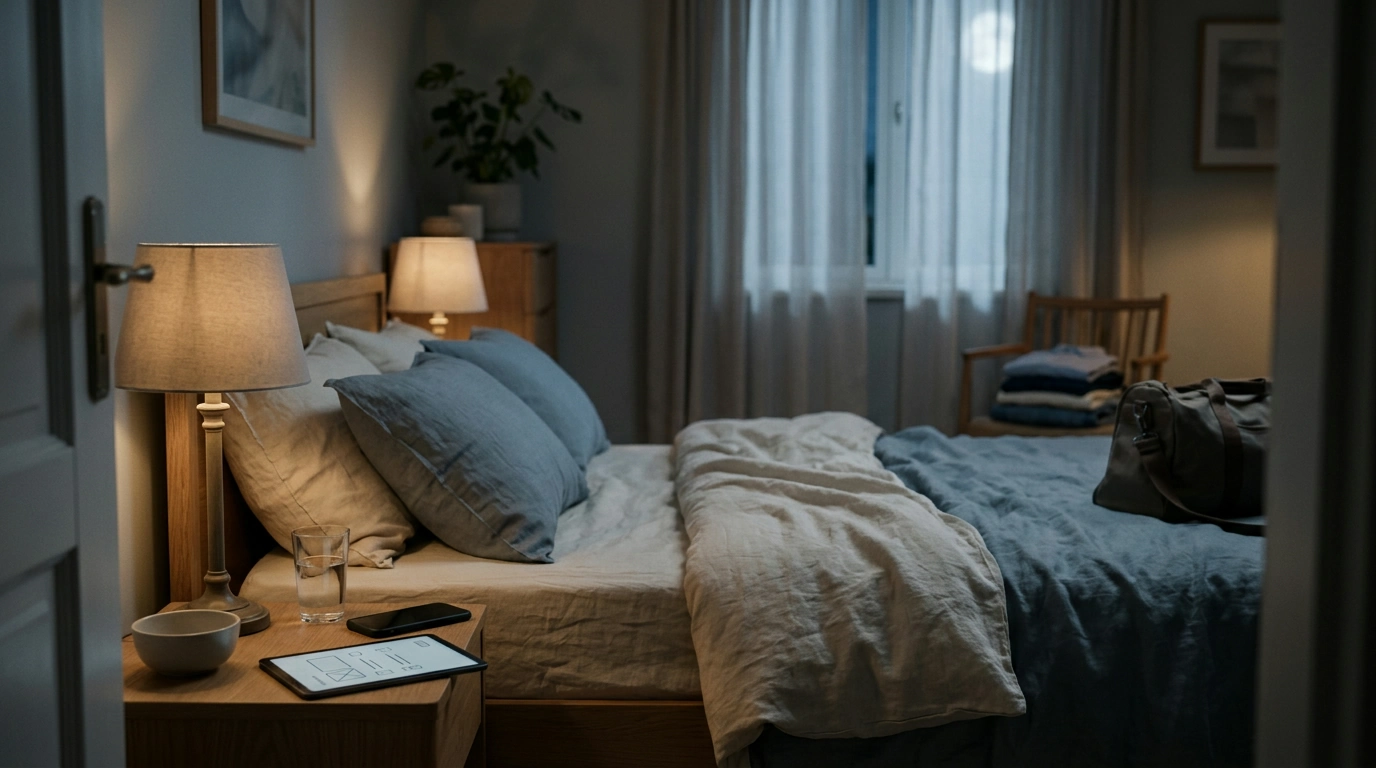
Why sleep feels hard at night (and why mornings feel harder)
When falling asleep feels like a nightly negotiation, it’s usually not because you’re “bad at sleep.” It’s because small sources of friction stack up: stress that lingers past dinner, a brain that stays on-call for tomorrow, and a bedroom environment that quietly signals “stay alert.” That’s how many people end up in the familiar “tired but wired” state—exhausted in the body, revved up in the mind.
Timing plays a bigger role than it seems. Caffeine that hits too late, workouts or work messages that run long, and irregular sleep windows can all make it harder for your body to anticipate rest. Predictable cues help: when the wind-down sequence looks similar most nights, the brain starts to recognize the pattern and shifts into lower gear more smoothly.
Then there’s the environment friction: bright light, a warm room, inconsistent noise, and phone notifications. Even if you feel sleepy, these signals nudge your nervous system toward alertness. According to the Centers for Disease Control and Prevention (CDC), sleep health is shaped by daily habits and sleep conditions—not just what time you “try” to fall asleep.
A checklist approach helps because it reduces decision fatigue. Instead of deciding what to do every night (and accidentally defaulting to scrolling), you follow a simple sequence. Fewer choices means fewer delays, and less mental clutter means a calmer runway into sleep.
What an AI-assisted bedtime checklist changes
Traditional advice can be helpful, but it’s often broad: “reduce screens,” “relax,” “keep a consistent schedule.” An AI-assisted digital checklist turns those concepts into specific steps you can complete in 10 to 45 minutes depending on the night. It can also adapt the timing to your next morning—because a 6:00 a.m. wake-up deserves a different wind-down start than a weekend schedule.
Instead of aiming for perfection, the checklist structure encourages consistency. If you miss a step, you don’t “start over”; you just resume with the next item. That alone reduces the pressure that can make sleep feel like a performance.
Another advantage is quick reflection. A short nightly note—what worked, what didn’t—helps your routine evolve week to week. Over time, you keep the steps that reliably make you drowsy and drop the ones that don’t.
Common sleep blockers and checklist-style fixes
| Sleep blocker | What it feels like | Checklist action to try | When to do it |
|---|---|---|---|
| Racing thoughts | Mind won’t stop reviewing the day | 2–5 minutes of brain-dump journaling + choose 1 priority for tomorrow | 30–60 minutes before bed |
| Phone overstimulation | Scrolling extends bedtime and increases alertness | Set a device cutoff + place phone across the room or on a charger outside the bedroom | 45–90 minutes before bed |
| Light exposure | Sleepiness disappears after bright screens/lights | Dim room lights + enable warmer screen settings | 60 minutes before bed |
| Temperature discomfort | Too warm or too cold to settle | Adjust thermostat/fan; choose breathable bedding | 30 minutes before bed |
| Caffeine too late | Sleep latency increases even when tired | Set a caffeine cutoff time and swap to herbal tea/water | Early afternoon (varies by person) |
| Irregular schedule | Body clock feels confused | Set a consistent wake time; anchor a wind-down start time | Daily |
A practical evening flow that fits real life
Choose one calming activity that’s genuinely repeatable: light reading, gentle stretching, breath work, or a warm shower. Keep it simple enough that you can do it even when you’re tired. For guidance on sleep-friendly routines, the National Sleep Foundation’s sleep hygiene overview offers practical foundations that pair well with a checklist.
How the digital checklist supports calm mornings
Another high-leverage habit is a consistent wake-up anchor: light exposure, hydration, and brief movement. These cues help your body clock stay steady, which supports stronger sleep pressure later. The National Institute of Neurological Disorders and Stroke (NINDS) explains how sleep is regulated by brain systems that respond to rhythms and cues—exactly what a repeatable checklist is designed to reinforce.
Using the checklist for different nights
Product spotlight: Digital Checklist for Restful Nights and Calm Mornings
If you want a ready-to-use structure that turns good intentions into a nightly sequence, Fall Asleep Faster with AI | AI Help Falling Asleep Faster | Digital Checklist for Restful Nights and Calm Mornings is designed to make wind-down predictable. It’s especially useful for building a “default routine” you can follow even when you’re tired, busy, or overstimulated.
- Triple-Sided Ultra-Fine Soft Bristle Toothbrush for Enhanced Oral Health to streamline your nightly hygiene step (easy routines are easier to repeat).
- Universal Car Steering Wheel Phone Mount for Safe Navigation to make morning navigation smoother, so you’re less tempted to handle your phone in a rushed, stressful way.
FAQ
How quickly can a bedtime checklist help improve falling asleep?
Some people notice a quicker wind-down within a few nights, especially when the checklist reduces late-night phone use and decision fatigue. More reliable improvements often show up after 1–2 weeks of consistent timing. Tracking bedtime, wake time, and which steps you completed can help you spot what’s working.
What if the checklist feels too long or hard to follow?
Use a “minimum viable routine” of 3–5 steps: device cutoff, lights dim, quick prep for tomorrow, a short relaxation practice, and bed. Once that feels automatic, add optional steps only if they noticeably help. A shorter routine done consistently is more effective than a perfect routine done rarely.
Is AI guidance safe to use for sleep problems?
AI guidance can be a safe way to support habits and routines, but it isn’t medical care or a replacement for diagnosis. If insomnia persists, or if there are signs of sleep apnea, severe anxiety/depression, or medication-related concerns, it’s important to consult a qualified clinician.
Recommended for you


Was this article helpful?
Yes
No









Leave a comment