-
Shop
- Advanced Technologies
- AI Skills for Creators & Freelancers
- AI Client Management
- AI Ethics
- AI Mindset
- AI Tools & Prompts
- AI Writing & Content Creation
- Audio, Voice & Music
- Design & Visual Creation
- Email, Messaging & Communication
- Freelancing & Business
- Marketing, Ads & Conversion
- Productivity, Workflow & Automation
- SEO & Search Optimization
- Social Media Content & Growth
- Strategy, Planning & Analytics
- Video Creation & Editing
- AI Skills Mastery 2026 Collection
- Bathroom
- Best-Sellers
- Car Accessories
- Confidence
- Dating & Social Skills
- Digital Resources
- Easter Products
- Education & Learning
- Family & Parenting
- Fashion
- Fashion Accessories
- Furniture
- Gadgets
- Health & Beauty
- Health & Wellness
- Home & Garden
- Home Electronics
- Home Supplies
- Jewelry
- Kids & Babies
- Kitchen
- Lighting
- Patio, Lawn & Garden
- Personal Growth
- Pet Care
- Pet Supplies
- Pets
- Shoes
- Smart Home Living Guides
- Sport & Outdoors
- Stress Relief & Relaxation
- Super Deals
- TikTok Growth & Monetization Mastery
- Travel
- Travel & Adventure
- Wealth
- Wellness
Calm Turbulence Anxiety: Breathing & Mindset Tools
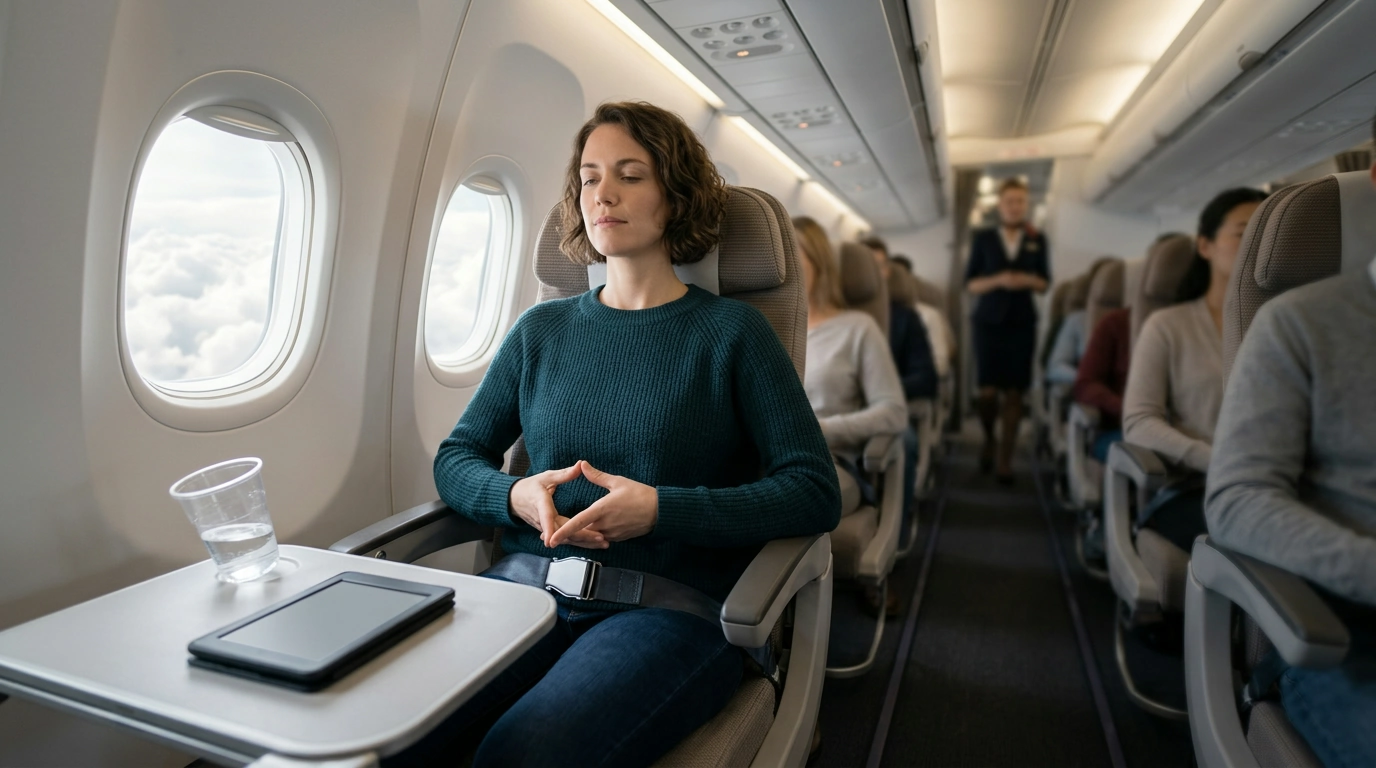
Managing Anxiety During Turbulence: Calm Flight Strategies, Mindset Tools, and Breathing Exercises
Turbulence can feel personal when anxiety is already high: the body reacts fast, thoughts spiral, and control feels out of reach. The goal isn’t to force calm instantly, but to reduce fear responses, stay oriented, and use practical tools that work mid-flight. The sections below build a simple, repeatable approach—before takeoff, during bumps, and after landing—so turbulence becomes a manageable moment rather than a catastrophe.
Why turbulence feels so scary (even when it’s not dangerous)
Anxiety amplifies uncertainty. When the motion is unfamiliar, the brain often treats it like a threat and hunts for the most alarming explanation available. That mental “search” can make moderate bumps feel like an emergency.
It also doesn’t help that common anxiety sensations can mimic danger signals: a tight chest, lightheadedness, shaky legs, or tingling hands. When those sensations show up during turbulence, it’s easy to assume they’re proof that something is wrong—when they’re often a normal stress response.
Loss of control is another big trigger. You can’t see the air, you can’t predict the next bump, and you can’t “fix” the situation. If catastrophic thinking kicks in (“This shouldn’t be happening”), the body tightens, breathing gets shallow, and fear escalates. A more useful target: turbulence is typically uncomfortable, not unsafe—more like a rough road than a structural threat.
A quick reality check: what turbulence is and what pilots do
Turbulence is irregular airflow. It can happen in clear air, near storms, around mountains, or along jet streams. Authoritative aviation sources describe turbulence as a common atmospheric condition, not a rare failure event (see the Federal Aviation Administration and the NOAA National Weather Service for weather basics).
Modern aircraft are engineered with large structural tolerances, and routine turbulence is accounted for in design and operations. When the seat belt sign turns on, it’s usually about preventing injuries from sudden movement—because the primary risk in turbulence is an unbelted passenger getting jolted.
Pilots use weather radar, air traffic control, and reports from other aircraft to adjust altitude or route when feasible. A helpful mantra that matches reality: “Uncomfortable motion is expected; the crew is managing it; my job is to stay strapped in and steady my nervous system.”
Your turbulence toolkit: what to do in the first 60 seconds
When bumps start, the first minute matters. Use a short sequence that you can repeat automatically:
Breathing exercises that work during bumps
You don’t need perfect breathing—just a consistent exhale that signals “downshift” to the nervous system. If you’re prone to anxiety disorders, calming skills like paced breathing can help reduce physiological arousal over time (see the National Institute of Mental Health for background on anxiety and body symptoms).
1) Box breathing (steadying)
2) Extended exhale (downshift)
3) Physiological sigh (reset)
4) Breath + count + touch (anti-spiral)
Mindset tools for nervous flyers: calming thoughts that don’t backfire
A simple plan by flight phase (save this and rehearse it)
Before boarding
Reduce baseline stress: hydrate, eat lightly, avoid excess caffeine, and preload a calming playlist or grounding audio. If you like having a structured plan you can follow when your mind goes blank, keep a ready-to-use guide on your phone, such as Managing Anxiety During Turbulence eBook for Nervous Flyers.
Taxi and takeoff
During turbulence
Cruise after turbulence
Descent and landing
Calm plan for turbulence: actions by moment
| Moment | Body action | Breathing | Mindset cue | Attention anchor |
|---|---|---|---|---|
| First sign of bumps | Belt low and snug; feet flat; jaw unclench | Extended exhale 4 in / 6 out | “Uncomfortable, not unsafe” | Fix gaze on a stable point |
| Moderate turbulence | Shoulders down; hands relaxed; seat contact points felt | Box breathing 4-4-4-4 | “Crew expects this” | Count 10 exhales |
| Sudden drop sensation | Exhale on the drop; soften belly | Physiological sigh x2 | “A wave passes” | Thumb-to-finger tapping |
| After it eases | Slow stretch; sip water | Normal slow breathing | “I handled it” | Music or guided grounding |
What to avoid when anxiety spikes
Build confidence over time: practice between flights
A guided resource for nervous flyers
When turbulence hits, it’s hard to think clearly—so having a structured, step-by-step plan can help you act first and analyze later. A resource that combines body regulation (breath, grounding) and cognitive reframes (thought scripts) is often easier to use in real time. For a ready-made set of routines and scripts, see Managing Anxiety During Turbulence eBook for Nervous Flyers. For travel comfort prep that supports calmer routines, consider packing simple hygiene basics like the Triple-Sided Ultra-Fine Soft Bristle Toothbrush for Enhanced Oral Health so small self-care actions stay easy even on stressful travel days.
FAQ
What should be done when turbulence triggers a panic attack?
Fasten your seat belt low and snug, plant your feet, and focus on a short breathing protocol like an extended exhale (4 in, 6–8 out) or box breathing. Label what’s happening (“panic” or “turbulence”), use a grounding anchor (touch or gaze), and ride it in small time blocks; if panic is frequent, professional support can help.
Is turbulence dangerous for the plane?
Turbulence is a normal change in airflow, and aircraft are designed to handle it. The main risk is passenger injury when someone isn’t buckled, which is why the seat belt sign matters; pilots also adjust altitude or route when possible.
Do breathing exercises really help during turbulence?
Yes—slower breathing, especially with longer exhales, can reduce sympathetic “fight-or-flight” arousal and make the sensations feel less alarming. If counting is hard during bumps, focus on one simple rule: make each exhale slower than the inhale.
Recommended for you

Was this article helpful?
Yes
No









Leave a comment