-
Shop
- Advanced Technologies
- AI Skills for Creators & Freelancers
- AI Client Management
- AI Ethics
- AI Mindset
- AI Tools & Prompts
- AI Writing & Content Creation
- Audio, Voice & Music
- Design & Visual Creation
- Email, Messaging & Communication
- Freelancing & Business
- Marketing, Ads & Conversion
- Productivity, Workflow & Automation
- SEO & Search Optimization
- Social Media Content & Growth
- Strategy, Planning & Analytics
- Video Creation & Editing
- AI Skills Mastery 2026 Collection
- Bathroom
- Best-Sellers
- Car Accessories
- Confidence
- Dating & Social Skills
- Digital Resources
- Easter Products
- Education & Learning
- Family & Parenting
- Fashion
- Fashion Accessories
- Furniture
- Gadgets
- Health & Beauty
- Health & Wellness
- Home & Garden
- Home Electronics
- Home Supplies
- Jewelry
- Kids & Babies
- Kitchen
- Lighting
- Patio, Lawn & Garden
- Personal Growth
- Pet Care
- Pet Supplies
- Pets
- Shoes
- Smart Home Living Guides
- Sport & Outdoors
- Stress Relief & Relaxation
- Super Deals
- TikTok Growth & Monetization Mastery
- Travel
- Travel & Adventure
- Wealth
- Wellness
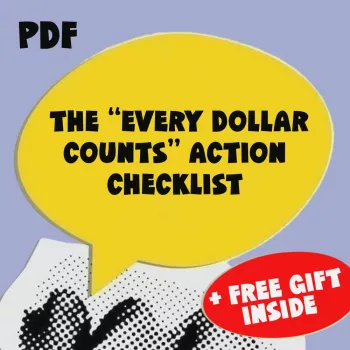
Every Dollar Counts: Daily Budget Checklist + Savings Tracker

The “Every Dollar Counts” Action Checklist: A Simple Daily System for Spending, Saving, and Staying on Track
Money goals usually fail for predictable reasons: small purchases go untracked, “future” bills surprise the month, and habits slip when life gets busy. A printable checklist and savings tracker turns budgeting into a short daily routine—so every dollar has a job, progress is visible, and decisions feel clear.
If you want extra guidance while you build the habit, the Consumer Financial Protection Bureau’s budgeting resources are a solid reference point for categories and basics. The difference maker, though, is consistency—checking in daily instead of rebuilding your plan after the damage is done.
What This Checklist System Helps With
- Turns budgeting into a repeatable daily routine instead of a once-a-month reset
- Helps assign each dollar a purpose: spending, saving, debt payoff, or essentials
- Creates quick visibility into where money leaks happen (subscriptions, convenience spending, impulse buys)
- Supports small, consistent actions that build momentum toward bigger goals
When you’re tracking daily, “minor” spending stops being invisible. That’s especially helpful for recurring charges—free trials, app renewals, and surprise add-ons. For a deeper look at how recurring charges work (and how to spot them), review the FTC guidance on negative option subscriptions.
What’s Included in the Digital Download
- Action checklist pages designed for daily budget habits (track, review, and adjust)
- Printable savings tracker to mark progress toward a specific target (emergency fund, sinking funds, short-term goals)
- Goal-focused prompts to keep priorities visible during spending decisions
- A layout that works with either cash envelopes, debit, or credit (with a pay-in-full plan)
Quick overview: pages and how they’re used
| Page/Element | Use it for | Best time to fill it out |
|---|---|---|
| Daily action checklist | Record spending, confirm bills, and set the next small action | 5 minutes at the end of the day |
| Savings tracker | Visual progress toward a target amount | After transfers or paycheck deposit |
| Money goals prompts | Keep top goals front and center to reduce impulse spending | Morning or before shopping |
| Notes/adjustments area | Capture changes (unexpected expense, income changes, plan updates) | When something changes |
How to Use It in 10 Minutes a Day
- Start with one clear goal (example: $500 starter emergency fund or next month’s rent buffer)
- Write today’s non-negotiables (bills, groceries, transport) before discretionary spending
- Log every spend the same day—small purchases count most because they’re easiest to forget
- Do a fast end-of-day check: what was planned vs. what happened
- Choose one next action for tomorrow (pack lunch, cancel a subscription, move $5 to savings)
The simplest way to keep this from turning into “homework” is to keep it tiny: one daily check-in, one quick course correction. If you went off-plan, the win is still writing it down. That’s how patterns show up—and how you stop repeating the same expensive week on a loop.
Daily Budget Habits That Make the Biggest Difference
- Name the “top three” spending triggers (time pressure, boredom scrolling, convenience fees) and plan around them
- Use a 24-hour rule for non-essential purchases when possible
- Create a small “miscellaneous” buffer to prevent one surprise from breaking the plan
- Batch errands to reduce repeat trips and add-on spending
- Schedule a weekly 15-minute review to catch issues early (mid-week is often best)
That “miscellaneous” buffer is underrated. It’s not permission to overspend—it’s a shock absorber. A $10–$25 weekly cushion can keep you from raiding savings or reaching for a credit card when something minor goes sideways.
Setting Smart Money Goals You’ll Actually Track
- Keep goals specific and measurable (amount + deadline + purpose)
- Break big goals into weekly targets and track the small wins on the savings page
- Prioritize in this order when starting out: essentials → minimum debt payments → starter emergency fund → targeted savings → extra debt payoff
- Use a sinking fund approach for predictable expenses (gifts, car repairs, annual fees) to avoid last-minute credit use
Examples of goal setup
| Goal type | Example goal | Weekly target idea |
|---|---|---|
| Emergency buffer | $500 in 10 weeks | $50/week |
| Sinking fund | $240 car maintenance by December | $20/week |
| Short-term purchase | $150 for back-to-school items in 6 weeks | $25/week |
| Debt payoff add-on | Extra $30/week toward smallest balance | $30/week |
Printing and Use Options
- Print at home for a binder, clipboard, or fridge-friendly routine
- Use page protectors and a dry-erase marker for reusability
- Print multiple copies for monthly cycles or different goals (one tracker per goal reduces confusion)
- Keep the checklist where spending decisions happen: wallet, planner, desk, or kitchen command center
A Simple 7-Day Reset Plan
Shop Helpful Tools
- The “Every Dollar Counts” Action Checklist digital download for a daily routine plus a savings tracker you can print as often as needed.
- Universal Car Steering Wheel Phone Mount for Safe Navigation to keep your phone visible for lists and planned stops—helpful when batching errands and avoiding repeat trips.
- Triple-Sided Ultra-Fine Soft Bristle Toothbrush for Enhanced Oral Health as an example of a small, easy-to-forget purchase category that adds up if it’s never recorded.
FAQ
Is this a physical product or a digital download?
It’s a digital download. You can print it at home and make multiple copies for ongoing daily use and new goals.
How often should the checklist be used to see results?
Use it daily for 5–10 minutes, with a quick weekly review to catch issues early. Consistency matters more than doing it perfectly.
Can it work if income is irregular?
Yes—prioritize essentials first, keep a small buffer category, and set smaller weekly targets that can scale up or down depending on what comes in.
Recommended for you


Was this article helpful?
Yes
No









Leave a comment