-
Shop
- Advanced Technologies
- AI Skills for Creators & Freelancers
- AI Client Management
- AI Ethics
- AI Mindset
- AI Tools & Prompts
- AI Writing & Content Creation
- Audio, Voice & Music
- Design & Visual Creation
- Email, Messaging & Communication
- Freelancing & Business
- Marketing, Ads & Conversion
- Productivity, Workflow & Automation
- SEO & Search Optimization
- Social Media Content & Growth
- Strategy, Planning & Analytics
- Video Creation & Editing
- AI Skills Mastery 2026 Collection
- Bathroom
- Best-Sellers
- Car Accessories
- Confidence
- Dating & Social Skills
- Digital Resources
- Easter Products
- Education & Learning
- Family & Parenting
- Fashion
- Fashion Accessories
- Furniture
- Gadgets
- Health & Beauty
- Health & Wellness
- Home & Garden
- Home Electronics
- Home Supplies
- Jewelry
- Kids & Babies
- Kitchen
- Lighting
- Patio, Lawn & Garden
- Personal Growth
- Pet Care
- Pet Supplies
- Pets
- Shoes
- Smart Home Living Guides
- Sport & Outdoors
- Stress Relief & Relaxation
- Super Deals
- TikTok Growth & Monetization Mastery
- Travel
- Travel & Adventure
- Wealth
- Wellness
Compact Cat Scratching Pad: 2 Sisal Posts + Play Ball
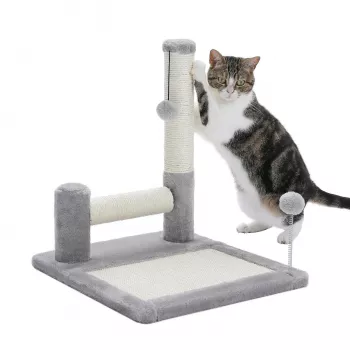
Cat Scratching Post Pad with 2 Sisal Posts and Interactive Play Ball
A compact scratching spot can protect floors and furniture while giving cats a satisfying place to stretch, scratch, and play. A pad base with sisal posts adds stability and variety, and a built-in play ball helps redirect bored energy into healthy daily activity. If you’re looking for a simple station that fits neatly into daily life, the Cat Scratching Post Pad with 2 Sisal Posts and Interactive Play Ball is designed to keep scratching “yes” and furniture “no” without needing a bulky cat tree.
Why scratching and play matter at home
Scratching is a normal, healthy behavior for cats. It helps maintain claw condition by shedding outer layers, and it supports full-body stretching—especially through the shoulders, back, and legs. When that need doesn’t have a clear outlet, cats often choose the most satisfying texture available: sofa arms, rugs, door frames, and carpet edges.
Designated scratch zones can reduce unwanted scratching by giving cats a predictable, rewarding place to do what comes naturally. Many behavior specialists recommend offering multiple options (horizontal and vertical) and placing them where the cat already spends time, rather than isolating scratchers in low-traffic rooms.
Play is the other half of the equation. Interactive play supports mental stimulation and can help prevent boredom-related mischief such as counter-jumping, nighttime zoomies, and “surprise” ambushes of ankles. A combined scratch-and-play station can be especially helpful in smaller homes, and in multi-cat households as long as there are enough stations to avoid competition.
For more background on why cats scratch and how to support healthy behavior, helpful references include International Cat Care’s guide to scratching and enrichment tips from the ASPCA Cat Care resources.
What this scratching pad station includes
This setup blends three cat favorites into one compact footprint: a grounded pad base, two vertical sisal posts, and a built-in play ball for quick batting breaks. The goal is to make the “right” choice easy—scratch here, not there.
- Pad-style base that provides a grounded scratching surface and helps keep the unit steady
- Two sisal-wrapped posts that offer a durable texture many cats prefer for vertical scratching
- Interactive play ball element to encourage batting, pouncing, and quick play breaks
- Space-saving footprint suited for apartments, offices, and corners near favorite cat hangouts
Quick feature overview
| Component | Purpose | Best for |
|---|---|---|
| Pad base | Stable scratch surface and support | Cats that like low, grounded scratching |
| 2 sisal posts | Vertical scratching and full-body stretch | Cats that reach up to scratch or climb |
| Interactive play ball | Redirects energy into play | Kittens and active adult cats |
Placement ideas for better use
Where you put a scratching station often matters as much as what it’s made of. Cats are routine-driven, and scratching is frequently tied to specific daily moments (after waking, after zooming, or when greeting a person).
- Place it near a previously targeted area (like a sofa arm or rug edge) to offer an immediate alternative.
- Position it close to sleeping spots since many cats scratch right after waking up.
- Keep it in a visible, easy-to-access location rather than hiding it in a closet or laundry room.
- If there are multiple cats, consider separating scratch stations to reduce resource guarding.
If your cat has a “hot spot” they keep returning to, place the station within a few feet of that spot first. After it becomes part of the routine, it’s often easier to gradually shift it to a more convenient location.
Getting a cat to use it without stress
Most cats don’t need much convincing—if the station is stable, appealing, and located well. The key is to make it rewarding and avoid any approach that creates wariness.
- Use positive reinforcement: reward when the cat investigates or scratches the correct surface.
- Try a small sprinkle of catnip or silver vine (if the cat responds to it) to encourage exploration.
- Avoid physically placing paws on the post; forced interactions can create avoidance.
- Pair short daily play sessions with the ball feature to build a routine around the station.
To reduce confusion, keep the station from wobbling. If a scratcher tips or shifts under a cat’s weight, some cats will avoid it—even if they like the texture.
Care and upkeep for longer life
A well-maintained scratcher stays more attractive to cats and can last longer. A few quick habits help keep the station “fresh” and safe.
It’s also worth noting that many veterinary organizations discourage declawing for routine scratching issues; providing appropriate outlets is typically a safer, welfare-forward approach. See the American Veterinary Medical Association (AVMA) position on declawing for additional context.
Who this setup suits best
In-stock picks to add to your cart
- Cat Scratching Post Pad with 2 Sisal Posts and Interactive Play Ball
- Universal Car Steering Wheel Phone Mount for Safe Navigation
- Triple-Sided Ultra-Fine Soft Bristle Toothbrush for Enhanced Oral Health
FAQ
How do you get a cat to stop scratching furniture and use a scratching post instead?
Put the scratch station right next to the problem area, reward any investigating or scratching, and make the furniture less inviting by temporarily covering or blocking it. Keep the station stable so it doesn’t wobble and scare your cat off, and use catnip if it helps your cat engage.
Is sisal good for cat scratching posts?
Yes—sisal is a durable, common scratching texture many cats enjoy because it provides satisfying resistance for raking claws. Replace the post or station when it becomes loose, unsafe, or too worn to feel good to scratch.
Where should a scratching post be placed?
Place it near sleep spots, in high-traffic rooms, and close to areas your cat has already scratched. Easy access and visibility increase use, especially when you pair the spot with brief daily play sessions.
Recommended for you

Was this article helpful?
Yes
No









Leave a comment