-
Shop
- Advanced Technologies
- AI Skills for Creators & Freelancers
- AI Client Management
- AI Ethics
- AI Mindset
- AI Tools & Prompts
- AI Writing & Content Creation
- Audio, Voice & Music
- Design & Visual Creation
- Email, Messaging & Communication
- Freelancing & Business
- Marketing, Ads & Conversion
- Productivity, Workflow & Automation
- SEO & Search Optimization
- Social Media Content & Growth
- Strategy, Planning & Analytics
- Video Creation & Editing
- AI Skills Mastery 2026 Collection
- Bathroom
- Best-Sellers
- Car Accessories
- Confidence
- Dating & Social Skills
- Digital Resources
- Easter Products
- Education & Learning
- Family & Parenting
- Fashion
- Fashion Accessories
- Furniture
- Gadgets
- Health & Beauty
- Health & Wellness
- Home & Garden
- Home Electronics
- Home Supplies
- Jewelry
- Kids & Babies
- Kitchen
- Lighting
- Patio, Lawn & Garden
- Personal Growth
- Pet Care
- Pet Supplies
- Pets
- Shoes
- Smart Home Living Guides
- Sport & Outdoors
- Stress Relief & Relaxation
- Super Deals
- TikTok Growth & Monetization Mastery
- Travel
- Travel & Adventure
- Wealth
- Wellness
8-Panel Dog Playpen Setup: Indoor, Yard & Patio Use
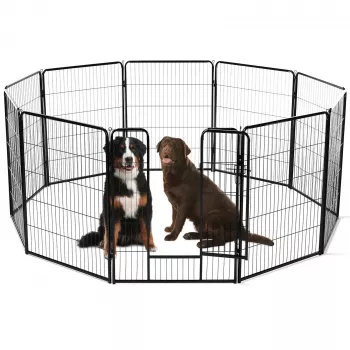
8-Panel Dog Playpen for Indoor Spaces, Yards, and Outdoor Hangouts
A panel playpen creates a flexible, portable boundary that helps dogs stay safe while still seeing and interacting with the household. This 8-panel setup with a door is designed to work as an indoor pet fence, a yard play area, or a temporary outdoor enclosure for supervised time. When used thoughtfully—comfortable layout, simple routines, and rewarding enrichment—it can become a go-to “calm zone” for puppies and adult dogs alike.
What an 8-panel playpen does well
An 8-panel pen shines when you need structure without fully closing a dog into a crate. It creates a defined safe zone for resting, chewing, and calm play, which can be especially helpful during busy household moments.
- Creates a defined safe zone for resting, chewing, and calm play without closing a dog into a crate
- Helps manage transitions: guests arriving, cleaning, cooking, deliveries, or puppy house-training routines
- Works as a temporary barrier for rooms, hallways, or open-plan areas when a full pet gate is not ideal
- Can be used outdoors for supervised yard time when a permanent fence is unavailable or incomplete
For general home safety reminders (cords, small objects, household hazards), the American Kennel Club and ASPCA offer practical guidance that pairs well with using a pen as part of a daily routine.
Quick overview: configuration and use cases
The big advantage of an 8-panel design is how easily it adapts to your space. You can make it roomy when you have the floor area, then tighten the footprint when you need it out of the way.
- Modular panels can be arranged into common shapes such as a rectangle, square, or octagon depending on the space
- A door panel makes it easier to step in to refresh water, add toys, attach a bed, or bring a dog in/out without lifting panels
- Suitable for many household scenarios: puppies learning boundaries, small-to-medium dogs needing a calm zone, or short-term separation for multi-pet homes
- Best results come from pairing the pen with enrichment (chews, lick mats, puzzle feeders) so the space feels rewarding
At-a-glance checklist
| Item | What to look for | Why it matters |
|---|---|---|
| Panel count | 8 panels | More layout options and a roomier play area |
| Access | Door panel | Faster entry/exit and less panel shifting |
| Placement | Indoor + yard + outdoor (supervised) | One enclosure for multiple settings |
| Routine fit | Space for bed + water + toys | Supports longer calm periods without frustration |
| Stability | Secure connections between panels | Reduces gaps and unwanted movement during use |
Where it fits: indoor setups that feel natural
Indoors, a panel playpen is most effective when it feels like a “normal” part of the room—close enough for your dog to relax, but positioned to prevent common trouble spots.
- Living room corner: keeps a dog near the family while limiting access to cords, rugs, or kids’ toys
- Kitchen/dining boundary: reduces counter-surfing and underfoot accidents during meal prep
- Work-from-home zone: provides a predictable spot for naps and independent play during calls
- Nighttime routine: place a bed inside so the pen becomes a consistent “settle” location
- Multi-pet management: temporary separation for feeding, introductions, or recovery after vet visits
A small tweak that often improves success: set the pen up before you need it. When the pen only appears during “chaos moments,” some dogs learn to anticipate disruption and resist going in.
Outdoor and yard use: safer supervised time
Portable pens can be a great solution for short outdoor hangouts—think grilling, gardening, or a sunny break—when you want boundaries without building a permanent fence.
- Pick level ground to reduce rocking and keep panel edges aligned
- Provide shade and water; avoid hot surfaces that can overheat paws
- Stay nearby—most portable pens are intended for supervised use rather than unattended outdoor confinement
- Limit duration in warm weather and watch for digging attempts or chewing on panels
- Bring the pen indoors after use to reduce weather exposure and keep hardware in better condition
If your dog is motivated to explore, treat the pen as a “pause button” rather than a long-term outdoor solution: supervised time, short sessions, then back inside.
How to set it up for stability and easy access
Most day-to-day frustration comes from inconvenient placement or a layout that invites pushing. A few setup choices can make the pen feel sturdy and easy to live with.
Helping a dog like the playpen (without the drama)
Sizing and suitability: choosing the right match
Care, cleaning, and long-term upkeep
Featured in-stock picks
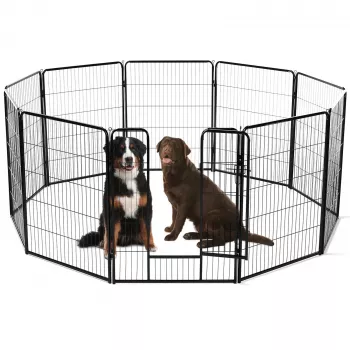
- 8 Panel Dog Playpen Indoor Pet Fence with Doors for Yard and Outdoor Use
- Universal Car Steering Wheel Phone Mount for Safe Navigation
- Triple-Sided Ultra-Fine Soft Bristle Toothbrush for Enhanced Oral Health
FAQ
Can a panel playpen be used outside all day?
Most panel playpens are best for supervised outdoor use rather than all-day unattended confinement. If used outside, provide shade and water, watch for digging or chewing, and bring the pen in after the session to reduce weather wear.
How do you keep a playpen from sliding on indoor floors?
Place the pen on a non-slip mat or rug, confirm the base is flat, and avoid layouts that create “push points” (like tight corners near the door). A stable shape and good footing typically reduce sliding significantly.
Is a playpen the same as a crate?
No—playpens are more open and give a dog extra room to move while still creating boundaries. Crates are more enclosed and are often used for structured rest, travel, and short, den-like downtime; both should be introduced gradually and positively.
Recommended for you
Was this article helpful?
Yes
No









Leave a comment