-
Shop
- Advanced Technologies
- AI Skills for Creators & Freelancers
- AI Client Management
- AI Ethics
- AI Mindset
- AI Tools & Prompts
- AI Writing & Content Creation
- Audio, Voice & Music
- Design & Visual Creation
- Email, Messaging & Communication
- Freelancing & Business
- Marketing, Ads & Conversion
- Productivity, Workflow & Automation
- SEO & Search Optimization
- Social Media Content & Growth
- Strategy, Planning & Analytics
- Video Creation & Editing
- AI Skills Mastery 2026 Collection
- Bathroom
- Best-Sellers
- Car Accessories
- Confidence
- Dating & Social Skills
- Digital Resources
- Easter Products
- Education & Learning
- Family & Parenting
- Fashion
- Fashion Accessories
- Furniture
- Gadgets
- Health & Beauty
- Health & Wellness
- Home & Garden
- Home Electronics
- Home Supplies
- Jewelry
- Kids & Babies
- Kitchen
- Lighting
- Patio, Lawn & Garden
- Personal Growth
- Pet Care
- Pet Supplies
- Pets
- Shoes
- Smart Home Living Guides
- Sport & Outdoors
- Stress Relief & Relaxation
- Super Deals
- TikTok Growth & Monetization Mastery
- Travel
- Travel & Adventure
- Wealth
- Wellness
Dog Pain Signs: Quick Home Checklist for Pet Owners
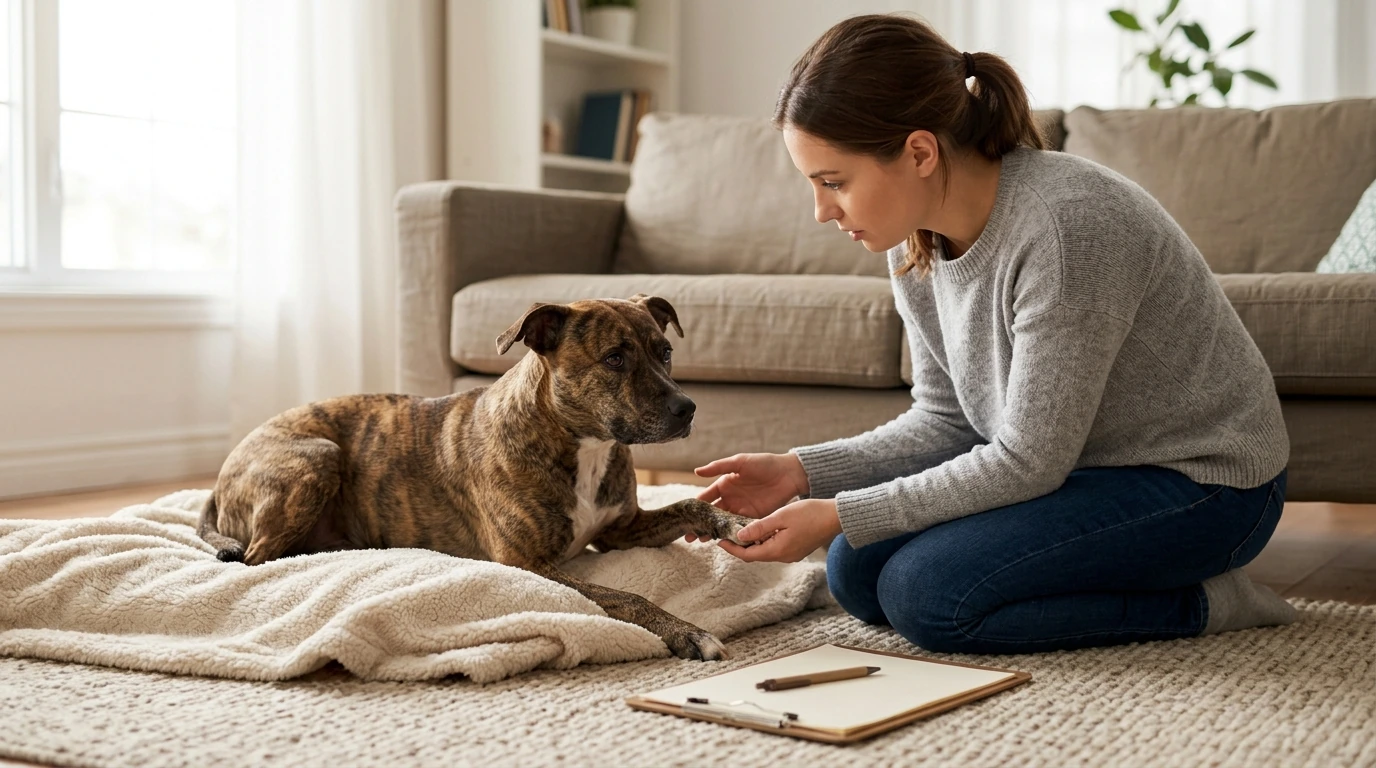
Spotting Signs of Pain in Dogs: A Practical Checklist for Everyday Pet Owners
Dogs often hide discomfort, so small changes in behavior, movement, and routine can be the earliest clues. A simple, repeatable check done at home helps track what’s new, what’s worsening, and when it’s time to call a veterinarian. Below is a practical, everyday approach that breaks common pain signals into easy categories, plus a printable checklist method you can use in just a few minutes.
Why pain can be hard to notice in dogs
Many dogs instinctively mask weakness, especially around strangers, in busy environments, or at the vet’s office. That means a dog can look “fine” in one moment and struggle at home an hour later. Often, discomfort shows up first as subtle routine changes—sleeping differently, acting less social, eating less—well before obvious limping appears.
Complicating things further, stress, anxiety, aging, and even a hard play session can mimic pain. The most useful clue is pattern: what repeats, what worsens, and what’s clearly new for your dog. Catching pain early can reduce suffering and help prevent minor issues from escalating into urgent problems.
Everyday behavior changes that can signal discomfort
Behavior is often the earliest “language” of pain. Watch for shifts that don’t match your dog’s typical personality:
- Irritability when touched: growling, snapping, or flinching when you pet a specific area that used to be tolerated.
- Withdrawal: hiding, avoiding family interaction, or moving away when approached.
- Restlessness: pacing, difficulty settling, frequent position changes, or choosing unusual sleeping spots.
- Appetite or thirst changes: eating less, skipping treats that are normally irresistible, or drinking noticeably more or less.
- House-training slip-ups: new accidents indoors, reluctance to go outside, or suddenly asking to go out more often (possible urinary or abdominal discomfort).
If you want a quick way to make these observations consistent day to day, use a simple rating system (not present/mild/moderate/severe). A printable format makes it easier to stay objective rather than relying on memory.
Movement and posture clues to watch for
Movement changes are classic pain signals, but they can be surprisingly easy to miss if they develop gradually. Look for:
- Limping or stiffness: especially after rest, or a dog that “warms up” after walking a few minutes.
- Reluctance to jump or climb: hesitation at stairs, avoiding the couch, refusing the car, or struggling to rise from lying down.
- Posture changes: tucked abdomen, arched back, head held low, or shifting weight off one limb.
- Guarding or focusing on one spot: licking, chewing, or protecting a joint, paw, or patch of skin.
- Reduced stamina: shorter walks, lagging behind, stopping more often, or less interest in play.
Common signs of pain and what to note at home
| Sign | What it can look like | What to record for the vet |
|---|---|---|
| Limping or stiffness | Shortened stride, favoring one leg, stiff after naps | Which leg, when it started, better/worse with activity |
| Reluctance to move | Hesitating at stairs, refusing jumps, slow to stand | Specific movements avoided, time of day, recent exercise |
| Vocalization | Whining, yelping when picked up, groaning when lying down | What triggered it, frequency, intensity (mild/moderate/severe) |
| Behavior change | Hiding, irritability, clinginess, less social | New vs ongoing, context (touch, meals, kids, other pets) |
| Licking/chewing one area | Obsessive licking of paw/joint, flinching when approached | Exact location, skin changes, swelling, odor, heat |
Face, breathing, and body signals that deserve attention
Some dogs show pain more in facial expression and body tension than in walking. Keep an eye out for:
- Facial tension: squinting, furrowed brow, ears pinned back, a tightened mouth, or a “worried” look.
- Out-of-place panting: panting in a cool room at rest, shallow breathing, or a faster resting respiratory rate than normal.
- Trembling or rigidity: shaking, flinching when touched, or a stiff “frozen” stance.
- Eye changes: dilated pupils, glassy eyes, or avoiding eye contact when you approach a sensitive area.
- Grooming shifts: an unkempt coat from reduced self-care, or overgrooming one spot.
For a deeper overview of pain recognition, VCA Animal Hospitals has a helpful reference on recognizing pain in dogs.
Fast home check: using a printable checklist the right way
A checklist works best when it’s quick, consistent, and focused on changes. Here’s a simple routine:
If you want an easy, ready-to-print format, see: Printable checklist for spotting signs of pain in dogs.
When to contact a veterinarian urgently
For toxin concerns, the ASPCA Animal Poison Control resource can help you identify common risks and next steps. For general pet care guidance, the American Veterinary Medical Association (AVMA) also provides reliable owner education.
Supportive steps at home while waiting for care
If you need hands-free directions while heading to an appointment, consider: Universal Car Steering Wheel Phone Mount for Safe Navigation.
FAQ
How can pain be spotted if a dog isn’t crying or limping?
Many dogs show pain through behavior and routine changes, like avoiding touch, resting differently, facial tension, or moving more carefully. Watching for patterns and specific triggers (stairs, jumping, being lifted) often reveals discomfort even without obvious limping.
Is panting always a sign of pain in dogs?
No—panting can be normal with heat, exercise, or stress. Panting is more concerning when it happens at rest in a cool environment, persists, or appears alongside other signs like trembling, restlessness, or posture changes.
What information is most helpful to bring to the veterinarian?
Bring when the signs started, what movements your dog avoids, where they seem sensitive, and how severe it has been over several days. Short videos, notes on appetite/sleep changes, and any recent injury or activity change are especially useful.
Recommended for you



Was this article helpful?
Yes
No









Leave a comment