-
Shop
- Advanced Technologies
- AI Skills for Creators & Freelancers
- AI Client Management
- AI Ethics
- AI Mindset
- AI Tools & Prompts
- AI Writing & Content Creation
- Audio, Voice & Music
- Design & Visual Creation
- Email, Messaging & Communication
- Freelancing & Business
- Marketing, Ads & Conversion
- Productivity, Workflow & Automation
- SEO & Search Optimization
- Social Media Content & Growth
- Strategy, Planning & Analytics
- Video Creation & Editing
- AI Skills Mastery 2026 Collection
- Bathroom
- Best-Sellers
- Car Accessories
- Confidence
- Dating & Social Skills
- Digital Resources
- Easter Products
- Education & Learning
- Family & Parenting
- Fashion
- Fashion Accessories
- Furniture
- Gadgets
- Health & Beauty
- Health & Wellness
- Home & Garden
- Home Electronics
- Home Supplies
- Jewelry
- Kids & Babies
- Kitchen
- Lighting
- Patio, Lawn & Garden
- Personal Growth
- Pet Care
- Pet Supplies
- Pets
- Shoes
- Smart Home Living Guides
- Sport & Outdoors
- Stress Relief & Relaxation
- Super Deals
- TikTok Growth & Monetization Mastery
- Travel
- Travel & Adventure
- Wealth
- Wellness
X-Inch Metal Bathroom Mirror Guide: Size, Finish, Height
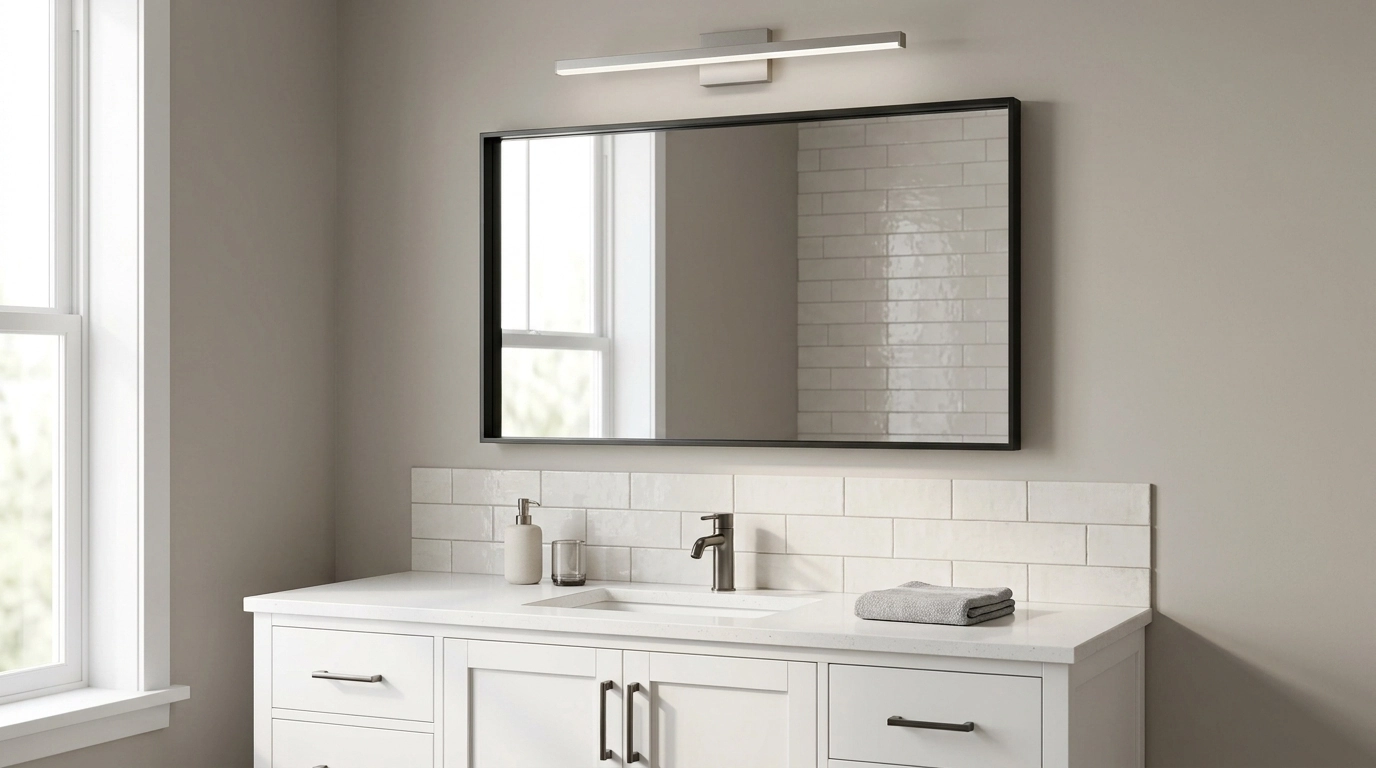
Choosing the Right Metal Bathroom Mirror Size and Style
A metal-framed bathroom mirror brings crisp lines, long-term durability, and a more “finished” look above the vanity. The best outcome usually comes from three decisions: sizing the mirror so it visually fits the vanity, choosing a frame finish that coordinates with faucets and lighting, and mounting at a height that works for everyone who uses the space—especially in shared bathrooms.
What a Metal-Framed Mirror Changes in a Bathroom
Compared with frameless glass, a metal frame adds structure and contrast, making the vanity wall feel intentional rather than “floating.” This can be especially helpful in bathrooms with simple tile or painted walls where you want the mirror to anchor the space.
Metal frames also hold up well in daily humidity when properly finished (powder-coated and sealed coatings are common). Beyond durability, the frame becomes a style “bridge” between your hardware, lighting, and shower trim—particularly in popular finishes like black, brushed nickel, and brass.
Because the lines are clean and the silhouettes are straightforward, metal-framed mirrors often coordinate more easily with industrial, modern, farmhouse, and transitional bathrooms than ornate wood frames.
Sizing: Picking an X-Inch Mirror That Fits the Vanity
Start with vanity width. A mirror typically looks balanced when it’s slightly narrower than the vanity, leaving a visual margin on both sides. That margin keeps the mirror from feeling oversized and gives space for wall plates, trim, or sconce backplates.
Next, consider height. Taller mirrors can make ceilings feel higher and improve the viewing range for households with different heights. If the vanity sits under a light bar, the mirror height also affects how much “air” remains between the countertop, backsplash, mirror, and light fixture.
One detail that trips people up is how the size is listed. Some mirrors are labeled by overall dimensions (including the frame), while others reference the glass size. Because metal borders add to the outer measurement, confirm which dimension you’re buying—especially if you’re working around sconces, outlets, or wall switches.
Finally, think about orientation. Landscape mirrors are a natural match over wider vanities; portrait orientation can make a narrow vanity look taller and can help in tight wall spaces where a wider mirror would collide with lighting or cabinetry.
| Vanity width (in) | Typical mirror width range (in) | Notes |
|---|---|---|
| 24 | 20–22 | Keeps side margins; good for small powder rooms |
| 30 | 24–28 | Pairs well with one centered light or a short bar light |
| 36 | 30–34 | Balanced look with sconces or a medium bar light |
| 48 | 42–46 | Works with double-sconce layouts; consider taller height for better coverage |
| 60 | 48–58 | For wide vanities; a single large mirror or two separate mirrors can work |
Finish and Frame Details That Affect the Look
The finish and profile of a metal frame can change the entire mood of a bathroom, even if the mirror size stays the same.
- Black metal adds strong contrast, pairs naturally with matte-black fixtures, and tends to hide small smudges better than shinier finishes.
- Brushed metallics (like brushed nickel) soften contrast and blend easily with stainless or nickel faucets without feeling stark.
- Frame thickness matters: thin frames feel modern and light; thicker frames read bolder and slightly more industrial.
- Corner treatment shifts the vibe: square corners look architectural; rounded corners feel softer and can be friendlier in tight walkways.
- Edge protection is a practical win: a rigid metal frame helps protect mirror edges from accidental knocks near sinks and countertops.
Placement and Mounting Basics
- Height: Many setups look best when the mirror is centered around typical eye level while still allowing taller users to see comfortably. In homes where accessibility is a priority, review the ADA Standards for Accessible Design (2010) for guidance on accessible reach and usability considerations.
- Clearance: Leave breathing room above the backsplash and below light fixtures. If you’re using a light bar, ensure it won’t overlap the frame; if you’re using sconces, confirm their spread won’t feel cramped against the mirror edges.
- Wall support: Use appropriate anchors for drywall and fasten into studs when possible for heavier mirrors. Double-check the hanging hardware rating before installation.
- Leveling: Measure from the countertop to the bottom frame edge on both sides and verify level before fully tightening.
- Moisture considerations: Keep the bathroom ventilated and avoid trapping water behind the frame during cleaning. For broader planning best practices, the National Kitchen & Bath Association (NKBA) is a helpful reference point.
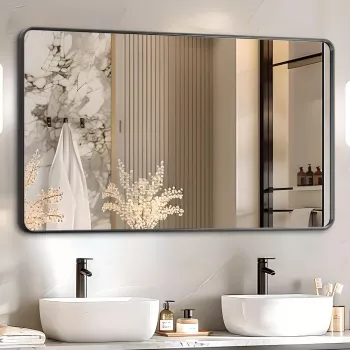
A Practical Pick: 48×30 Inch Black Metal Bathroom Mirror
Featured products: 48×30 Inch Black Metal Bathroom Mirror and Triple-Sided Ultra-Fine Soft Bristle Toothbrush for Enhanced Oral Health.
| Detail | Value |
|---|---|
| Product | 48×30 Inch Black Metal Bathroom Mirror |
| Frame | Metal (black finish) |
| Orientation | Landscape (48×30) |
| Availability | In stock |
Care and Cleaning for Metal Bathroom Mirrors
FAQ
Should a bathroom mirror be the same width as the vanity?
Most bathrooms look best when the mirror is slightly narrower than the vanity, leaving a small margin on each side. Exceptions include wall-to-wall designs or double vanities where two separate mirrors can look more balanced than one oversized mirror.
How high should a bathroom mirror be mounted?
Mount it so the mirror’s viewing area works for the primary users, typically centered around average eye level while still accommodating taller users. Keep practical clearance above the backsplash and below any light fixture, and consider accessibility needs when planning final placement.
Is a metal-framed mirror okay in a humid bathroom?
Yes—metal-framed mirrors are well-suited to bathrooms when the frame has a protective finish such as powder coating or sealed treatments. Consistent ventilation and gentle cleaning help preserve the coating and reduce moisture-related wear.
Recommended for you


Was this article helpful?
Yes
No









Leave a comment