-
Shop
- Advanced Technologies
- AI Skills for Creators & Freelancers
- AI Client Management
- AI Ethics
- AI Mindset
- AI Tools & Prompts
- AI Writing & Content Creation
- Audio, Voice & Music
- Design & Visual Creation
- Email, Messaging & Communication
- Freelancing & Business
- Marketing, Ads & Conversion
- Productivity, Workflow & Automation
- SEO & Search Optimization
- Social Media Content & Growth
- Strategy, Planning & Analytics
- Video Creation & Editing
- AI Skills Mastery 2026 Collection
- Bathroom
- Best-Sellers
- Car Accessories
- Confidence
- Dating & Social Skills
- Digital Resources
- Easter Products
- Education & Learning
- Family & Parenting
- Fashion
- Fashion Accessories
- Furniture
- Gadgets
- Health & Beauty
- Health & Wellness
- Home & Garden
- Home Electronics
- Home Supplies
- Jewelry
- Kids & Babies
- Kitchen
- Lighting
- Patio, Lawn & Garden
- Personal Growth
- Pet Care
- Pet Supplies
- Pets
- Shoes
- Smart Home Living Guides
- Sport & Outdoors
- Stress Relief & Relaxation
- Super Deals
- TikTok Growth & Monetization Mastery
- Travel
- Travel & Adventure
- Wealth
- Wellness
Queer Fashion: Fluid Style, Capsule Pieces & Fit Tips
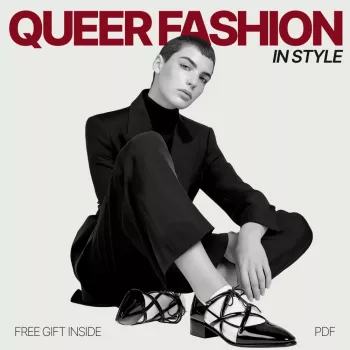
Queer Fashion in Style: Embracing Fluidity, Breaking Norms, and Building a Queer-Inclusive Wardrobe
Queer fashion is less about rules and more about range—mixing silhouettes, playing with codes, and choosing pieces that reflect identity, mood, and community. Whether your style leans masc, femme, androgynous, or changes day to day, the goal is simple: build outfits that feel like you, on your body, in your life. Below are practical ways to experiment with fluid styling, shop with confidence, and create a wardrobe that adapts to different presentations, occasions, and comfort needs.
What queer fashion means today
Queer fashion lives at the intersection of self-expression, cultural reference, and personal safety. It can be loud, subtle, polished, messy, or all of the above—sometimes in the same week.
- Style as self-definition: Clothing becomes a tool to explore gender expression, heritage, nightlife codes, workwear expectations, and personal storytelling.
- Fluidity over binaries: Mixing traditionally “menswear” and “womenswear” elements doesn’t require justification—just intention and comfort.
- Visibility and safety: Some days call for bold signaling; other days call for quiet confidence. Both are valid, and context matters.
- Community signals: Color choices, accessory cues, silhouettes, and even styling attitude can feel affirming without reading as costume-like.
If you want deeper terminology and respectful language around identity and community, resources like the GLAAD Media Reference Guide and the Human Rights Campaign Glossary of Terms are helpful reference points.
Breaking norms with silhouettes and proportion
Silhouette is often the fastest way to shift gendered “read” without changing who you are. Think of proportion as a dial you can turn up or down depending on the day.
- Start with contrast: Pair structured with soft—an oversized blazer with a skirt, wide-leg trousers with a fitted tank, or a slouchy knit with a slim boot.
- Try “borrowed” tailoring: Experiment with shoulder lines, dropped waists, longer hems, and relaxed suiting to create an androgynous shape that still feels intentional.
- Use proportion as a dial: More fluid can mean longer lines and looser drape; sharper can mean cinched waistlines, cropped jackets, or a cleaner shoulder.
- Reframe basics: A white tee can read totally different depending on cut (boxy vs. fitted), styling (tucked vs. untucked), and finishing touches (belt, chain, boots).
A useful approach: pick one “anchor” item (like a blazer or wide-leg trouser), then change only one variable at a time—volume, neckline, hem length, or shoe. This keeps experimentation exciting without feeling chaotic.
Color, print, and texture as identity-friendly tools
Color and texture let you communicate energy without forcing a specific silhouette. They’re also great for low-commitment experimentation.
- Color strategy: Choose one “anchor” palette (neutrals, denim tones, earth colors) plus one “signal” palette (brights, pastels, metallics) you can add when you want a visible shift.
- Print mixing made easy: Keep one shared color between prints, or mix scales (tiny stripe + large floral) so the outfit feels styled, not cluttered.
- Texture adds depth: Leather, satin, denim, mesh, knits, and suede can take the same base outfit from soft to sharp without requiring a full change.
- Accessories as the gateway: Scarves, nail color, belts, jewelry, pins, and bags can make familiar clothes feel newly “you” with minimal risk.
For fashion history context and the way queer communities have shaped style, the Victoria and Albert Museum’s LGBTQ+ resources are a strong starting place: V&A LGBTQ+ resources.
Building a queer-inclusive capsule wardrobe (foundation pieces)
A capsule wardrobe doesn’t have to be minimal or rigid. Think of it as a set of reliable “connectors” that make styling easier across different gender expressions and occasions.
Capsule pieces and the vibe they create
| Piece | Why it works | Easy styling moves |
|---|---|---|
| Oversized blazer | Instant structure with fluid fit | Over a tee + wide-leg trousers; over a dress; sleeves pushed up |
| Crisp button-up | Shifts from masc to femme depending on styling | Half-tuck; open over a tank; layered under knitwear |
| Wide-leg trousers | Androgynous proportion; comfortable movement | With fitted top; with cropped jacket; with loafers or sneakers |
| Statement skirt/kilt | High-impact without needing a full look change | With boots + tee; with blazer; with oversized knit |
| Layering knit or cardigan | Softens silhouettes; adds texture | Over button-up; belted; paired with slim bottom |
Footwear and finishing touches: comfort, confidence, and code-switching
Shopping and styling with inclusivity in mind
Featured picks to support fluid styling
- Queer Fashion in Style: A Guide to Embracing Fluidity, Breaking Norms, and Building Your Queer-Inclusive Wardrobe (a handy reference for outfit formulas, proportion tweaks, and confidence-building styling steps).
- Armani Exchange Men’s Sneakers (a clean, versatile shoe option that can neutralize a look or sharpen it, depending on styling).
A supportive guide for exploring queer style
FAQ
How can a wardrobe be more gender-fluid without buying all new clothes?
Use styling swaps: change proportions with tucks and layers, add one statement piece, and experiment with accessories to shift the vibe. Small tailoring tweaks (like hemming or adjusting the waist) can also give existing items a new silhouette.
What are easy starter outfits for queer fashion experimentation?
Try simple formulas like an oversized blazer + tee + wide-leg trousers, or a button-up worn open over a tank with a skirt. A monochrome outfit with one bold accessory, or a mesh layer under a neutral look, also adds range without feeling like a costume.
How do sizing and fit work when shopping outside typical gendered sections?
Rely on garment measurements and fabric stretch instead of the label, and decide which area matters most for the item (shoulders for jackets, hips for skirts, waist for trousers). Budgeting for minor alterations can make cross-section shopping feel far more reliable.
Recommended for you


Was this article helpful?
Yes
No









Leave a comment